Annual Shred Day Planning: A Workflow Blueprint
By Aisha Khan • 6th Sep
What to do
Plan an annual shred day as a controlled records-destruction workflow, not an open cleanup drive. Screen materials for retention requirements and holds, count boxes or containers, publish provider-specific rules, document custody, and complete the required sign-off and destruction documentation.
- Start with: Assign a records reviewer, event lead, and closeout signatory. Screen every submission under your organization’s records process before release.
- Then: Collect container counts and flag unusually large loads. Confirm accepted materials, access rules, processing location, and whether witnessed destruction is actually included.
- Important prerequisite: Do not use universal retention periods or equipment rules. Route uncertain records to the designated records, legal, privacy, or compliance owner, and obtain the exact provider or machine instructions.
Annual shred day planning is not a contest to move the most paper in the shortest window. It is a controlled office document purge event: decide what may leave retention, keep held records out of the stream, move approved material through a defined custody handoff, and close with proof that matches your organization's process. The difference between a smooth event and a stressful one is rarely the shredder itself. It is the workflow around it.
I approach this with a throughput mindset: measure containers, define handoffs, and remove ambiguity before the first box reaches the loading area. Sustained throughput beats brochure bursts, every office hour, every time.
The comparison that matters: cleanup drive vs. controlled destruction event
A successful event can look simple from the parking lot, but there are two very different operating models.
| Planning choice | Cleanup-drive approach | Controlled destruction approach |
|---|---|---|
| Primary goal | Get rid of paper | Destroy only approved paper with a clear custody path |
| Release and preparation | "Bring anything old" | Eligibility and legal-hold check before release, with material rules published in staff communications |
| Volume planning | Guess by stacks of paper | Count boxes or containers; flag unusually large loads separately |
| Vendor handoff | Informal drop-off | Specified custody handoff and authorized service-completion signatory |
| Closeout | Event ends when the truck leaves | Record the agreed volume unit, authorized completion signature, and destruction documentation |
The second model is appropriate when your organization is disposing of consumer-report information used for a business purpose. A shredding event is not permission to destroy. It is the final operational step after your organization has determined that records are eligible under its document destruction policy.
That distinction helps prevent materials from entering the destruction stream before a records-eligibility and legal-hold check. For example, the San Francisco Ethics Commission policy uses a retention and destruction schedule to distinguish eligible records from those that must stay, supporting document destruction compliance. That policy also makes clear that materials relevant to a pending claim or litigation remain retained until the matter is resolved. Questions involving investigations, audits, contracts, regulated record classes, or other exceptions should go to your records, legal, privacy, or compliance owner.

Build the workflow backward from the certificate
Start at the end. Ask what evidence your organization needs after the event, then design each prior handoff so it produces that evidence.
1. Establish a release gate before collection
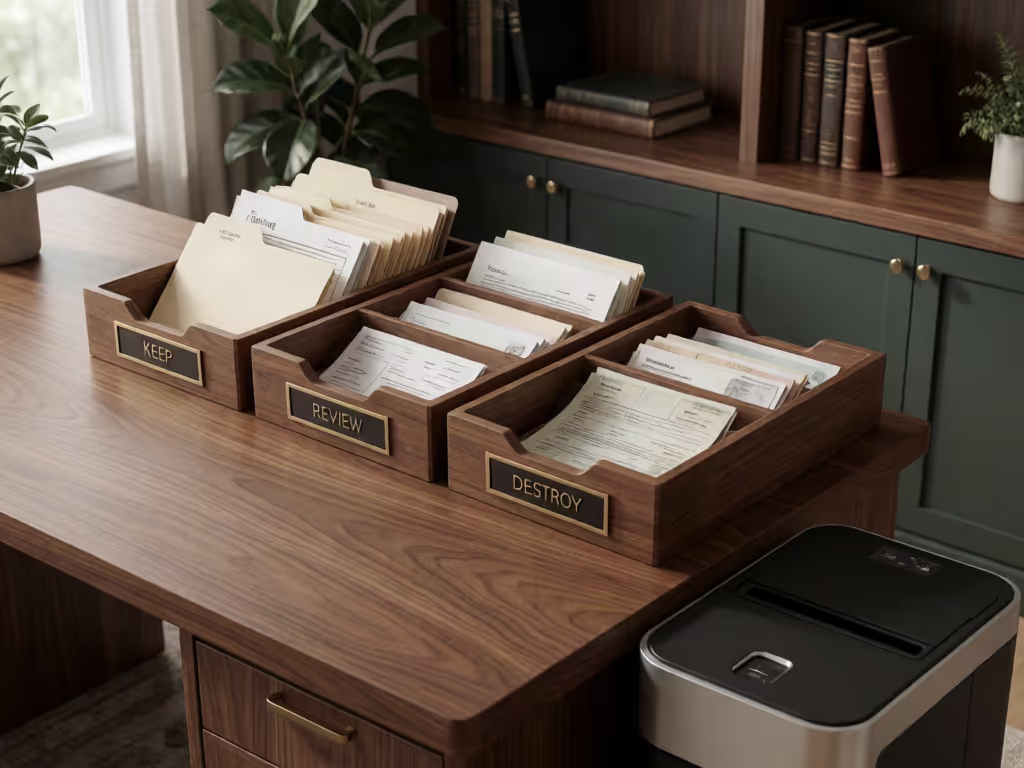
Create a short release form or digital intake question set for department leads, using a shred-ready document organization system to track whether materials are approved or need review. It should require them to confirm that the materials have been screened under the organization's records process and that any exception has been routed for review.
Keep the test practical:
- Is this material approved for destruction under the applicable schedule or policy?
- Is it connected to a legal hold, claim, litigation, audit, investigation, contract, or regulated record category?
- Has the appropriate internal owner cleared any uncertainty?
- Is the submitting group identifying the boxes or containers it is releasing?
Do not turn employees into records lawyers. Their job is to flag uncertainty early, not make a legal determination at the dock.
2. Scope volume in containers, not fantasy sheet counts
For bulk shredding workflow planning, ask each participating team for a box or container count and a separate "unusually large load" flag. This gives the event a consistent unit to record at intake and handoff.
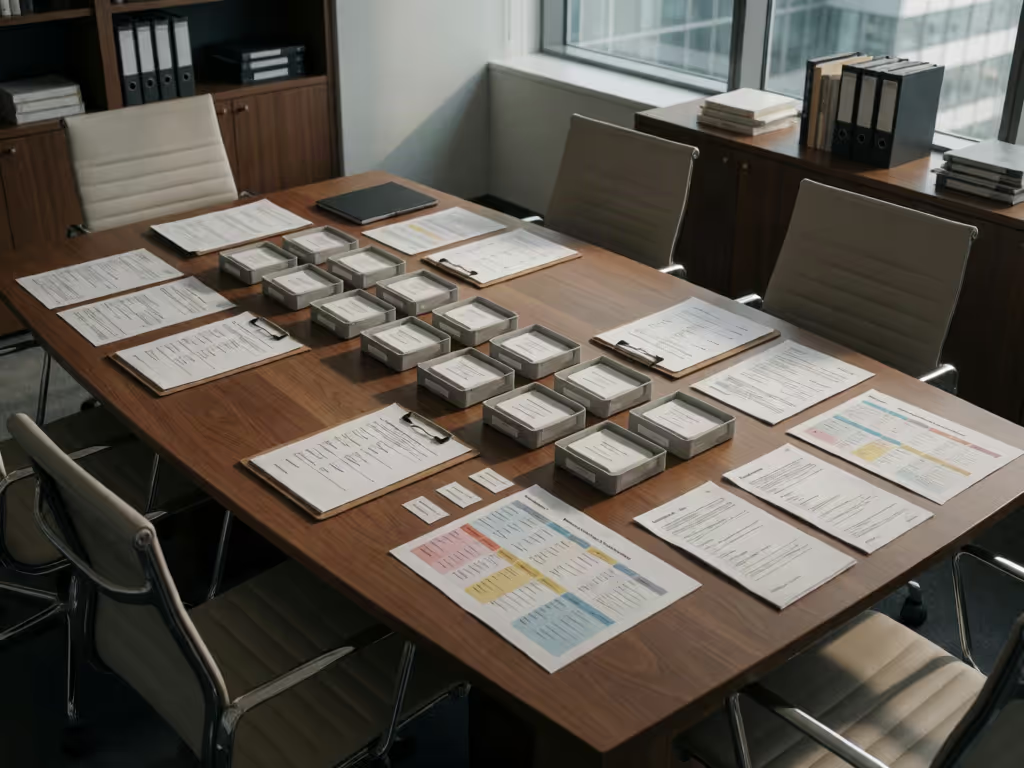
Use a simple planning register:
| Field | Why it earns its place |
|---|---|
| Department or owner | Establishes accountability |
| Box/container count | Gives a consistent volume unit |
| Large-load flag | Lets you design a separate route or appointment |
| Material status | Confirms it cleared the release gate |
| Custody handoff | Captures the handoff specified in the vendor brief |
| Signatory | Identifies who accepted completion |
Do not promise a fixed number of boxes per hour without a provider-specific estimate or a trial. Schedule the event with a contingency path for volume you did not predict.
3. Publish material rules before people start packing
Clear instructions reduce line delays, rejected loads, and awkward sorting around sensitive paper. Your event notice should state:
- the operating window;
- accepted and prohibited materials;
- whether paper must be dry, boxed, bagged, or otherwise prepared;
- the route for large loads; and
- whether immediate, witnessed onsite destruction is available.
Those rules must come from the booked provider or, for a small internal setup, the exact machine's current manufacturer instructions. Do not borrow a rule from another event. Comerica’s April 11, 2026 Shred Day DFW accepts paper without requiring removal of small staples, paper clips, rubber bands, or small fasteners, but prohibits wet or damp paper, certain binders and large clips, plastic media, hazardous materials, and computer, printer, or photocopier parts. That is a useful example of specificity (not a universal acceptance list).
Design the handoff: two models, one non-negotiable control
On-site destruction coordination usually falls into one of two models. Neither is automatically better; the deciding factor is whether the custody and documentation match your requirements.
Model A: Mobile, onsite processing
In one provider-described workflow, locked collection containers are transported to a mobile shredding vehicle onsite. The provider describes scanning containers and capturing an audit trail with container volume and electronic signatures, then issuing a certificate of destruction after processing; organizations that need more structured records can explore DMS integration for automated audit trails.
This model can simplify the story for staff because the collection and processing location are close together. But "truck onsite" should not be treated as a promise that every item will be destroyed while an employee watches. Confirm the actual service configuration in writing.
Model B: Secure collection followed by facility processing
Comerica’s April 11, 2026 Shred Day DFW states that some documents may be loaded into secure trucks and shredded at an Iron Mountain facility rather than while guests wait. This model can still be a controlled process, but it reinforces why the vendor brief must define the custody and documentation requirements.
"On-site" and "witnessed immediately" are separate conditions. Confirm both; do not assume either.
For either model, put four items into the vendor brief: the custody handoff, the unit of volume recorded, the authorized completion signatory, and the destruction documentation required. Provider due diligence can also include reviewing independent audits, references, recognized trade-association certification, and information-security procedures. If a provider cites NAID AAA certification, verify the relevant service mode and ask what controls apply to chain of custody and staff screening; certification is a useful control signal, not a substitute for your own obligations.
Make employee participation easy (and bounded)
High employee participation in shredding does not mean an open invitation to bring any paper from any source. It means removing friction for approved materials while preserving the release gate.
Give employees a calendar invitation, a one-page preparation guide, and one owner to contact with exceptions. For repeat events, reinforce that guide with structured shredder user training covering safety, authorization, and exception handling. For shared offices, use timed department windows or designated runners. For vehicle-based pickup, separate regular traffic from oversized loads; public events have used dedicated lanes for trucks, trailers, and similar vehicles because large loads operate differently from a few file boxes.
Run a closeout that proves the event finished correctly
A secure purge event scheduling plan needs a closeout owner, not just an event coordinator. At closeout, record the agreed volume unit, obtain the agreed signature or service acknowledgment from the authorized person, and collect the required destruction documentation when it is issued.
This is where a clean workflow pays off. Instead of asking later, "Did we destroy it?" you can answer narrower, more useful questions: "What volume was recorded, who acknowledged service completion, and what destruction documentation do we have?"
FAQ: avoid these preventable shredding mistakes
What mistakes should an office purge event avoid?
Avoid releasing records before an eligibility and legal-hold check, giving staff unclear accepted-material rules, and assuming that a mobile event guarantees witnessed immediate destruction. Use a release gate, written instructions, documented provider questions, and confirmation of the actual processing arrangement.
How many sheets can an office shredder handle at once?
There is no responsible universal number. Feed limits, permitted fasteners, runtime, cooling, and safety instructions are model-specific. For a high-volume annual event, do not build a schedule around a generic sheet-capacity claim; obtain the current instructions for the exact machine or scope a destruction provider around containers and large-load handling.
Your next step: schedule the control points first
Before you select a date, assign three names: records reviewer, event lead, and closeout signatory. Then send a one-page intake form requesting container counts, large-load flags, and confirmation that each submission cleared your internal release process. With those numbers and names in hand, you can request a precise service plan, publish unambiguous rules, and run a purge event that is calm, auditable, and built for the workload you actually have.
Related Articles