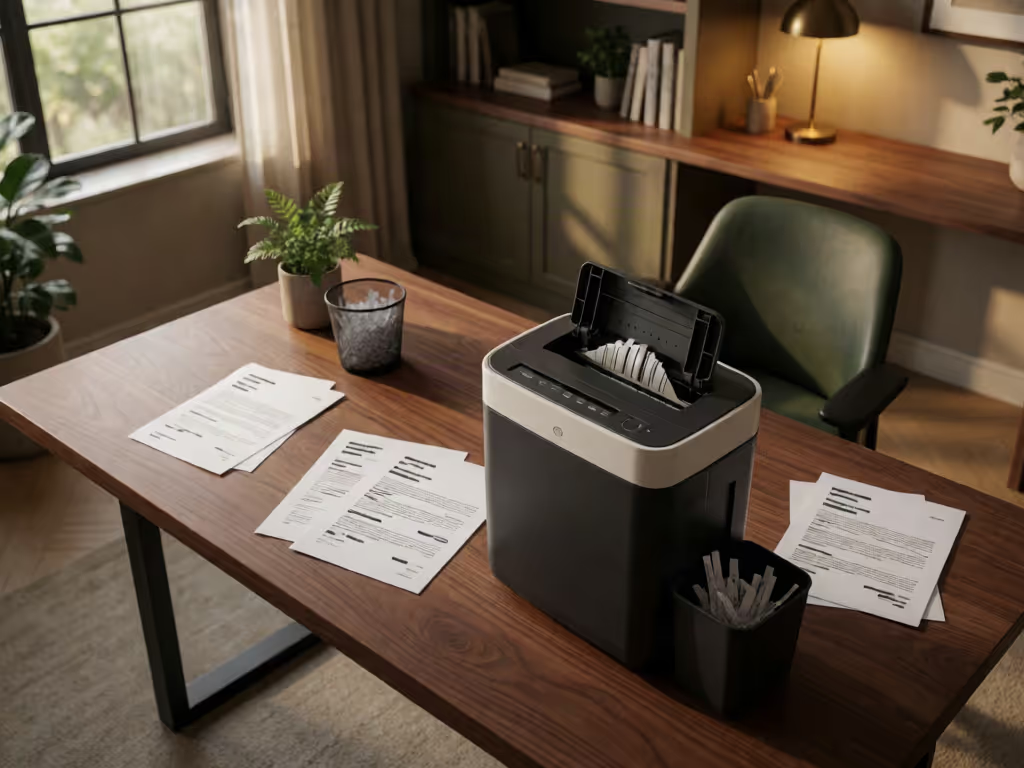
Shredded Paper Biodegradation: Microbes, Security, and Time
By Linh Tran • 25th May
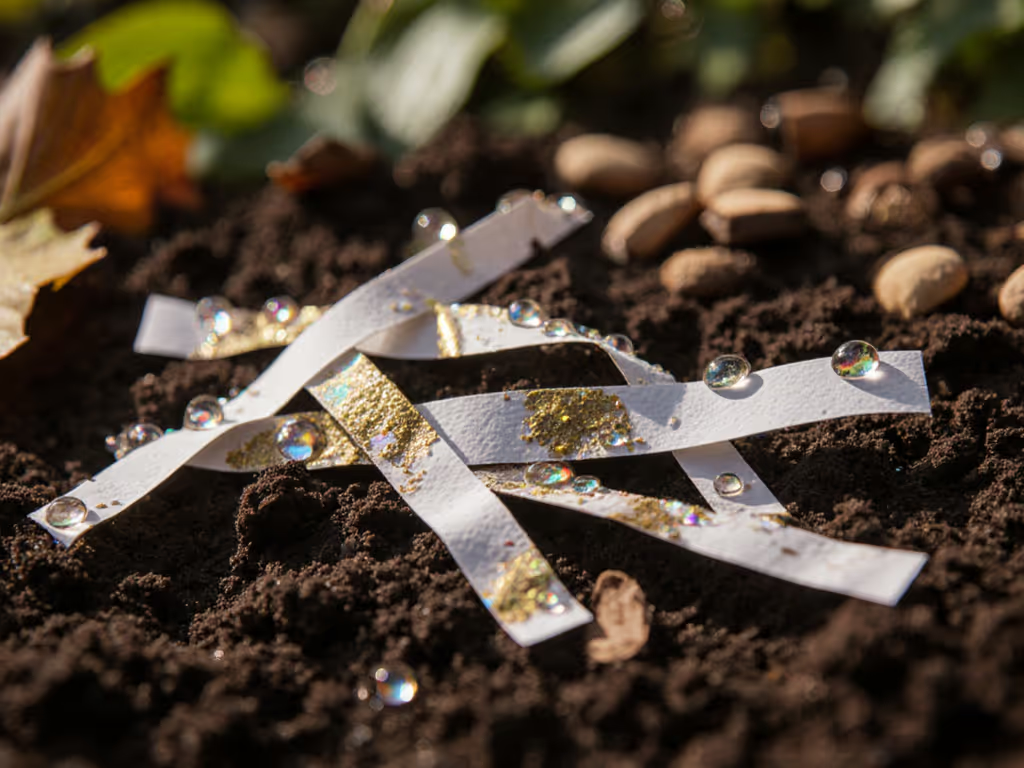
If you shred for privacy, you probably also worry about what happens next. Shredded paper biodegradation and microbial document decomposition sit right at the intersection of security, clutter, and sustainability, and understanding them takes a lot of anxiety out of your disposal routine.
Quiet is a productivity feature, but so is knowing where your paper ends up after it's shredded.
In this FAQ deep dive, I'll walk through what actually breaks shredded paper down, how shred size and security levels affect both privacy and decay, and how long you really have before text becomes unreadable. For a deeper microbiology explainer, see our guide to how microbes break down shredded paper.
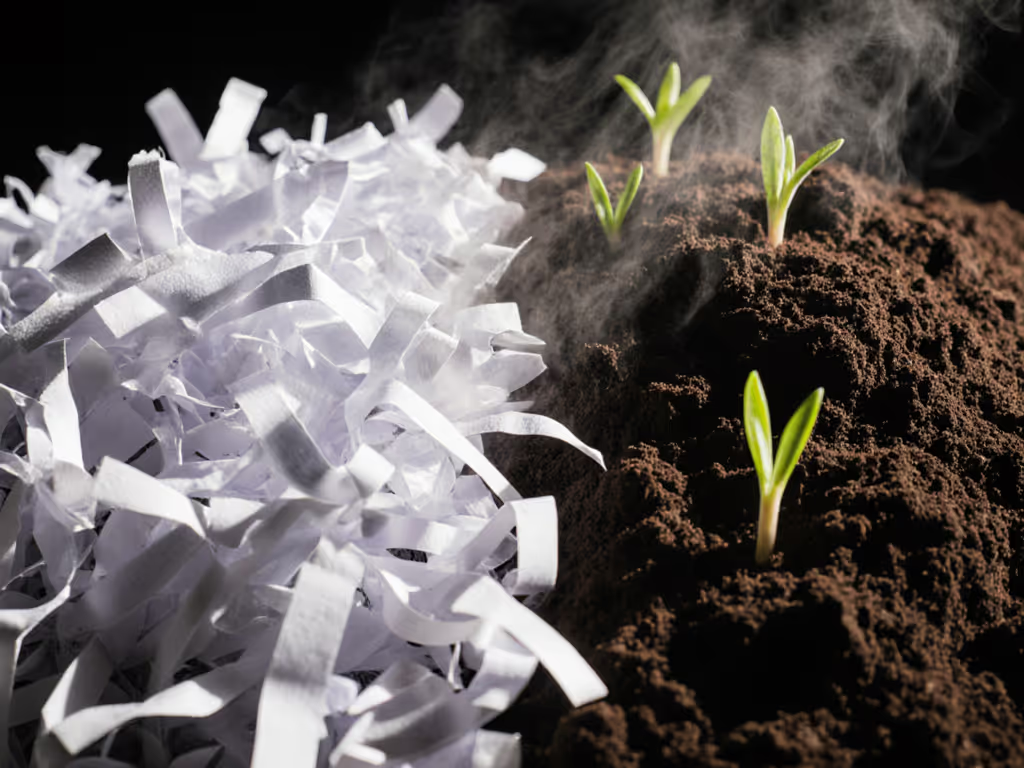
What actually happens to shredded paper once it leaves the shredder?
At the microscopic level, shredded paper is mostly cellulose fibers from wood pulp, plus any coatings, inks, or fillers the manufacturer added.[3] Tiny organisms (primarily bacteria and fungi) use enzymes to cut those fibers into smaller molecules, then convert them into carbon dioxide, water, and stable organic matter.[3]
According to an environmental bioenergy review, most conventional papers (newspaper, office paper, cardboard) are inherently biodegradable when microbes have enough moisture, oxygen, and suitable temperature.[3] Paper usually breaks down much faster than plastics or synthetic materials.[3]
From a biodegradation perspective, shredding changes the shape and macrostructure of the paper, not its chemistry. Experimental work on shredded paper and cardboard in anaerobic digesters found that shredding did not significantly increase methane yield or biogas production rates, suggesting only limited gains in microbial accessibility in those oxygen-poor conditions.[1] In other words: the paper is just as digestible; it's the environment that really decides the speed.
Does shredding make paper biodegrade faster?
Sometimes, but not nearly as much as people assume, and the setting matters more than shred size.
Theoretically
Shredding increases surface area, which should give microbes more access points and allow moisture and oxygen to reach fibers more quickly. In a well-managed compost pile, that can translate to somewhat faster breakdown compared with intact sheets.
In practice
Real-world data are more nuanced:
- Under ideal compost-like conditions (moist, warm, well-aerated), uncoated paper can break down within roughly 2-6 weeks even without shredding.[3]
- In landfill-like conditions, the same paper may take 2-5 months to decompose because oxygen is limited and compaction slows microbial activity.[3]
- A controlled study on paper and cardboard under anaerobic digestion found that shredding did not significantly increase biodegradability or biogas production speed.[1]
Put together, that suggests:
- Shredding can help in aerobic systems (home compost, municipal green waste) mainly by improving mixing and contact with moist material.
- Shredding offers little to no boost in anaerobic or low-oxygen situations (tightly packed trash bags, deep landfill), where environmental conditions (not particle size) are the main bottleneck.[1][3]
So yes, shredding can modestly speed environmental degradation factors when conditions are already favorable, but it is not a magic accelerator. If you're composting, here's the science on how shred size affects decomposition rates.
Which microbes are involved in microbial document decomposition?
In everyday environments, paper microbiology is dominated by common decomposers:
- Bacteria that secrete cellulase and related enzymes
- Fungi, including molds, that thrive on cellulose-rich material
Environmental summaries note that bacteria and fungi are the primary agents breaking down paper fibers into simpler compounds.[3] In a compost bin, you'll also see contributions from larger organisms (mites, springtails, worms) that mechanically fragment the paper, giving microbes even more surface to colonize.
The exact species mix changes with:
- Moisture (dry office bag vs. damp compost)
- Temperature (cool garage vs. outdoor summer bin)
- pH and presence of food scraps or yard waste
From a security standpoint, the specific microbe species are less important than the overall activity level: warm, moist, oxygen-rich environments with diverse organic matter tend to erase text faster.
Do different security levels (strip, cross, micro-cut) change biodegradation rates?
Not in a way that should drive your shredder choice. The main differences between strip-cut, cross-cut, and micro-cut relate to security, not how fast microbes can eat the paper.
Why the effect on biodegradation is small
Shred size does affect particle dimensions, but the underlying material is still the same fiber mix. Lab work on shredded paper and cardboard shows that simply reducing size does not guarantee faster biodegradation when conditions are limiting, and anaerobic tests found no meaningful improvement in breakdown or gas production from shredded versus unshredded material.[1]
In compost-like conditions, smaller particles can:
- Mix more evenly with food scraps and yard waste
- Retain moisture more consistently
...but the gain from going cross-cut to micro-cut is typically marginal compared with the impact of moisture, oxygen, and temperature.[1][3]
Where shred size does matter
- Security: Higher DIN/P-levels (e.g., P-4, P-5, P-6) produce smaller pieces that are exponentially harder or practically impossible to reconstruct by hand.
- Handling: Micro-cut confetti compacts more, so bins fill densely; that can be convenient for space but heavier when you carry them out.
If you're balancing privacy with environmental performance, choose the security level based on document sensitivity and regulations, then use good disposal conditions (composting or secure recycling) to handle biodegradation. Shred size is a secondary factor.
How long is the "document reconstruction window" before microbes erase the text?
Think of two overlapping clocks:
- The security clock: How long could someone reasonably reconstruct or read the document fragments?
- The biodegradation clock: How long until microbes and weather make the fragments physically or visually unreadable?
They don't run at the same speed, and both depend on environment and shred type. For empirical tests on real-world reassembly difficulty, see our shred reconstruction reality study.
Rough guide by environment (for uncoated paper)
These ranges assume typical temperate climates and are based on reported paper breakdown times, combined with practical observation.[3]
-
Dry indoor trash bag (closet, office, apartment chute)
- Microbial activity is low; paper remains structurally intact for many months or longer.
- Ink may fade slowly, but strips or large cross-cut pieces can be read or reassembled for an extended period.
-
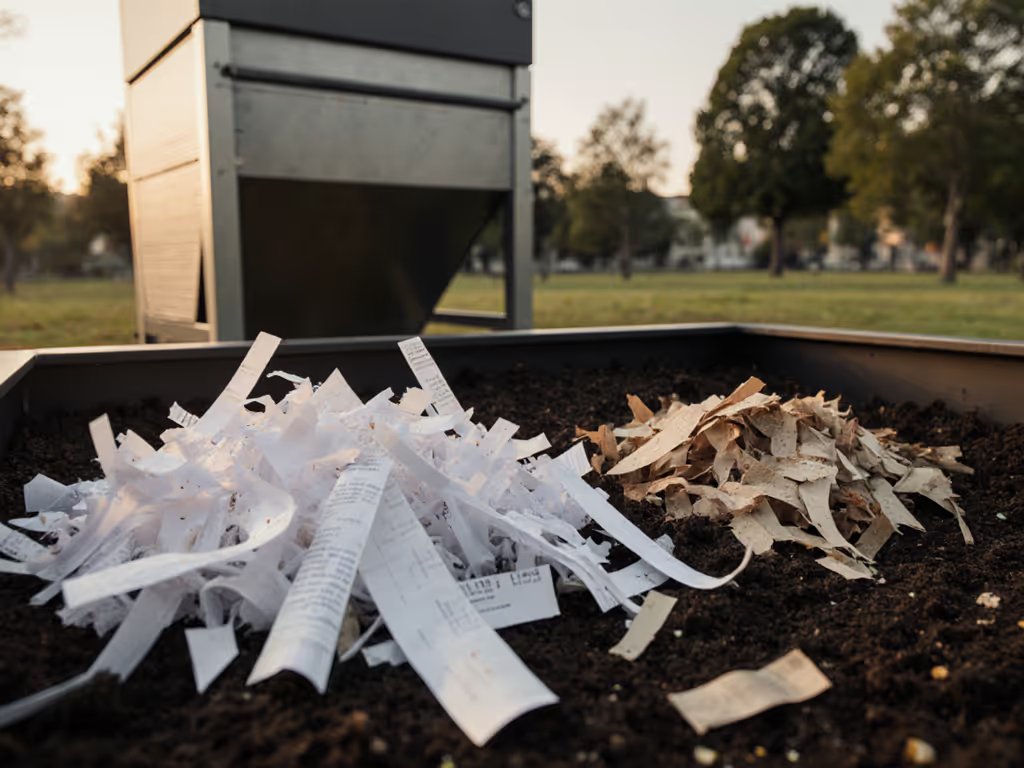
Outdoor compost or municipal green-waste bin
- Under well-managed conditions, uncoated paper can lose structural integrity within a few weeks, with substantial degradation over 2-6 weeks.[3]
- Text rapidly smears, runs, and tears; reconstruction becomes unrealistic fairly early in that window.
-
Landfill-like conditions (sealed bag, compacted waste)
- Decomposition is slow and mostly anaerobic; complete breakdown may take 2-5 months or more.[3]
- Fragments can remain legible for weeks, though access is generally restricted.
By shred type
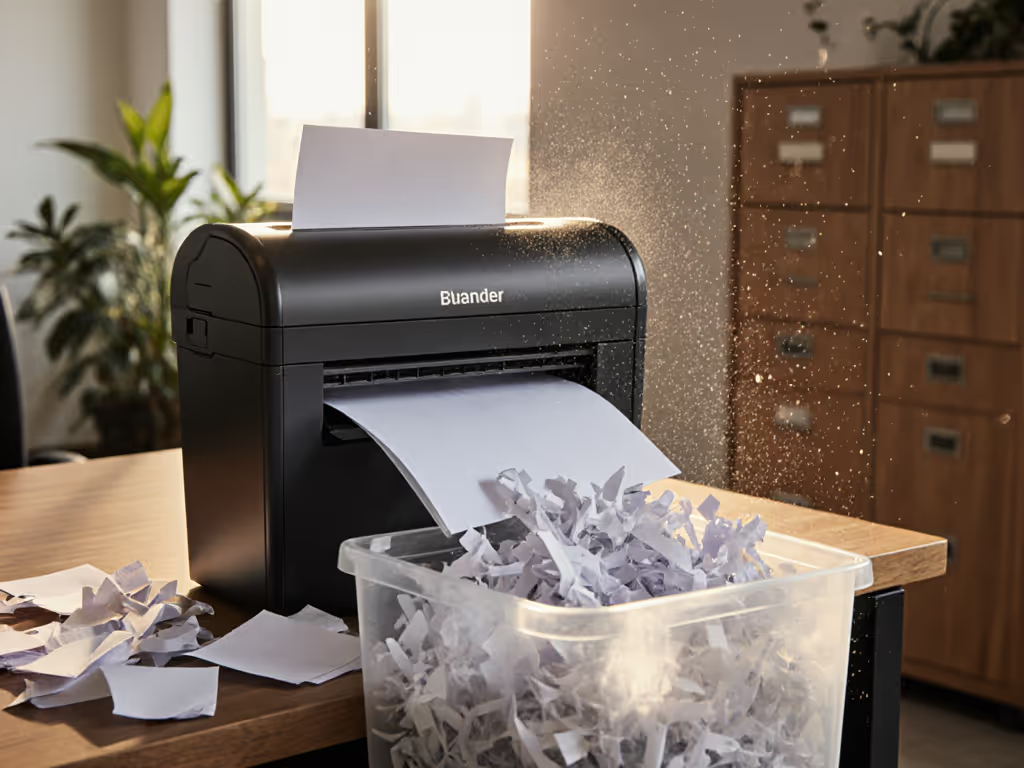
- Strip-cut (low DIN levels): Long strips can sometimes be reassembled until moisture and tearing destroy continuity. The practical reconstruction window can be weeks to months if kept dry.
- Cross-cut (typical P-3/P-4): Manual reconstruction is extremely laborious; after any moisture exposure or partial biodegradation, realistic reconstruction potential drops quickly.
- Micro-cut and beyond (P-5+): The limiting factor is forensic-level effort, not microbes. Even before significant biodegradation, confetti-sized, mixed fragments are effectively unreconstructable in real-world scenarios.
For privacy-conscious users, it is safer to assume your security comes from shred level and handling, not from waiting for microbes to erase the text.
Where should I put shredded paper for fastest, lowest-risk breakdown?
From both a security and sustainability angle, your best options are controlled, high-activity environments rather than letting shredded paper slowly rot in a random corner.
1. Secure recycling
If your local recycler accepts shredded paper in sealed or labeled bags, this is often the cleanest choice:
- Fibers are pulped in water, rapidly breaking them into a slurry where text is effectively erased.
- Resulting paper products keep the material in use instead of sending it to landfill.[3]
Check requirements: some curbside programs reject loose shreds because they contaminate sorting machinery.
2. Composting or green waste (uncoated paper only)
For uncoated office paper, envelopes without plastic windows, and non-glossy documents:
- Mix shredded paper with "greens" (food scraps, coffee grounds, fresh yard waste) to avoid a dry, matting layer.
- Aim for thin layers of shreds, not thick pads that block airflow.
- Keep the pile moist but not soggy; this balances oxygen and microbial activity.
Environmental guides note that uncoated papers are generally suitable for composting and can break down in weeks under good conditions.[3]
Avoid or limit:
- Plastic-lined, waxed, or heavily coated papers, which break down slowly or incompletely and can leave persistent residues.[3]
3. Trash as last resort
Letting paper simply biodegrade in nature or in landfills is considered a last resort compared with recycling or composting.[3] If you must use the trash:
- Use opaque bags to reduce visual exposure of shredded material.
- Empty indoor bags regularly so you're not storing readable fragments near cleaning staff, roommates, or neighbors.
Does moisture, climate, and storage method change both risk and biodegradation time?
Very much so. These environmental degradation factors determine whether your shreds sit intact for months or disappear into soil-like material.
-
Moisture
- Too dry: microbes go dormant; text stays readable for a long time.
- Moderately moist: optimal breakdown in compost and green waste systems.[3]
-
Temperature
- Warmer conditions (within a comfortable range for microbes) greatly accelerate decomposition.[3]
- Cold garages or outdoor bins in winter slow everything down.
-
Oxygen availability
- Aerobic (oxygen-rich) systems convert paper more quickly.[3]
- Anaerobic (sealed, compacted) systems decay slowly and differently; shred size offers little advantage here.[1]
From a security perspective, dry indoor bags are paradoxical: they feel safe, but they preserve reconstructable fragments and delay microbial help. Moving shreds promptly into secure recycling or active compost shortens both your reconstruction window and the environmental lifetime of the material.
How do noise, shredder choice, and space relate to biodegradation?
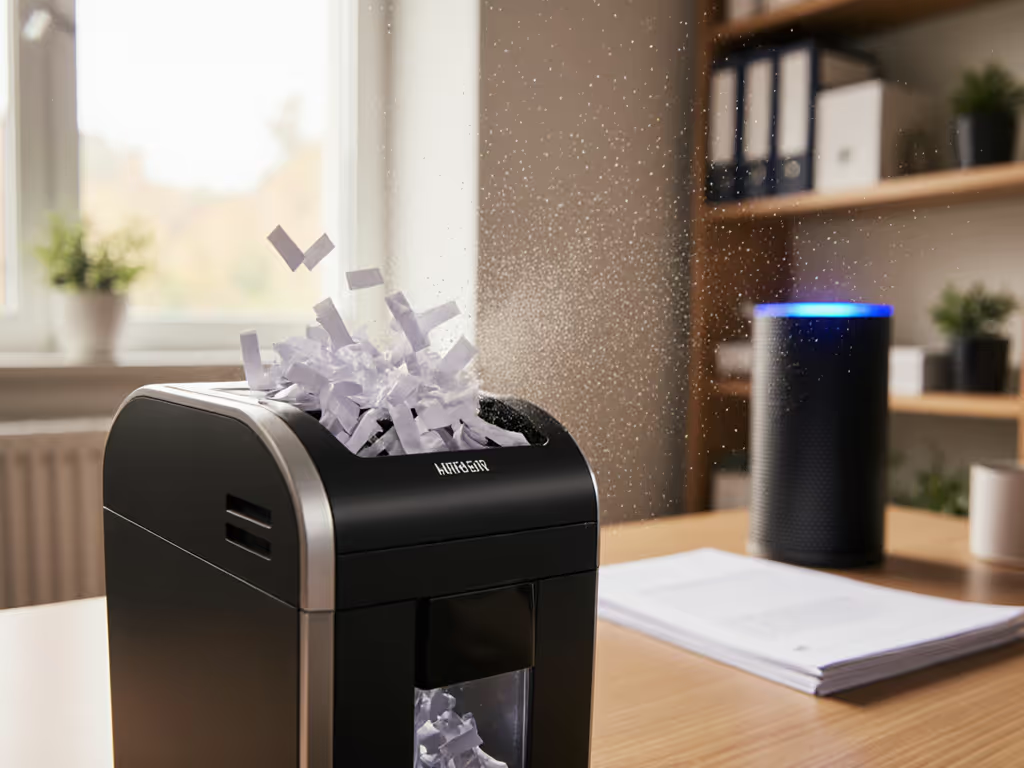
In small offices and apartments, disposal decisions don't happen in a vacuum, they happen next to colleagues, kids, or thin walls. I've seen one loud, rattling shredder in a waiting area turn whispered conversations into winces until we rethought both the machine and where it lived.
From a biodegradation angle, though, your shredder's acoustic profile and footprint don't change how microbes behave later. What they do change is whether you shred consistently enough that documents are never left intact "for later."
Some practical guidance:
- Choose your cut level based on document sensitivity and compliance needs, not on imagined differences in decay speed.
- In shared spaces, look for models with documented noise levels (ideally under about 60 to 65 dB(A) at 1 m for comfortable conversation coexistence) and plan placement so that at 3 m the sound level blends into background office noise.
- Place the shredder where you can feed paper as part of your workflow, under a desk or along a circulation path, without creating clutter or trip hazards.
Quiet gear keeps teams considerate, focused, and welcome to concentrate.
When shredding doesn't disturb anyone and the bin is easy to reach, you're more likely to process documents immediately and move shreds quickly into recycling or compost, closing both the security loop and the biodegradation loop.
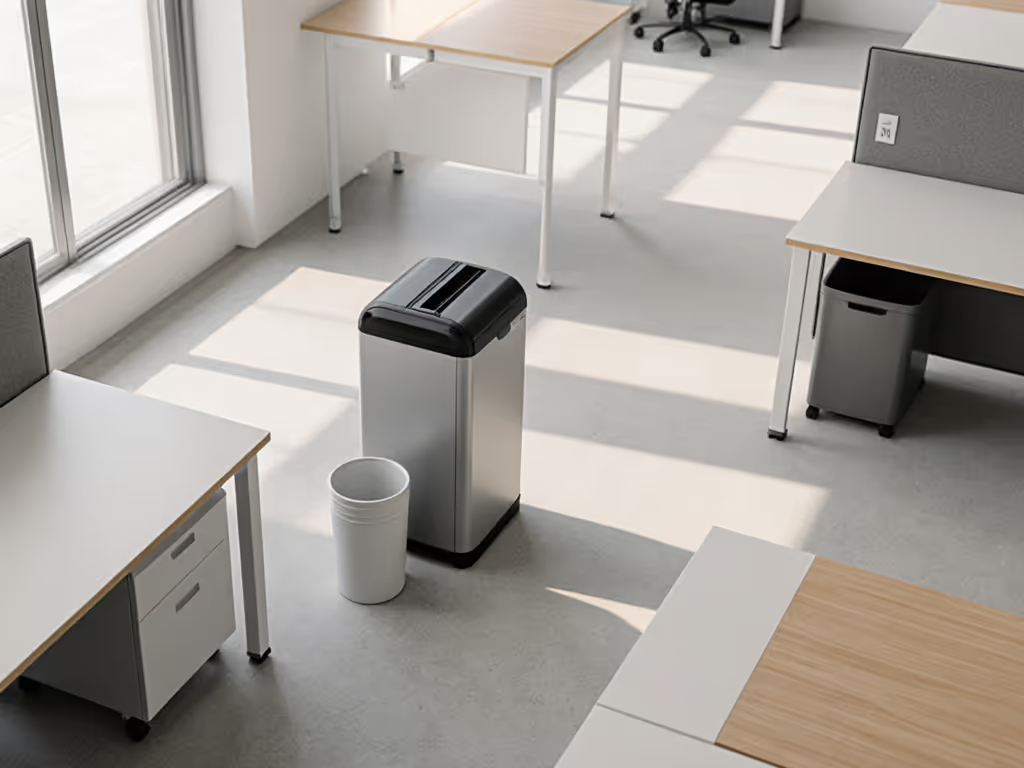
Is it eco-friendly to rely on biodegradation instead of recycling?
Biodegradation is natural, but relying on it as your primary strategy is not always the most sustainable choice.
Environmental guidance emphasizes that while paper will eventually break down, recycling and composting are preferable to simply letting it degrade, especially in unmanaged environments or landfills.[3] Recycling keeps fibers in circulation; composting turns them into soil amendments. Uncontrolled biodegradation in landfills, by contrast, can be slow and may contribute to methane production under anaerobic conditions.[1][3] For environmental impacts and timelines, explore our analysis of shredded paper's landfill toll.
For sensitive documents, a balanced approach is:
- Shred at an appropriate security level.
- Use secure recycling or controlled composting as the primary disposal route.
- Treat landfill disposal as a fallback, not the plan.
Where to explore next
If you want to go deeper, consider mapping three things on a single page:
- The types of documents you handle and their sensitivity
- Your available disposal channels (recycling rules, compost options, building trash setup)
- Your space and noise constraints around shredding
From there, you can fine-tune:
- The shredder cut level and placement that let you shred consistently, without disturbing anyone
- The disposal route that gives microbes the best conditions to work quickly and harmlessly
Once you see how microbial document decomposition, security level, and time all connect, document disposal stops feeling like a vulnerability and becomes part of a calm, predictable workflow. Quiet is a productivity feature, and so is a shred-and-dispose routine you can trust.
Related Articles