
Shred-Ready Document Organization: A Pre-Shredding Filing System
By Priya Nair • 2nd Sep
What to do first
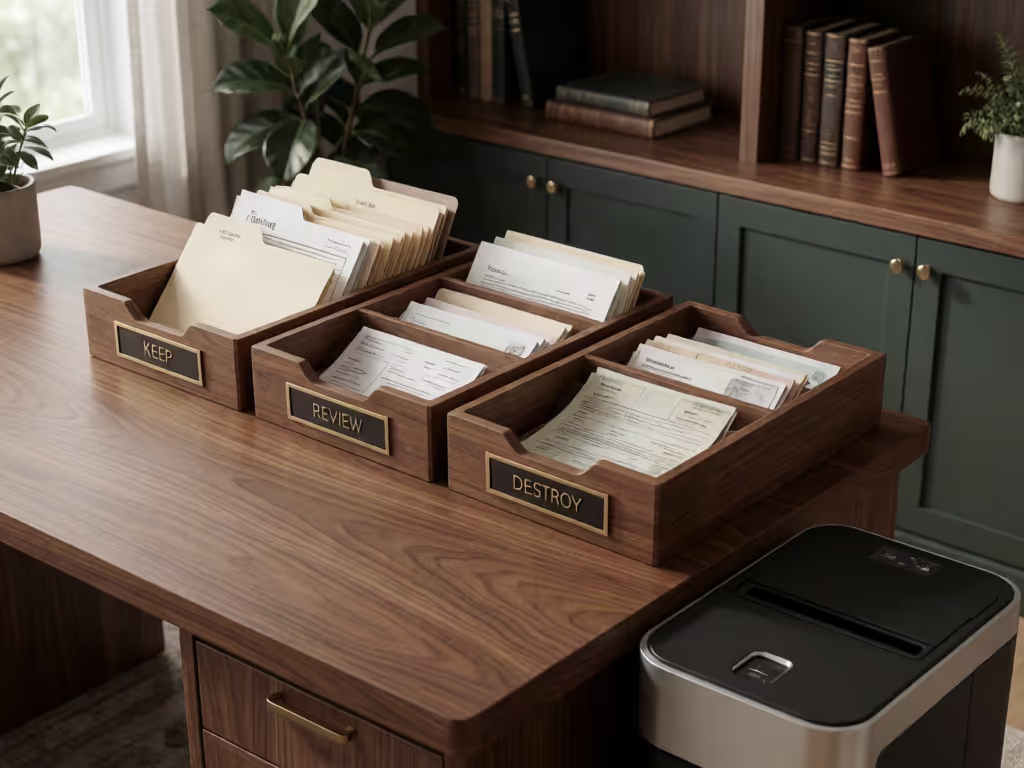
Start by sorting every paper into KEEP, REVIEW, or DESTROY before shredding.
- First action: Set up three labeled folders, bins, or trays and process one document at a time. Add a reason or status, such as tax support, property owned, or review later.
- Likely explanation: Routine household papers may be eligible for disposal after a retention check, but federal tax rules can extend beyond three years. Property records, unfiled or fraudulent returns, and other obligations require special handling.
- Stop or escalate when: Keep the document in REVIEW instead of shredding if its tax, property, insurance, creditor, business, or legal purpose is unclear. Shred sensitive records only after that check is complete; the FTC suggests a community shred day if you lack a shredder.
Important: This is U.S.-focused organizational guidance, not a universal legal or tax retention schedule. Requirements vary by document, jurisdiction, and circumstances.
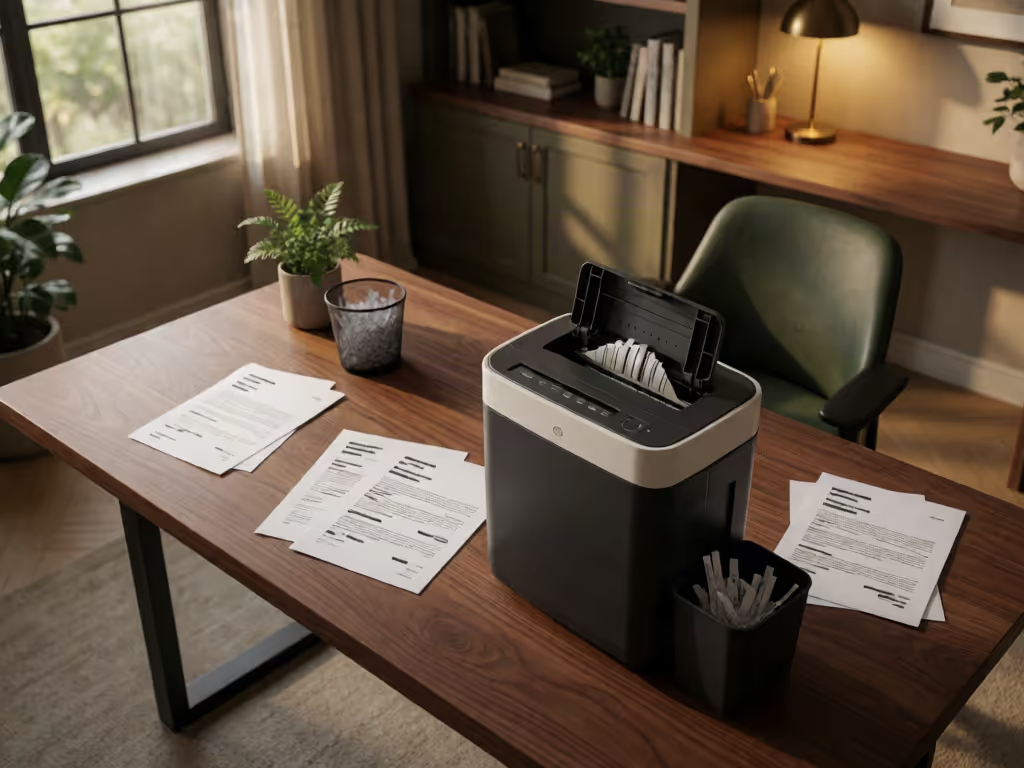
A pre-shredding filing system turns paper piles into clear decisions instead of risky guesswork. The goal of shred-ready document organization is not to shred faster; it is to know, before a document reaches the destroy pile, whether it should be kept, reviewed, or securely disposed of. For a home office or small business, that distinction reduces clutter without accidentally destroying a record you still need.
The most useful system is usually not the most elaborate. It is the one people can follow during a busy week: right cut, right place, every time. This is general U.S.-focused guidance, not legal or tax advice. Retention needs can vary by document, jurisdiction, tax position, contract, insurer, creditor, or other obligation.
The Problem: Paper Piles Mix Different Risks
A stack of old mail looks like one task ("shredding"), but it is actually several decisions mixed together. A bank statement may contain financial information. A tax document may support income, a deduction, or a credit. A title, lease, or home-improvement receipt may still matter because you own the related asset.
When everything goes into one "to shred" bag, two failures become likely:
- Over-retention: papers with personal information sit in drawers for years because nobody has time to sort them.
- Premature destruction: someone clears space by shredding records that still support a tax, property, insurance, loan, or business need.
That tension is why document triage before shredding matters. A shredder or a community shred day can handle destruction once you have made the retention decision. It cannot make that decision for you.

Why "Just Keep Everything" Is Not a Calm System
Keeping everything can feel safer than making a wrong call. In practice, it creates a different privacy problem: more sensitive paper, stored for longer, in more places. It also makes the eventual purge exhausting. When the pile contains tax records, routine bills, warranties, and old offers together, every cleanup session becomes a high-stakes research project.
The answer is not a universal retention chart taped to a filing cabinet. Those charts are often too blunt. For example, the Federal Trade Commission places household bank statements, pay stubs, undisputed medical bills, credit-card and utility bills, and deposited checks in a "keep for a year" consumer category. But tax-related records can require a different review, and the IRS says records supporting items on a return generally must be kept until the applicable limitations period ends.
For U.S. federal income tax, three years is a general rule only when longer situations do not apply. IRS guidance includes examples that require different handling:
- Six years when more than 25% of reported gross income was omitted.
- Seven years for worthless-securities losses or bad-debt deductions.
- At least four years after tax is due or paid, whichever is later, for employment-tax records.
- Indefinitely when no return was filed or a fraudulent return was filed.
- Property records may need to be kept until the limitations period expires for the year the property is disposed of.
In plain language: do not put a tax document into an automatic three-year shred cycle unless you have checked which rule applies. Also check for other retention needs before disposal; an insurer or creditor may require a longer period, and document destruction compliance requirements may vary by industry.
Match the document risk to the shredder security level, not the hype.
The Solution: Build Three Simple Lanes
Use a three-lane destroy vs archive workflow. This is a practical operating framework, not a legal retention schedule.
1. Keep: Protected records with an active purpose
This lane is for originals and records you know you still need. Put these in a clearly labeled protected file rather than a future-shred box.
Examples from FTC consumer guidance include documents to keep forever and lock up, such as birth or adoption records, Social Security cards, valid passports, citizenship or residency papers, marriage or divorce records, military records, estate-planning documents, retirement or pension plans, certain vital health records, and family death certificates.
Also use a status-based label for ownership documents. The FTC lists vehicle and home titles, mortgage or vehicle-loan documents, home-improvement receipts, leases, and major-appliance sales receipts or warranty information as records to keep while you own the related item.
File labeling for shred readiness: write the reason to retain, not merely the subject.
TAX - REVIEW BEFORE DESTROYINGPROPERTY - OWNEDLOAN - ACTIVEVITAL - PERMANENTBUSINESS - INCOME/EXPENSE SUPPORT
For a small office, choose a recordkeeping system that fits the business and clearly shows income and expenses. The important part is that a team member can see why a document is filed and when it needs another look.
2. Review: Records awaiting a retention check
The review lane prevents uncertainty from turning into permanent clutter (or an impulsive purge). Use one folder or tray, not scattered "maybe" stacks.
Label each item or batch with a visible review note such as:
REVIEW: tax supportREVIEW: property connectionREVIEW: insurer/creditor needREVIEW LATER: retention date unclear
A review label is not a legal conclusion. It is a pause button. That distinction matters. A simple "review later" tag keeps an unresolved record out of the shred stream while allowing routine documents to move on.
3. Destroy: Records that have cleared review
Only place papers here after confirming they have no current retention purpose. The FTC advises shredding documents with personal or financial information when it is time to dispose of them.
Its examples of documents to shred include ATM receipts, credit or insurance offers, credit reports, expired warranties, prescription information for medicines no longer taken, and expired identification or payment cards. The FTC also lists cleared checks for shredding after 14 days.
For routine household records, the FTC says to consider shredding paper copies in its one-year category when they can be accessed electronically. Treat that as a condition, not an assumption: accessible electronic copies are different from a paper folder you meant to scan someday.
Set Up the Physical Workflow in 20 Minutes
You do not need a color-coded archive room. Start with three labeled folders, bins, or trays: KEEP, REVIEW, and DESTROY.
Then use this office purge checklist whenever you process mail or tackle a backlog:
- Open and sort one document at a time. Do not start shredding while sorting.
- Ask what it supports. Is it tied to a tax return, property, loan, insurance matter, business income or expense, or a permanent personal record?
- Assign one lane. Keep, review, or destroy, never "somewhere on the desk."
- Add a short label. Use a review reason or ownership status where useful.
- Hold the destroy lane separately. Do not mix it with recycling or general trash before shredding.
- Process the destroy batch on a routine. Weekly for active offices, monthly for most homes, or whenever the bin reaches a manageable amount are reasonable operational choices, not mandated schedules.
- Record handoffs when more than one person is involved. A plain-language audit note can be as simple as:
Destroy batch prepared - date - owner - completed.
That last step is a chain-of-custody reminder, not security theater. In shared offices, it answers the ordinary question: who moved this sensitive batch, and has it actually been dealt with? During one records audit, a labeled-bin workflow and a simple pickup log were the least dramatic part of the review, which is exactly the point. A good process should be easy to explain and uneventful to repeat.
Home vs. Office Policy Pointers
At home
Keep the system close to where paper arrives: beside the mail station or desk. Limit the permanent file to actual long-term records, use a small review folder, and avoid storing a large destroy pile in an open area. If you do not have a shredder, the FTC suggests looking for a local community shred day.
In a small office
Write down four decisions on one page: For shared workflows, pair those decisions with shredder user training so every team member follows the same approval and handling steps.
- Which document categories belong in keep, review, and destroy.
- Who may approve a destroy batch when records are unclear.
- Where the destroy container is kept between sorting and disposal.
- What simple completion log the team uses.
Do not claim that a label alone proves compliance. It does not. But consistent categories, controlled handling, and a record of routine actions make the workflow easier to operate and easier to examine.
Frequently Asked Questions
Should I shred 20-year-old bank statements?
Not automatically just because of their age. The FTC places bank statements in a one-year consumer category, but IRS guidance says to check tax and other retention needs before discarding records. Review whether the statements support a tax, property, insurance, creditor, or other unresolved need; if not, and they contain personal or financial information, route them to destruction.
Do I need to shred old credit-card statements?
The FTC lists credit-card bills in its "keep for a year" category and says to consider shredding paper copies when they are electronically accessible. Once the retention check is complete, shred statements containing personal or financial information rather than placing them in ordinary trash.
Can I throw away mail without shredding it?
Not all mail carries the same risk. The FTC specifically advises shredding documents containing personal or financial information when disposing of them. Sort first; then keep non-sensitive disposal separate from sensitive records headed for destruction.
How can I dispose of records without a personal shredder?
The FTC suggests looking for a local community shred day. Check the event details yourself before relying on it, and keep your destroy batch separate and controlled until it is handled.
Make the Next Purge Smaller Than the Last
A reliable pre-shredding filing system does not demand a heroic annual cleanup. It gives every incoming document a destination and every uncertain record a deliberate pause. Start with three lanes, use labels that state the retention reason, and let tax or ownership questions override an automatic destruction date.
For further exploration, take one existing paper stack and map ten documents into keep, review, or destroy. The gaps will show you which labels or categories your home or office actually needs. Security should feel routine: the right cut, used consistently, with simple proof when someone asks.
Related Articles