Shredder Baler Combo vs Separate Systems: Space, Cost, Flow
By David Okoro • 11th Aug
Quick verdict
Choose an integrated shredder-baler when one verified machine fits your material flow, output needs, and dedicated lane. Choose separate equipment when you need independent control over shredding, baler type, feed method, or recyclable streams.
- Choose the integrated option if: You can accommodate the machine and its bale-staging route.
- Choose separate systems if: Your operation benefits from selecting manual vertical, continuous-use horizontal, conveyor-fed, or auto-tie baling independently. Confirm the exact models, material compatibility, transfer method, and labor requirements.
- Main trade-off: Integration may simplify handoffs, while separate systems may offer more configuration flexibility. There is no matched evidence for installed footprint, lifecycle cost, labor, uptime, or directly comparable throughput.
Important: The HSM evidence covers its V-Press baler family, not a verified integrated shredder-baler; Vecoplan VHZ is documented as a wood-shredder series. Base quotes on a one-week flow log and model-specific specifications.
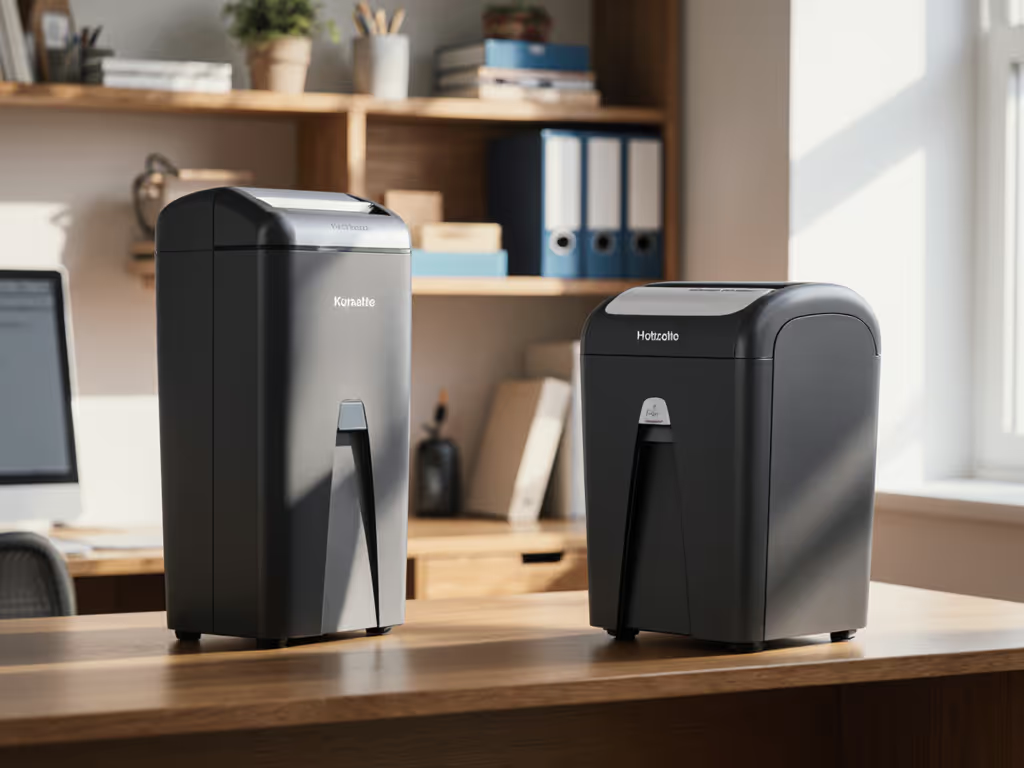
A shredder baler combo (sometimes described as an integrated shredder baler) deserves a closer look when confidential-paper disposal has become a material-handling problem, not just a document-destruction task. The useful comparison is not "one machine good, two machines bad". It is whether a well specified integrated unit fits your incoming material, output needs, layout, and handling routine better than a separately selected shredder and baler.
That distinction matters because the published evidence does not support a universal promise that integrated equipment always takes less space, costs less, or requires less labor. Those outcomes depend on the site. A sound decision starts with the flow of material through your building, then tests whether the equipment supports that flow without creating a new bottleneck.
Small habits, big reliability: choose the arrangement people can feed, clear, empty, and stage consistently.
Start With the Scope: This Is a Material-Flow Decision
For this comparison, think in terms of two procurement paths:
- An integrated option: one example is the intimus 16.86 High-Volume Industrial Shredder Baler, which the manufacturer says includes an integrated waste-baling press.
- A separately specified arrangement: a purchaser may evaluate a standalone shredder and a standalone baler as distinct pieces of equipment. The exact handoff, feed method, controls, staging, and output procedure must be confirmed for the models and layout under consideration.
The difference sounds simple, but the planning questions are not. Before comparing brochures, map five points:
- What enters the process? Confidential paper only, or other recyclable streams too?
- How does material arrive? Small batches, carts, or a steady feed?
- What leaves the process? Loose shredded material, manually tied bales, or another defined output?
- Where does it wait? Before shredding, between machines, and after baling.
- Who owns each handoff? The person who drops material, the person who feeds equipment, and the person who moves finished bales may not be the same person.
This is office waste stream optimization in the practical sense: reducing needless touches, wandering carts, loose material, and unclear ownership. In one busy shared-equipment area I worked with, the change was not dramatic machinery. We color-taped feed guides and taught people to stagger material rather than stack it. That kind of visible flow discipline cut down on the little stoppages that make equipment feel unreliable.
Space: Measure the Whole Work Cell, Not the Cabinet
A common purchasing mistake is comparing only machine footprints. For a more complete space assessment, compare feed mechanisms and desk-space requirements alongside the equipment footprints. The machine is only one piece of the usable space requirement.
The intimus 16.86 is listed at 135 inches long, 48 inches wide, and 61 inches high. Those are nominal machine dimensions, not a completed installation plan. They do not provide loading clearance, bale-removal room, service access, travel routes, or storage space for supplies.
The integrated-layout case
With the 16.86, shredding and baling are combined in the product configuration. The manufacturer describes a process in which a bale is ejected by button and then secured with bale straps. It lists bale weights of 130 to 175 pounds.
That immediately gives you a layout checklist:
- Room to load source material without blocking traffic.
- A defined place for straps and completed bales.
- A clear route for moving a 130- to 175-pound bale after ejection.
- Enough floor area that a full-output event does not turn into a pileup.
An integrated machine can simplify the equipment count in a process lane, but it does not eliminate the need for output staging. If the bale has nowhere sensible to go, the apparent space savings may simply move the clutter downstream.
The separate-layout case
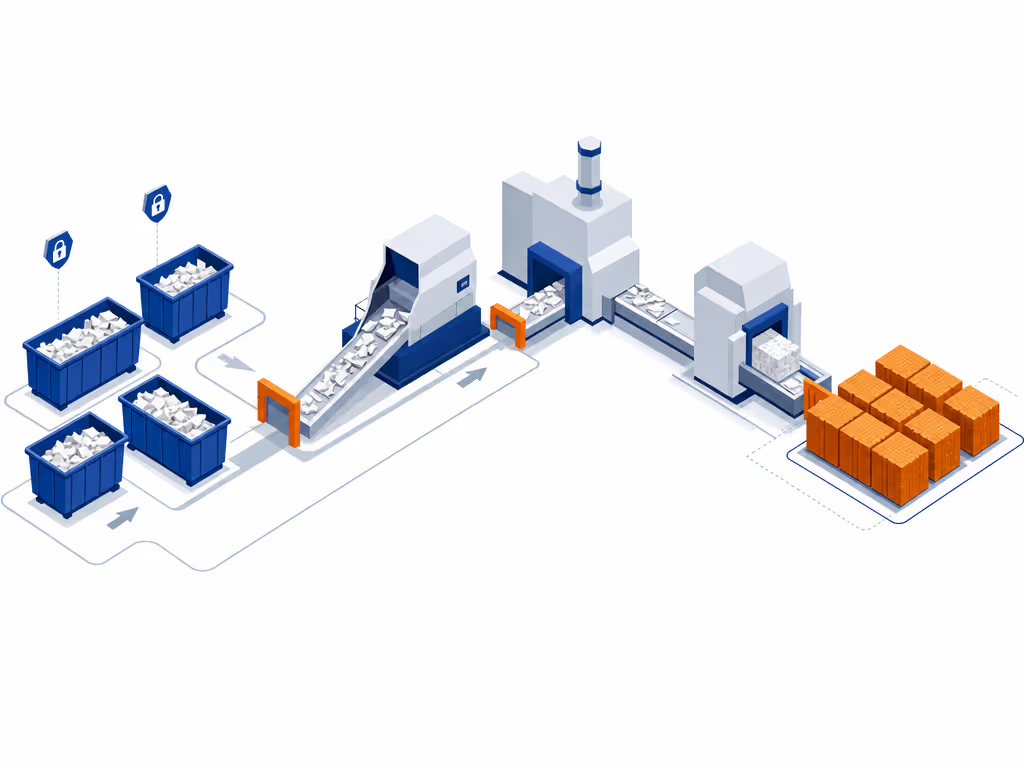
Separate equipment requires a different drawing: each machine's dimensions, the material-transfer path between them, and the area needed to accumulate material when one stage is unavailable. There is no matched installed-footprint comparison available, so do not accept a claim that either architecture will automatically occupy less room.
What can be said from the available equipment descriptions is narrower:
- A supplier characterizes its vertical balers as compact, manually fed equipment for small recyclable-material volumes; it says a vertical downstroke baler typically processes two bales or fewer per day.
- The same supplier characterizes its horizontal balers as designed for continuous use and says they may be manually fed or conveyor-fed.
Those are supplier descriptions, not a rule for every vertical or horizontal baler. Still, they offer a useful planning prompt: a separate setup may be evaluated around manual feed and smaller bale output, or around a more continuous feed concept, depending on the particular baler selected.
A layout test you can run before requesting quotes
Tape the proposed equipment zones on the floor (or sketch them to scale) and include:
- incoming secure-paper storage;
- operator standing and loading area;
- the transfer zone if machines are separate;
- full-bale staging;
- routes used by carts or other building traffic.
Then walk the path with the people who will use it. Ask where material waits during a busy hour. That answer is more valuable than a headline footprint. Low-fuss habits beat heroics when the bin hits full.
Cost: Separate the Purchase Price From the Operating Question
Cost comparisons get sloppy when they blend a listed machine price, installation assumptions, labor estimates, and hoped-for recycling revenue into one number. For a more rigorous ownership comparison, use cost-per-sheet lifetime analysis to separate upfront price from maintenance, repairs, replacement, and usage volume. Keep them apart.
At the time the manufacturer product page was collected, it listed the intimus 16.86 at $58,875. Treat that as a product-page price only, not a total installed cost. At collection, the listed figure was not a total installed cost and excluded unlisted site, freight, installation, service, and operating costs.
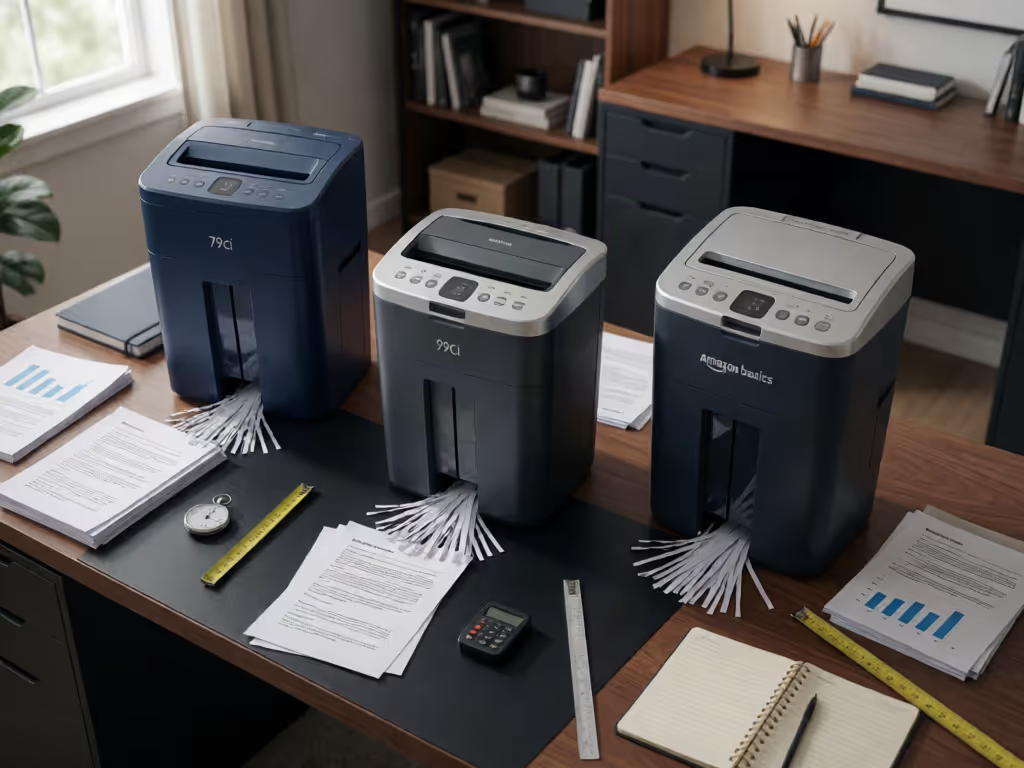
There is no equivalent total-cost figure for a separate shredder-and-baler arrangement, and no independent lifecycle-cost comparison between the two approaches. A confident "combo saves money" or "separate systems cost less" conclusion would be guesswork.
Build a quote sheet that prevents false comparisons
Request the same categories from every vendor or supplier:
| Cost category | Ask for |
|---|---|
| Equipment | Model-specific price and included components |
| Site work | Any stated requirements, exclusions, and installation scope |
| Material handling | Carts, conveyors, bale straps, and staging equipment if applicable |
| Service | Scheduled service terms, consumables, and response assumptions |
| Labor | Each manual touch in the proposed workflow |
| Disposal/recycling | Hauling, storage, market requirements, and destination constraints |
The old but still sensible logistics principle is to look beyond the machine: transportation, storage, market availability, and operational constraints affect the disposal program. Central consolidation can reduce handling and transport costs in some networks, but actual results depend on the facility arrangement and local conditions.
For a separate system, ask specifically whether manual tying or an auto-tie configuration is proposed. One supplier states that auto-tie configurations can yield significant labor savings relative to manual-tie machines, but it does not quantify those savings. Put a site-specific labor estimate on paper instead of treating that claim as a guaranteed return.
Flow and Throughput: Compare Like With Like
Throughput is where buyers are most likely to be misled by impressive but incompatible numbers. A proper comparison should also account for shredder duty cycle and overheating, since sustained run time can matter as much as a headline hourly capacity. Paper type, shred size, feed method, duty cycle, and operating conditions all affect what a published rate means.
The intimus 16.86 manufacturer lists:
- Up to 330 sheets per pass
- Up to 1,050 pounds per hour
- 9 tons of baling force
These are manufacturer specifications for that specific model. The operating conditions behind the "up to" capacity are not supplied, so they should not be used as a direct substitute for a different manufacturer's system figure.
For example, Shred-Tech advertises paper-shredding systems at rates of up to 15 tons per hour across a product range. That is not a rating for a specific standalone model, and it cannot be compared directly with the 16.86 figure without aligned material and operating conditions.
Use a three-part flow audit
Instead of trying to declare a winner from capacity numbers alone, audit your proposed line in three parts.
1. Infeed consistency
Document the peak amount arriving in the busiest period, not only the monthly total. Is material delivered in a few dense batches or continuously? A system that looks adequate on a monthly spreadsheet can still create a queue at peak times.
Use jam-risk grading during the walk-through:
- Low: consistent, prepared material and one clear feed routine.
- Moderate: varied bundles and several users, but a defined staging point.
- High: irregular materials, unclear handoffs, and pressure to overfeed during peaks.
This is not a performance rating of any machine. It is a practical way to identify where user behavior may create interruptions.
2. Transfer and compression
For a separately arranged process, document exactly how shredded material moves from shredder to baler. Do not assume that "separate" means conveyor-fed or continuous; those details are model- and layout-specific. For an integrated product such as the 16.86, confirm the manufacturer's stated output procedure and the space needed around it.
3. Bale exit and staging
A bale is only useful if it can be secured, staged, and collected without blocking the next cycle. The same principle applies to real-world shredder bin capacity: rated volume matters only if the container can be emptied without interrupting the workflow. For the 16.86, the stated process is button ejection followed by bale straps. Put that task into the staffing plan. A tidy bale area is not cosmetic, it keeps the rest of the flow from backing up.
Materials: Avoid Building the Decision on Assumptions
A separate baler may be attractive when your facility has multiple recyclable streams, but confirm material compatibility at the model level.
HSM describes its V-Press vertical-baler family as suitable for paper, cardboard, film, hard plastic, PET bottles, and cans. HSM also claims volume reductions of up to 95% for cardboard and foils. That is a manufacturer marketing claim for those materials; it is not evidence for shredded paper or for an integrated shredder/V-Press configuration.
Likewise, do not treat similarly named machines as interchangeable. Vecoplan's VHZ line is identified by the manufacturer as a single-shaft wood shredder series for wood waste and residual wood, not as an integrated baler system for confidential paper.
The takeaway is straightforward: ask every supplier to state, in writing, the accepted material stream, feed preparation requirements, intended output, and the exact configuration being quoted.
Maintenance and Cleanup: Design for the Routine You Will Actually Keep
There is no matched evidence on uptime, jam recovery, dust, energy use, or maintenance burden, so resist claims that either architecture is inherently lower-maintenance.
You can still make maintenance part of a responsible buying decision by following a complete shredder maintenance routine. Require each proposal to describe user-serviceable routine tasks in maintenance intervals in minutes: what the task is, how often it is expected, how long it takes, and who performs it. Keep the request focused on normal user upkeep rather than repair work.
Also document the mess/dust callouts around each proposed flow:
- Where loose material can accumulate;
- Which step creates the most handling;
- How full-output material is contained and staged;
- What must happen before the next person can use the equipment.
Ask for auto-feed reliability notes only where an auto-fed component is actually proposed. Ask for bin-change ergonomics only where a bin is part of the selected equipment. These details sound small until a rushed team has to do them repeatedly. The best process is usually the one that tolerates ordinary human timing and still stays tidy.
Which Direction Fits Your Decision?
Choose an integrated shredder baler for deeper evaluation when you can verify that one machine's dimensions, capacity, bale output, and operating routine fit a dedicated process lane. The intimus 16.86 is one example with an integrated press, a listed 135-by-48-by-61-inch machine size, manufacturer-rated capacity up to 1,050 pounds per hour, and a stated bale-ejection-and-strapping process.
Choose a separate-system evaluation when you need to compare baler types, feed approaches, or recyclable-material handling independently. A supplier's vertical-baler offering may suit a manually fed, smaller-volume use pattern; its horizontal offering may be assessed for continuous use and possible conveyor feed. Confirm every statement against the exact models proposed.
Neither route should be selected on a single claim about space, price, or throughput.
Your Next Step: Run a One-Week Flow Log
Before requesting final proposals, track one representative week:
- Record the weight or estimated volume of material arriving each day.
- Mark the busiest arrival window.
- Count each material handoff from secure collection through final staging.
- Sketch the available floor area, including travel and output space.
- Send that log to vendors and require a model-specific answer on capacity, accepted materials, output handling, maintenance routine, and all costs excluded from the quote.
That one-page record turns a vague shredder baler system comparison into a decision grounded in your actual flow. Reliability is rarely magic. It comes from equipment choices and repeatable routines that still work on a busy day.
Related Articles