Vertical vs Horizontal Shredders: Ergonomic Efficiency Test
By Linh Tran • 17th May
When people compare shredders, they usually fixate on security levels and sheet capacity. But shredder ergonomic efficiency (how a shredder treats your body, your time, and your space) is just as important. This is especially true when you're choosing between vertical vs horizontal feed comfort in a small office or shared home workspace.
In this FAQ deep dive, I'll walk through how feed orientation changes posture, strain, noise, and workflow, and how to pick the design that keeps paper moving without making your shoulders, back, or neighbors pay the price.

FAQ: Vertical vs Horizontal Shredders and Real-World Comfort
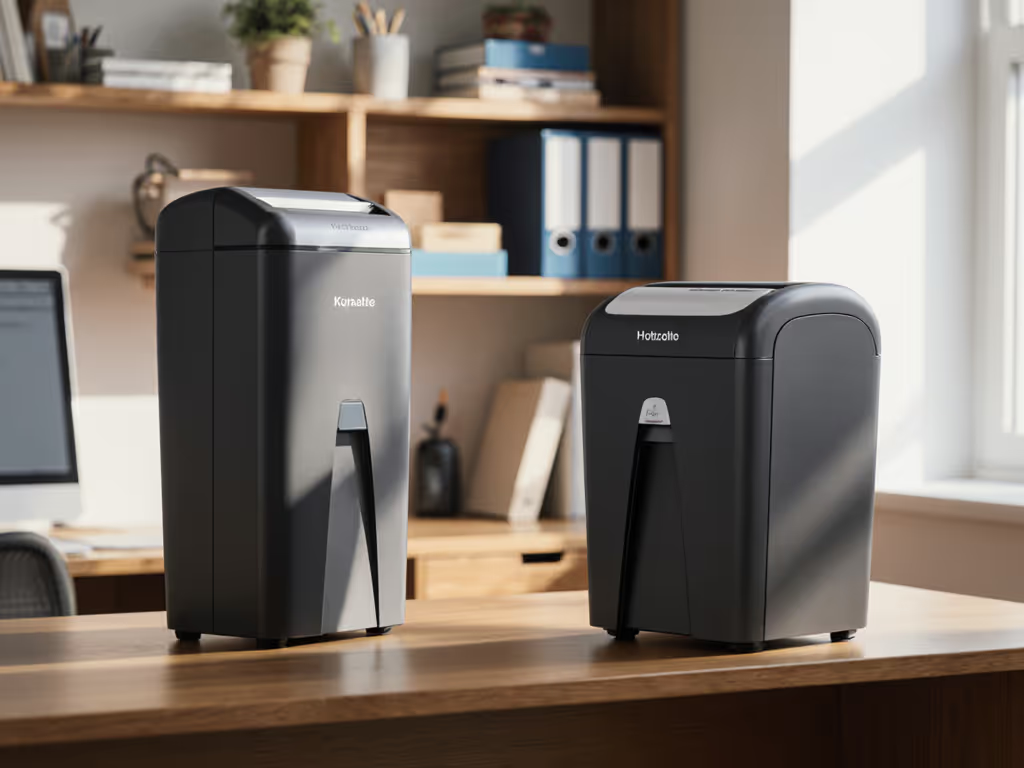
1. What exactly do "vertical" and "horizontal" shredders mean?
Vertical shredders
- Paper is fed from the top, drops downward through the cutting mechanism.
- The throat (slot) is often narrower but deeper (good for stacked packets, mixed mail).
- You typically stand and drop sheets in from above.
Horizontal shredders
- Paper is fed from the front, moving horizontally into the cutting head.
- The throat is usually wider, which feels natural for side-by-side sheets.
- You can often sit or stand and feed paper straight in at mid-torso height.
In both designs, security level (DIN P-2 to P-7) is determined by the cut mechanism, not the feed direction. Orientation mostly changes how your body interacts with the machine.
From an ergonomic lens, feed direction is really posture direction: vertical nudges you into a drop-in movement, horizontal into a push-in movement.
2. Which design is better for overall shredder ergonomic efficiency?
It depends on your load pattern and workspace layout, but you can think of efficiency in three buckets:
- Body load: How much bending, reaching, twisting, and gripping is required?
- Flow interruptions: Jams, overfills, overheating, and noise that force you to stop or move. To curb stop-starts from overfilled bins, check our bin capacity tests showing when to empty before efficiency drops.
- Spatial fit: How easily the shredder tucks into your room without blocking paths or amplifying sound.
Vertical designs tend to win when:
- You shred mixed materials (junk mail, envelopes, the occasional stapled packet).
- You do short, frequent sessions (a few minutes a day).
- You can stand comfortably and have clear space above the unit for easy drop-feeding.
Horizontal designs tend to win when:
- You shred more uniform paper (statements, printed sheets, standard office jobs).
- You do occasional but longer sessions (weekly purge, end-of-month cleanup).
- You prefer to shred seated or at a consistent front-facing posture.
Lab-style testing on office workloads often shows front-feed/horizontal units with fewer jams on uniform stacks, while vertical units cope better with awkward, mixed batches. Fewer jams mean fewer awkward reaches and forceful pulls (small differences that matter over months of use).
3. How does feed orientation change posture and reduce office strain?
Let's map the movements.
Vertical feed posture
- Shoulders & arms: You hold paper slightly in front of you, then drop downward. If the slot is low, it can turn into repeated torso flexion (small forward bends).
- Neck: Slight downward gaze, usually neutral unless the unit is very low.
- Back: Better when the shredder stands at mid-thigh to hip height. Worse if it's on the floor and you're bending repeatedly.
Horizontal feed posture
- Shoulders & arms: Arms move forward, feeding paper into a front slot. Movement is similar to placing documents into a printer tray.
- Neck: More neutral, especially when the slot sits around elbow to lower-chest height.
- Back: If you shred while seated and the shredder is slightly off to the side, there can be trunk rotation as you twist to feed.
Ergonomic shorthand:
- If your back is sensitive to forward bending, a horizontal shredder at desk-adjacent height often feels better.
- If your shoulders complain about forward reaching, a vertical unit with a comfortably high slot may reduce strain.
Workplace biomechanics is about reducing the sum of tiny stresses. You might shred only 10 minutes a week, but if those 10 minutes are all awkward bends, the strain adds up.
4. Are there ergonomic shredding metrics I can actually measure?
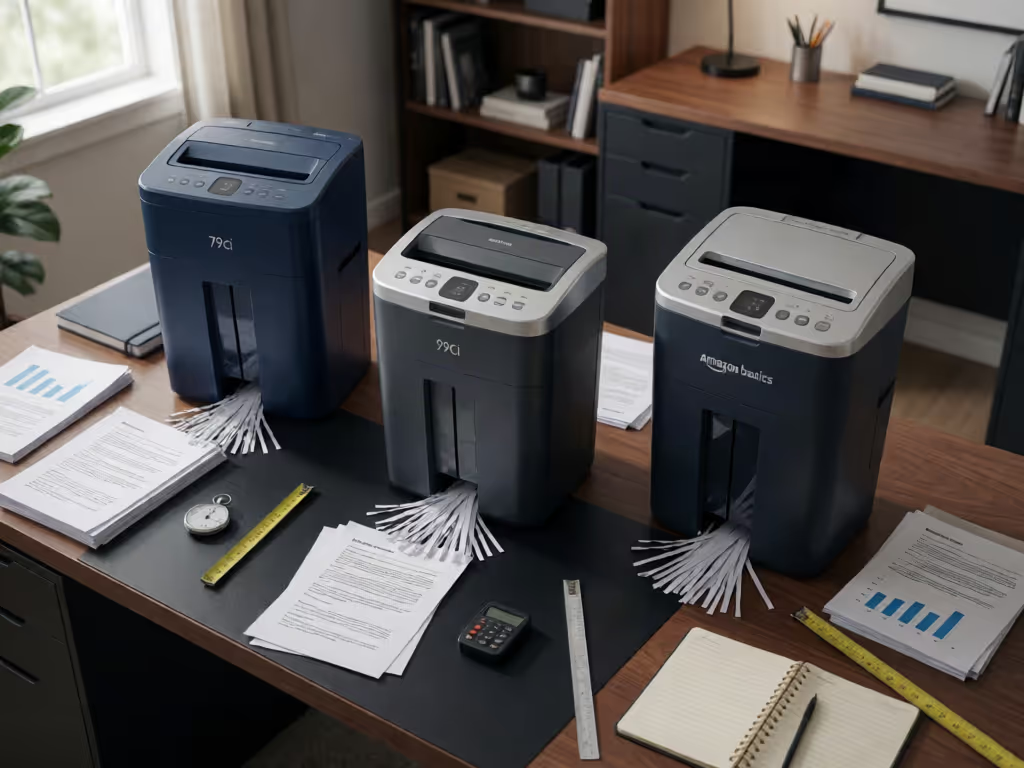
Yes. You don't need lab gear, just a timer and some awareness.
1. Session duration vs discomfort
- Time yourself during a typical shredding task.
- Note when you first feel discomfort in back, shoulders, or hands.
- If discomfort appears in under 5 to 10 minutes, your setup (height, distance, orientation) needs attention.
2. Reach distance
- Measure how far your hands travel from your neutral position (elbows at sides) to the shredder slot.
- Ideal: 20 to 35 cm (8 to 14 in) forward reach.
- If you consistently reach farther, you're loading shoulders and upper back unnecessarily.
3. Jam rate per 100 sheets
- During a declutter session, tally jams or misfeeds.
- High jam rates don't just slow you down, they cause repeated forceful pulls and awkward pinching.
4. Noise in dB(A) at 1m and 3m
- Use any phone dB meter app.
- Measure at 1 meter (operator position) and 3 meters (neighbor/room position).
- Note not only the peak noise but how often it spikes (e.g., startup, auto-reverse).
These become your ergonomic shredding metrics: the fewer painful reaches, jams, and noise spikes per session, the more ergonomic the machine, regardless of its brochure claims.
5. For long sessions, which is easier on my back and shoulders?
Think in terms of standing vs seated work.
Long standing sessions
- If you're standing, a horizontal front-feed shredder placed so the slot is roughly at your lower-chest height often feels most natural.
- This keeps elbows close to the body, wrists neutral, and reduces forward bending.
- A vertical shredder can also work if the slot is high enough. The key is avoiding a load where you're stooping to the floor every few seconds.
Long seated sessions
- Horizontal units win here. You can set the shredder slightly in front and to the side of your chair at desk height, turning occasionally to feed.
- With a vertical design, you'll often need to stand up to feed safely, or you'll end up bending down from the chair, which is hard on the lower back.
Height guide (rough):
- If you're 5'4" to 5'10" (162 to 178 cm), aim for the slot around 36 to 42 in (91 to 107 cm) high.
- Shorter: favor slightly lower, but keep it above knee level.
- Taller: go slightly higher, but don't exceed a comfortable elbow angle.
If you routinely shred more than 15 to 20 minutes in one go, treat shredder height and orientation the way you'd treat monitor height: a primary ergonomic setting, not an afterthought. Also match your workload to the shredder’s duty cycle to avoid heat-related slowdowns during long sessions.
6. How do noise and vibration factor into vertical vs horizontal feed comfort?
Noise is its own ergonomic load, mentally draining and socially stressful, especially in shared spaces.
Most small-office shredders cluster around 60 to 70 dB(A) at 1m, about the sound of normal conversation to a busy dishwasher. What matters is how that sound travels and transfers.
Vibration/desk transfer notes
- A shredder placed directly on a hollow desk or cabinet can turn that surface into a drum.
- Vertical units with taller housings sometimes sit closer to desk height, tempting people to park them on furniture (raising both noise at 1m and vibration).
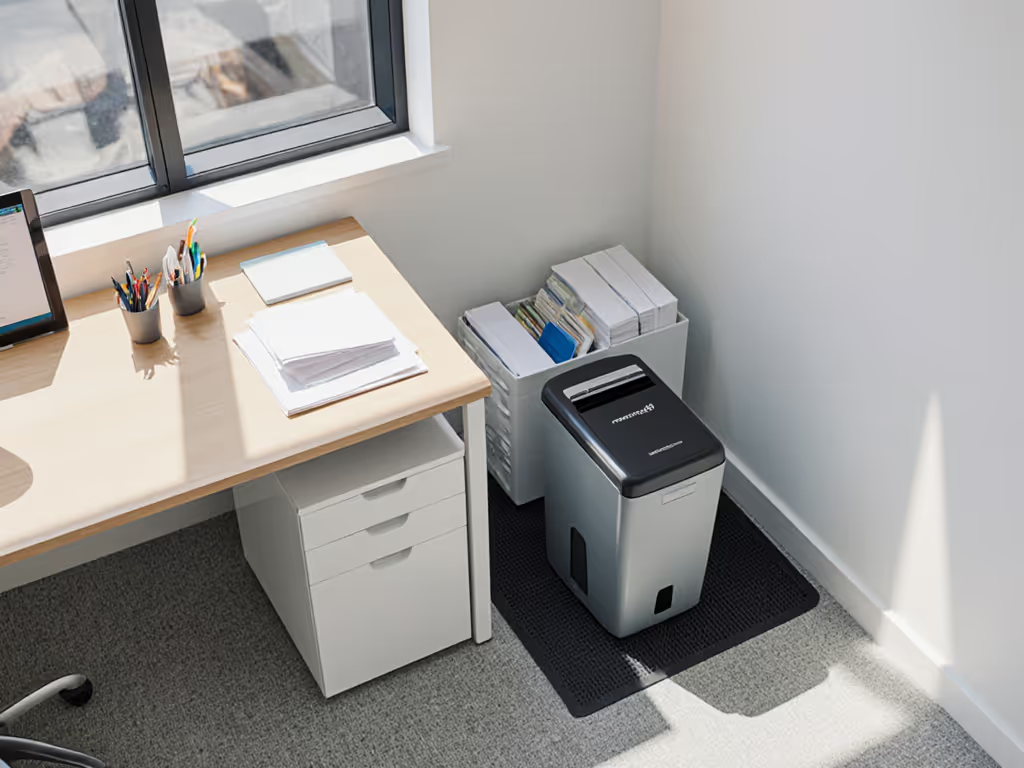
- Horizontal units are often shorter and deeper, more likely to sit on the floor where vibration can be tamed with a rubber mat.
Placement diagrams in words
- Imagine a small rectangle: your desk.
- Place the shredder's footprint just forward of your dominant-hand side, with the feed slot parallel to your torso.
- Keep 30 to 40 cm (12 to 16 in) clearance from walls behind it to avoid sound reflecting directly back at you.
- In waiting rooms or shared offices, keep shredders at least 2 to 3 meters from seating. That short distance can drop perceived loudness significantly at 3m.
I've seen rooms where simply moving a shredder and adding an anti-vibration mat changed the entire mood. Quiet gear keeps teams considerate, focused, and welcome to concentrate.
Respect the room; respect the people using it. That often starts with where you put the noisiest tools.
For after-hours suitability, test the machine at 3m with doors closed. If it reads much above low 60s dB(A) and you share walls with neighbors or sleeping kids, schedule the heavy shredding earlier or relocate it to a more isolated corner.
7. Do jam rates really matter for ergonomics, or just convenience?
They matter a lot.
Each jam usually means:
- Stopping your flow.
- Bending/leaning in.
- Applying forceful pulls on the paper.
- Possibly reaching near the throat area (even with the machine off, this is a risk). Choosing models with smarter jam-prevention sensors can reduce these risky interventions by detecting overloads early.
Tests on office workloads often find horizontal/front-feed units jamming less often on neat, uniform stacks, and vertical/top-feed units handling irregular, crumpled mail more gracefully. That translates directly into:
- Fewer awkward reaches.
- Less grip force.
- Lower cognitive load (less frustration, less temptation to bypass safety features).
To reduce jams, match your typical material to the design:
- Mostly standard office paper in tidy stacks → slight edge to horizontal.
- Mixed junk mail, envelopes, odd sizes → slight edge to vertical.
And regardless of design, avoid feeding at the shredder's max sheet claim. For ergonomic and mechanical health, aim for 50 to 70% of the rated capacity in regular use.
8. Which orientation is better for my specific environment?
Let's map orientation to common room types, this is footprint-to-room mapping in practice.
Small apartment or shared home office
- Priorities: quiet, compact, minimal visual clutter.
- A horizontal shredder that tucks under or just beside a desk works well, especially if the slot faces you while seated.
- Choose a model with a sealed bin and lower dB(A) rating so you can shred without announcing it to the entire apartment.
Small clinic, counseling office, or client-facing space
- Priorities: discretion, low noise, and not disturbing conversations or waiting areas.
- Often best to locate the shredder in a back room or staff nook.
- Either orientation can work, but vertical units' narrower footprint can slide into slim utility spaces.
- Add a rubber mat and keep it at least 3 meters from seating if it must live in the same room.
Small business with 5 to 20 staff
- Priorities: shared access, reduced jams, predictable workflow.
- A horizontal, front-feed shredder in a print/mail corner is usually easiest for everyone to approach, use standing, and walk away from.
- If people carry mixed mail bundles, a vertical top-feed model on a stand, with a clear, open top, can be more intuitive.
Tight, high-traffic corridors
- Avoid placing any shredder where people must side-step around the feed area.
- If unavoidable, a vertical unit with a narrower footprint aligned lengthwise with the wall presents a smaller bump-out.
In every case, consider:
- Walkway clearance: Aim for at least 90 cm (36 in) of clear path.
- Bin access: Make sure you can open the bin without blocking doors or desks.
- Cable routing: Keep cords out of walkways; this is as much a safety issue as an ergonomic one.
9. How should I set up my shredder (regardless of orientation) to reduce strain and noise?
A good setup can redeem a mediocre design; a bad setup can ruin a great one. For room-friendly positioning and reach, see our shredder placement guide.
1. Height and distance
- Place the slot between elbow and lower-chest height when you're in your typical shredding posture.
- Stand or sit so your elbows are bent around 90 to 120 degrees, not locked straight.
- Keep the shredder close enough that you're not leaning; about 20 to 35 cm (8 to 14 in) reach is ideal.
2. Orientation to your body
- For horizontal feed: slot parallel to your shoulders so you can feed straight in.
- For vertical feed: align so you're not twisting, face the shredder squarely when dropping paper.
3. Noise and vibration control
- Use a dense rubber or cork mat under floor-standing units to reduce vibration into floors.
- Keep the unit away from room corners, where reflective surfaces can amplify sound.
- Close nearby cabinets; hollow spaces can resonate.
4. Workflow layout
- Place the shredder between the paper source (inbox, filing cabinet) and the recycling bin, not off in a random corner. This reduces extra walking and twisting.
- Ensure the bin is easy to pull straight out, with room to set down a trash bag next to it when emptying, minimizing awkward lifting.
I once worked with a waiting area where simply switching to a quieter unit, adding a mat, and moving the shredder a few meters from the nearest chair eliminated a constant background tension. The machine stayed; the complaints disappeared.
10. Is there a simple decision checklist for vertical vs horizontal feed comfort?
Use this as a quick pass before you buy:
Choose a primarily HORIZONTAL/front-feed shredder if:
- You often shred while seated or prefer a front-facing standing posture.
- Your documents are mostly uniform office paper.
- You want a unit that slides under or beside a desk with the slot facing you.
- Your priority is reducing forward bending and jam-related interruptions in tidy stacks.
Choose a primarily VERTICAL/top-feed shredder if:
- You shred standing, with comfortable space above the unit.
- Your material mix includes junk mail, envelopes, and odd-sized items.
- You need a narrow footprint to fit next to a file cabinet or in a slim nook.
- You'd rather do short, frequent sessions dropping stacks in from above.
For both, favor:
- A quiet motor (low 60s dB(A) or better at 1m, if specified).
- Reliable jam management (auto-reverse, clear overload indicators).
- A size that fits your real volume, not just a flashy peak sheet spec.
When in doubt, I'll gladly trade a little peak capacity for a quieter, more compact unit that fits the room and encourages regular use. Over the years, I've seen that those are the machines people actually keep on, not under, the desk, and that's what keeps sensitive paper from piling up.
Where to go from here
You don't need to become an ergonomist to choose wisely. Start with:
- Log one month of shredding. Note how long sessions last, what you shred, and where it happens.
- Measure your space. Height under the desk, clearance beside cabinets, distances to seating.
- Decide on posture first. Will you mostly shred standing or seated? Orientation follows that choice.
From there, you can evaluate any model against a simple question: Will this reduce the physical and acoustic friction of getting paper securely out of my life? If the answer is yes, and it fits your room, then you're on the right track.
Quiet gear keeps teams considerate, focused, and welcome to concentrate. Explore your own habits, test a layout or two, and let your shredder serve the room instead of dominating it.
Related Articles