
Shredder Safety Certifications: UL CE ETL Guide
By Linh Tran • 30th Oct
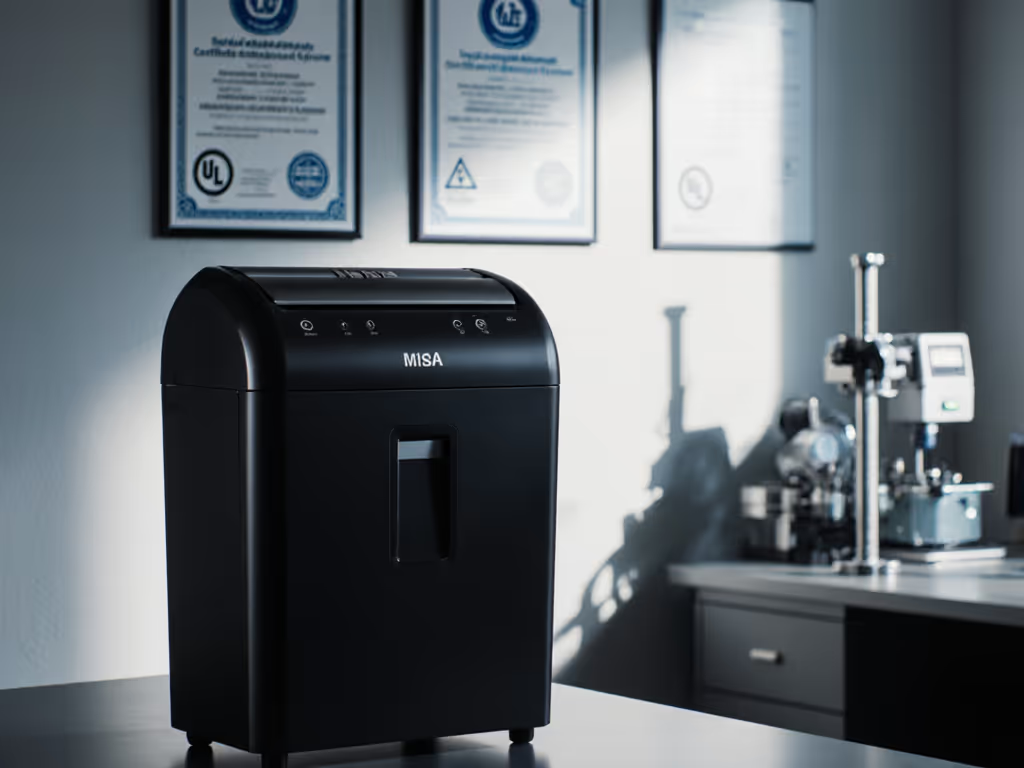
When you're selecting a quiet, space-efficient shredder for your home office or clinic waiting room, understanding shredder safety certifications is as crucial as evaluating decibel ratings. If noise is a top concern, see our quiet office decibel comparison. The right certified shredder standards ensure your document disposal solution will not compromise safety, compliance, or the calm atmosphere your workspace requires. In environments where concentration matters, quiet equipment is not just nice to have, it is essential for maintaining professional boundaries and neighborly respect.
Why Certification Matters for Considerate Workspaces
As someone who's managed library and clinic spaces where quiet was non-negotiable, I've learned that safety certifications do more than guarantee electrical integrity, they signal thoughtful engineering that respects shared environments. Quiet tools changed everything in that clinic waiting room where whispers turned to winces near a noisy unit.
Quiet is a productivity feature
What Are the Main Safety Certifications for Shredders?
You'll typically encounter three primary certifications when shopping for office shredders:
- UL (Underwriters Laboratories): The American gold standard for safety testing
- CE (Conformité Européenne): Mandatory for products sold in European markets
- ETL (Electrical Testing Laboratories): An alternative US certification often less expensive but equally rigorous
Each represents a different testing framework, but all serve the same purpose: verifying that your shredder will not overheat, spark, or otherwise create hazards during normal operation. This matters particularly in small offices where equipment runs near concentrated work areas or after hours.
How UL, CE, and ETL Differ (and Why It Matters to You)
While marketing materials often list certifications without context, the distinctions between them reveal important insights about your shredder's build quality and operational safety:
| Certification | Origin | Testing Authority | Key Focus |
|---|---|---|---|
| UL | USA | Underwriters Laboratories | Product safety standards development + testing |
| ETL | USA | Intertek Testing Services | Testing against existing standards (often UL's) |
| CE | Europe | Self-certified by manufacturer | Compliance with EU health, safety, environmental laws |
The crucial insight for space-conscious users: both UL and ETL certifications indicate compliance with OSHA safety standards, meaning regular facility inspections and quarterly manufacturing audits. This translates to equipment less likely to overheat during extended runs, critical when you're processing batches after business hours without supervision.
Unlike UL, which develops its own standards, ETL tests products against standards developed by UL and other organizations. Both require unannounced factory inspections to maintain certification, whereas CE certification is primarily self-declared by manufacturers with no required third-party testing.
Understanding Certification in the Context of Shared Spaces
How Certifications Relate to Noise and Vibration Performance
Here's where my expertise in acoustic performance intersects with safety standards: certified shredders often incorporate better engineering practices that indirectly improve noise characteristics. While certifications do not directly address sound levels, the rigorous testing process often reveals vibration issues that would otherwise cause excessive noise.
When reviewing decibel specifications (always look for dB(A) at 1m and 3m), consider that units passing UL/ETL certification typically demonstrate:
- Better motor mounting that reduces vibration/desk transfer noise
- Thermal management systems that prevent gear strain (and the associated noise increase during overheating)
- Consistent performance across duty cycles, avoiding the "whine" of struggling motors
For apartment dwellers or shared office users, these subtle engineering differences transform a disruptive chore into a barely noticeable background task. For an engineering look at sound dampening, see our open-office noise reduction guide. The Fellowes Powershred 79Ci, for instance, demonstrates how proper certification correlates with thoughtful noise management, performing at levels that will not disturb colleagues working at adjacent desks.
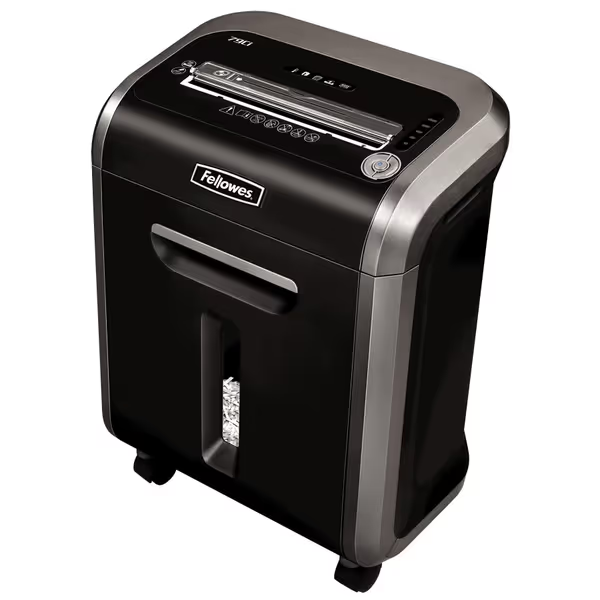
Fellowes Powershred 79Ci Crosscut Shredder
Heavy-duty, jam-proof shredder for secure, quiet, and efficient document disposal.
$278.99
Security LevelP-4 Crosscut
Security LevelP-4 Crosscut
Pros
Shreds 16 sheets + cards/CDs with ultra-quiet operation.
100% Jam-Proof system and 20-minute continuous run time.
SafeSense® technology enhances safety for hands and pets.
Cons
Mixed durability reports despite heavy-duty build.
Customers find this paper shredder to be a workhorse that shreds multiple pages with ease, including credit cards and CDs/DVDs, and appreciate its super quiet operation. The shredder features jam-proof technology that works well, and customers consider it good value for money.
Customers find this paper shredder to be a workhorse that shreds multiple pages with ease, including credit cards and CDs/DVDs, and appreciate its super quiet operation. The shredder features jam-proof technology that works well, and customers consider it good value for money.
Do Certifications Impact After-Hours Operation?
Absolutely. For small business owners who process sensitive documents after hours, certifications provide critical peace of mind. ETL-listed units undergo quarterly inspections that verify thermal cutoff systems, ensuring your shredder will automatically shut down before overheating becomes a fire hazard during extended, unattended operation.
When evaluating electrical safety compliance, look specifically for:
- Thermal overload protection
- Automatic shut-off features
- Fire-resistant materials in the feed path
These features not only meet safety standards but also enable longer continuous operation (like the Aurora AU1210MA's 60-minute duty cycle), allowing you to complete document purges without constant monitoring. Learn how run time and cooling systems affect reliability in our duty cycle guide.
The Quiet Connection Between Certification and Compliance
Many professionals confuse safety certifications with security certifications (like DIN P-levels), but they serve different purposes. While UL safety standard compliance ensures your equipment will not start fires, it does not guarantee your shredded documents meet HIPAA or GDPR requirements for data destruction.
However, certified shredders from reputable manufacturers often include both safety and security documentation. This dual compliance is essential for healthcare professionals and financial advisors who need to prove both: For specifics on HIPAA, FACTA, and GDPR obligations, read our document destruction compliance guide.
- Their disposal method meets document security standards (P-4 or higher)
- The equipment itself meets electrical safety requirements for office environments
When space is limited, this documentation becomes your ally in footprint-to-room mapping, proving you've made a compliant choice despite spatial constraints.
Making Certification Work for Your Space Constraints
Practical Verification Steps for Space-Conscious Buyers
Before purchasing a compact shredder for tight quarters, verify certifications through these practical steps:
- Examine the certification label: Legitimate marks include the testing organization's logo and certification number
- Check the manufacturer's website: Reputable brands like Aurora list certification details under "Compliance" or "Product Certification" pages
- Confirm testing scope: Ensure testing specifically covers the "continuous duty cycle" you'll use (e.g., 20+ minutes for home offices)
- Cross-reference with regulatory databases: UL maintains an online Product iQ database; ETL certifications can be verified through Intertek
Look for the CE marking requirements documentation if you're in Europe or handle EU citizen data, this confirms compliance with both safety and electromagnetic compatibility regulations that prevent interference with other office electronics.
The Space-Smart Approach to Certification Selection
Rather than chasing the most prestigious certification, prioritize what matters for your specific environment:
- For small offices/apartment workspaces: Focus on ETL/UL certifications with thermal management features that allow longer operation cycles without overheating
- For regulated industries: Verify both safety certifications (UL/ETL) AND security certifications (DIN P-levels) match your compliance requirements
- For after-hours operation: Confirm the certification includes testing for unattended operation periods matching your workflow
Smart placement diagrams in words consider more than just physical dimensions, they factor in safety margins for ventilation that certified units require. Most UL/ETL-certified shredders need at least 6 inches of clearance on all sides for proper heat dissipation, a critical detail for under-desk installations. Plan for that buffer.

Your Certification Checklist for Peace of Mind
When choosing a space-efficient shredder, verify these certification elements:
- UL safety standard compliance for North American markets (mandatory for commercial use)
- ETL certification benefits including quarterly manufacturing inspections
- CE marking requirements fulfillment if handling EU data or operating in Europe
- Documentation of continuous duty cycle testing matching your operational needs
- Thermal cutoff systems rated for your intended usage patterns
- Compatibility with your space constraints (verified through clearance requirements)
Selecting equipment with proper certifications creates considerate workplaces where document disposal happens seamlessly, without disrupting concentration, violating compliance, or straining neighborly relations. Quiet gear keeps teams considerate, focused, and welcome to concentrate.
Further Exploration
To deepen your understanding of how safety certifications intersect with daily workspace functionality, consider:
- Downloading the International Electrotechnical Commission's guide to NRTL (Nationally Recognized Testing Laboratory) standards
- Reading OSHA's guidelines on electrical equipment safety in office environments
- Consulting your local fire marshal's recommendations for unattended equipment operation
When document security and spatial harmony both matter, certified shredders represent the thoughtful intersection of safety compliance and considerate workspace design. Choose equipment that meets established standards, and you'll create environments where peace of mind is built into every specification.
Related Articles