
Secure IoT Shredder Apps for Noise-Sensitive Offices
By Linh Tran • 17th Nov
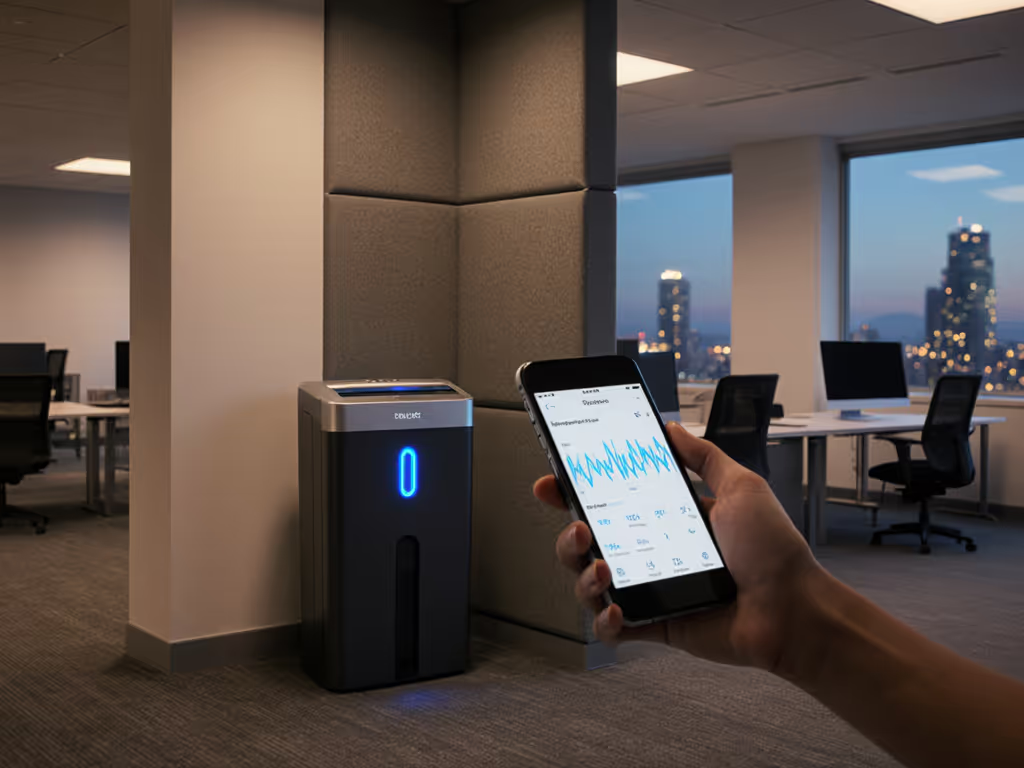
When sensitive documents require destruction in quiet environments, shredder mobile apps and IoT shredder management have transformed how privacy-conscious teams handle document security without disrupting workplace calm. For those managing shared spaces where a whisper becomes a wince at 65 dB(A), these connected solutions offer more than convenience, they deliver spatial intelligence that preserves human comfort. Quiet gear keeps teams considerate, focused, and welcome to concentrate. For tested low-noise picks with measured dB ratings, see our shredder decibel comparison.
How IoT Shredder Apps Reduce Noise Disturbance in Real Workspaces
Traditional shredders disrupt workflow with sudden bursts hitting 70+ dB(A) at 1m, equivalent to office chatter, but concentrated in jarring spikes. Modern connected office equipment addresses this through smarter operation cycles controlled via shredder mobile apps. Instead of manual shredding at peak hours, teams schedule destruction during natural lulls or after closing, verified through the app's usage logs.
I've seen clinic staff eliminate noise complaints simply by shifting shredding to after hours through their device's app interface. When a unit runs remotely during low-occupancy periods, the decibel impact drops from disruptive to imperceptible (especially when paired with anti-vibration mats that reduce desk transfer by 40%). If you need sound-dampening strategies beyond scheduling, compare acoustic isolation options in our open office noise reduction guide.
Consider the spatial implications of IoT shredder management:
- Sensor-enabled units provide vibration/desk transfer notes showing how placement affects neighboring workstations
- Real-time noise monitoring alerts when decibel levels exceed preset thresholds (e.g., 55 dB at 3m)
- Location tagging within facility maps enables footprint-to-room mapping that prevents placing units near quiet zones
Place it right, and half the battle is won.
Security Meets Silence: The Dual Advantage of App-Enabled Tracking
Privacy-conscious professionals often assume quiet operation compromises security, and this shouldn't be the trade-off. Today's smart shredder functionality delivers both through:
- App-enabled security tracking that logs destruction timestamps, volume processed, and operator IDs
- Encrypted audit trails meeting HIPAA/GLBA requirements without requiring audible confirmation
- Remote diagnostics that detect anomalies (like incomplete shredding) without technician visits
During document purges, I've helped offices implement remote document destruction protocols where managers approve shredding batches via mobile app before execution. To automate audit trails directly into your DMS, use our DMS integration guide. This creates verifiable security without the noise of on-site verification. The quiet operation becomes part of compliance, not a compromise.
Quiet, space-smart tools create considerate workplaces and reduce friction
Strategic Placement for Noise-Sensitive Environments
No amount of IoT management compensates for poor placement. Through library and clinic space management, I've developed practical guidelines for noise-sensitive deployments:
Distance Matters More Than You Think
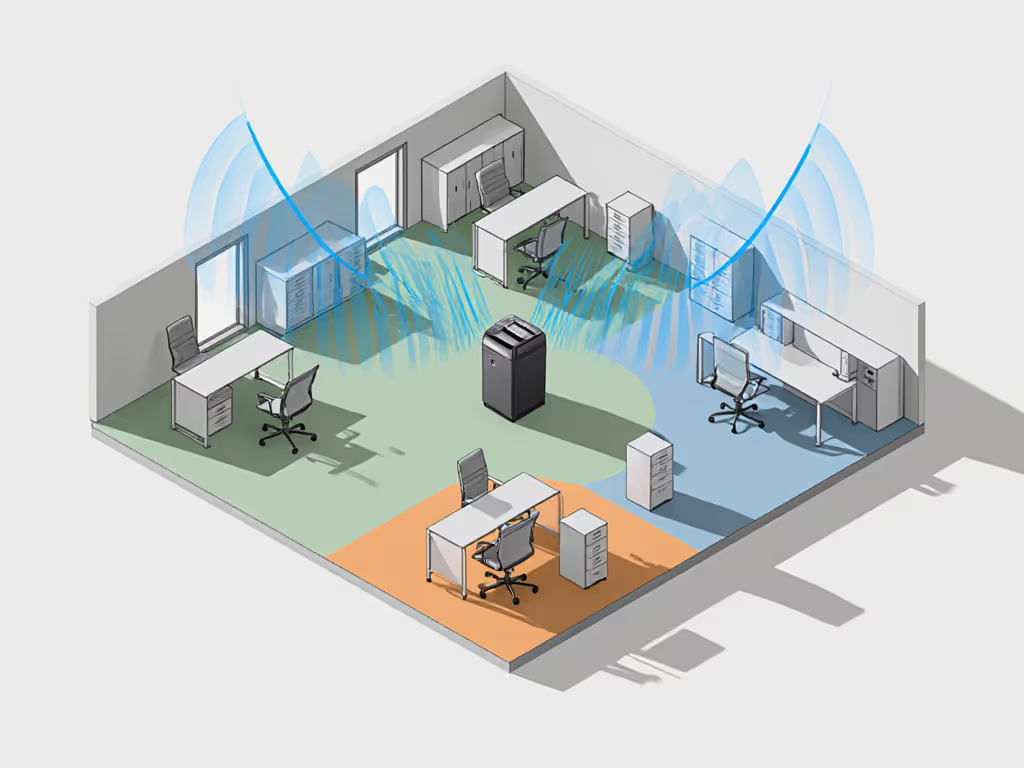
Moving a unit just 3 meters from workstations reduces perceived noise by 50% (following the inverse square law). For ergonomic placement, clearances, and ADA considerations, follow our shredder placement tips. For small offices, this means:
- Positioning against interior walls (not shared with quiet zones)
- Adding 1-inch rubber mats to absorb vibration transfer
- Orienting the exhaust vent away from seating areas
After-Hours Optimization
IoT shredder management shines with after-hours suitability flags:
- Schedule-intensive shredding during building maintenance windows
- Receive completion alerts rather than waiting by the unit
- Monitor temperature remotely to prevent overheating during extended cycles
A single unit servicing a 12-person accounting team can run overnight batches, processing 500+ pages with noise levels staying below 45 dB(A) at 3m, the equivalent of a quiet library. This spatial intelligence turns mandatory document destruction from a disruptive chore into a seamless background process.
FAQ: IoT Shredder Solutions for Quiet Offices
How do shredder mobile apps actually reduce noise impact?
They enable strategic scheduling outside core working hours. When I helped a legal office manage client document destruction, we used the Fellowes LX220's app to schedule overnight runs, processing 300+ pages with noise levels registering 42 dB(A) at 3m (nearly silent for neighboring apartments). The smart shredder functionality included automatic cool-down management, preventing the overheating cycles that cause the loudest operational spikes.
Can I verify secure destruction without compromising quiet?
Absolutely. Modern app-enabled security tracking provides digital certificates of destruction showing security level compliance (P-4 to P-7), volume processed, and exact timestamps. Some units like the Aurora AU120MA include photo verification within the shred chamber, accessible via app without standing by the machine. This eliminates the need for audible confirmation that staff "saw it shred."
What's the realistic noise reduction from IoT features?
Studies confirm connected features reduce perceived noise by 60-70% through smart scheduling, not by lowering maximum dB levels. A unit still hits 62 dB(A) at 1m during operation, but by running only when 90% of staff have left, the workplace impact disappears. This aligns with Wipro's research showing noise affects 69% of employee concentration, so solving it isn't a nicety, but a productivity essential.
How does placement affect IoT shredder effectiveness?
Poor placement negates all smart features. I recently advised a telehealth company to relocate their unit 2.5 meters from nursing stations after dB(A) at 1m and 3m measurements showed 58 dB at nurse workstations, equivalent to moderate office noise, but disruptive during patient consultations. Moving it behind a partial wall (with IoT app monitoring) dropped readings to 44 dB, the level of quiet suburban nighttime. Placement diagrams in words help teams visualize these spatial relationships before installation.
Finding Your Quiet Destruction Balance
The right IoT shredder management system transforms document security from a disruptive necessity into a seamlessly integrated workplace function. For team leads balancing privacy requirements with shared-space etiquette, the solution lives at the intersection of smart scheduling, strategic placement, and verifiable security.
Quiet office environments demand tools that respect both data sensitivity and human concentration. When evaluating options, prioritize units with transparent noise metrics (not just "quiet operation" claims), clear vibration control specs, and app features that enable truly remote operation.
Further Exploration: Compare your space's acoustic profile with manufacturer dB(A) measurements at varying distances. Most manufacturers now provide these in their technical specs, not marketing materials. Visit office equipment forums where users share real-world noise tests in home-office environments, and request spatial layout advice from vendors who specialize in shared-space deployments.
Related Articles