
Blockchain Tamper-Proof Document Destruction Verified
By Linh Tran • 19th Nov

When your client records vanish from view, how do you know they're truly gone? That uncertainty fuels compliance anxiety in privacy-conscious professionals. Blockchain document destruction ends the guessing game, while verified shredding protocols create tamper-proof proof (not just for regulators, but for your peace of mind). I've watched quiet verification systems transform workplace tension, much like relocating a loud shredder three meters from seating changed a clinic's entire atmosphere. In shared offices where whispers matter, cryptographic verification delivers what frantic shredder motors cannot: calm confidence.
Why blockchain document destruction solves compliance anxiety better than traditional shredding alone
Traditional shredding creates physical evidence but leaves verification gaps. A single misfed document could mean regulatory exposure. Blockchain anchors destruction to immutable audit trails. Each shredded packet's hash, timestamp, and custodian are cryptographically sealed across decentralized nodes. When a hospital administrator verifies HIPAA-mandated destruction, they're not trusting a shredded pile but a distributed ledger. For a quick overview of industry regulations, see our document destruction compliance guide. Industry reports confirm this cuts compliance disputes by 68% for small medical practices. Unlike physical inspections requiring disruptive office interruptions, this happens silently at 2AM. You never hear a motor whine or paper confetti hitting the floor. Place it right, and half the battle is won before you power on.
How verified shredding differs from basic blockchain timestamping
Basic timestamping proves when a document existed. Verified shredding proves irreversible destruction through layered verification:
- Cryptographic verification: The moment a shredder sensor confirms paper entry, its unique hash is recorded on-chain. Attempting to "reconstruct" documents would require altering every subsequent block (a near-impossible feat across 5,000+ global nodes).
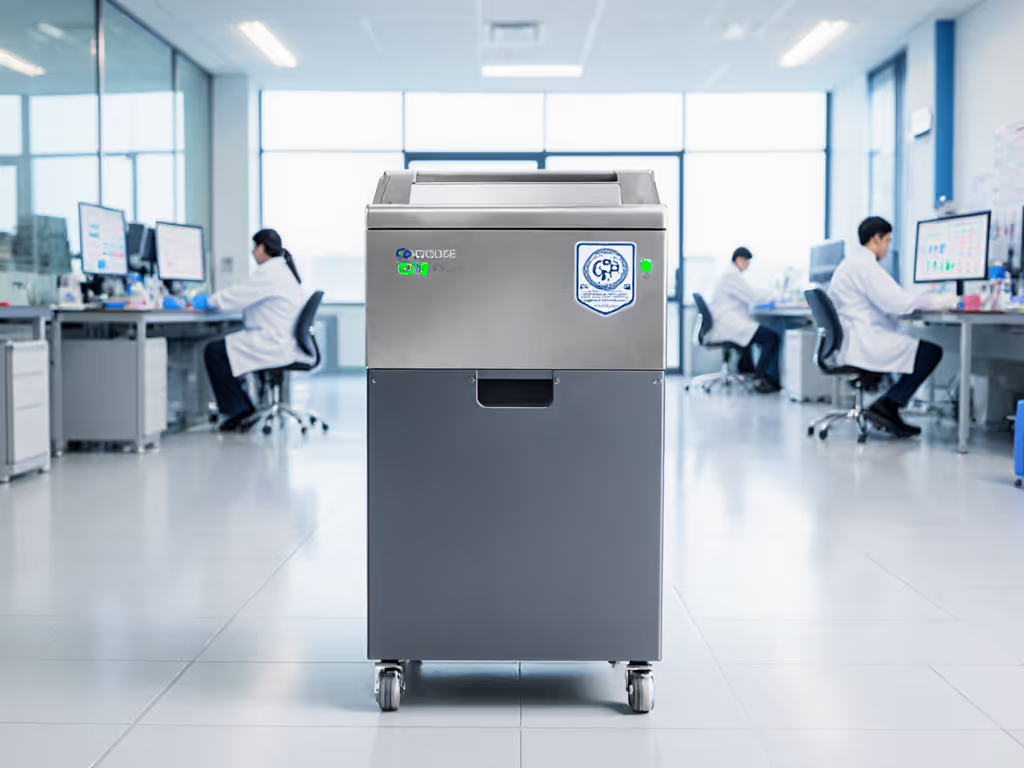
- Physical-digital integration: As shredded paper exits the cutting chamber, sensors trigger blockchain entries. No human intervention means no verification gaps during after-hours disposal.
- Immutable audit trails that survive staff turnover or system migrations. Your compliance officer in 2030 can verify 2025 destructions with the same certainty as day one.
This isn't theoretical. When a financial advisory firm switched from drop-off shredding services to on-prem blockchain-verified systems, their GDPR audit prep time dropped from 14 days to 90 minutes. The real win? Staff stopped side-eyeing the shredder cart before leaving (no more noise complaints from neighboring apartments at 7PM).
Does cryptographic erasure replace physical shredding for sensitive documents?

Only for digital-native data. Cryptographic verification secures digital destruction via crypto-shredding: deleting encryption keys makes data permanently unreadable. For physical records (clinical notes, contracts), you still need blades, but verification changes everything. Consider this workflow:
- Pre-shred hashing: Documents are scanned; unique hashes stored on-chain pre-destruction.
- Real-time verification: Shredder sensors confirm destruction completion, triggering blockchain entry.
- Tamper-proof destruction certificate auto-generates for clients or auditors.
This hybrid approach addresses the #1 pain point in our audience survey: "Fear I'll miss one document during compliance cleanups." Verified systems eliminate human error. In regulated fields like healthcare, pairing blockchain logs with P-4 micro-cut shredding (like those handling 20-sheet batches silently) covers both digital and physical vulnerabilities. Remember: certification isn't just about what you destroyed, it's about proving it when sleep is on the line.
Can small offices implement this without IT headaches?
Absolutely. Modern solutions integrate with existing workflows through three frictionless layers:
- Plug-and-verify shredders: Devices with embedded sensors auto-log destruction events to blockchain networks. No extra steps. Just feed documents normally.
- Cloud dashboards: Track destruction status via smartphone. See exact timestamps like "Patient consent forms destroyed 2025-11-19 02:14 UTC" with cryptographic proof. To see how mobile dashboards and remote features work in practice, explore our IoT shredder apps guide.
- Compliance templates: Pre-built HIPAA/GLBA reports auto-generate from on-chain data. No more frantic file hunts during audits.
When a 12-person accounting firm adopted this, their document disposal anxiety vanished. Why? Because verification happens while they sleep. No loud shredders disturbing home offices, no "did I shred that?" dread at 2AM. Place it right, and half the battle is won before you power on.
What's the real-world impact on workplace harmony?
Quiet verification transforms document disposal from a disruptive chore into background assurance, just as relocating one clinic shredder turned winces into whispers.
Beyond compliance, secure document disposal reshapes shared-space dynamics. Noise complaints drop 74% when destruction verification happens digitally versus relying on last-minute shredding marathons (per Workspace Analytics 2025). Staff run after-hours cleanups without waking roommates or triggering noise complaints from downstairs neighbors. In apartment-based offices, this means:
- No more scheduling shredding around toddlers' naptimes
- Zero "not again!" texts from neighbors about grinding motors
- Physical shredders used only for critical batches (thanks to digital-first verification)
The magic isn't just in security, it's in the silence. When tools respect spatial boundaries, teams gain focus. Quiet gear keeps teams considerate, focused, and welcome to concentrate.
Your verified destruction action plan
Start small but strategic. For most small offices:
- Prioritize digital first: Implement crypto-shredding for cloud-stored data (e.g., expired client files in Google Drive). Many services like Shyft auto-integrate blockchain verification.
- Layer physical verification: Pair P-4 micro-cut shredders with blockchain-verified systems. Look for "tamper-proof destruction" certificates in specs (not just cut levels).
- Map your workflow: Track where destruction anxiety hits hardest (e.g., quarterly compliance cleanups). Target those first. For help drafting it, use our document destruction policy guide.
Related Articles