
Shredded Paper's Landfill Toll: Environmental Consequences
By Priya Nair • 3rd Dec

When we talk about shredded paper landfill impact, few consider the full environmental consequences of what happens after documents leave our desks. The truth is, our security practices directly affect more than just data protection (they influence resource consumption, landfill burdens, and greenhouse gas emissions too). As someone who's spent years translating technical standards into practical workflows, I've learned that privacy and sustainability aren't competing priorities: they are two sides of the same coin.
How does shredded paper contribute to landfill waste?
Paper makes up approximately 23% of municipal solid waste in landfills, according to the EPA. When shredded, paper becomes more difficult to process through standard recycling streams due to its fragmented nature. While intact paper fibers can be easily collected and repurposed, shredded paper often falls through sorting machinery or becomes contaminated with other materials.
The DIN level spelled out in your shredding process directly affects how easily that paper can be recycled. For example, a P-2 strip-cut shredder produces longer strips that facilities can more readily process than the tiny particles from a P-7 micro-cut shredder. For facility acceptance rates by particle size, see our shredder particle recycling guide. This isn't about compromising security; it's about matching the document risk to the shred, not the hype.
Some recycling facilities reject shredded paper entirely because of sorting challenges, sending it directly to landfills where it contributes to space consumption and decomposition issues. The paper decomposition rates slow dramatically in landfill conditions where oxygen is limited, creating a perfect environment for methane production.
What are the methane emission concerns we should know about?
Landfill methane emissions represent one of the most significant environmental consequences of paper waste. When paper decomposes anaerobically (without oxygen) in landfills, it produces methane (a greenhouse gas 25 times more potent than carbon dioxide). This process happens regardless of whether the paper is shredded or intact, but shredded paper actually has a larger surface area that can potentially accelerate decomposition under certain conditions.
The irony is stark: we shred documents to protect sensitive information, yet send that same material to create another environmental hazard. During a records audit at a small healthcare clinic, our shred policy was the easiest compliance win; the auditor simply nodded and moved on. But that same week, I learned our "secure" disposal was contributing to landfill methane emissions. Good privacy practice is boring by design, but it shouldn't come at this environmental cost.
How can shredded paper be recycled effectively?
Sustainable document destruction requires careful planning beyond just feeding paper into a shredder. For practical disposal options and greener workflows, read our eco-friendly shredding guide. Here is where risk category mapping becomes essential (not just for security, but for environmental responsibility):
- Separate your waste streams: Keep shredded paper in dedicated, clean containers
- Know your local recycling requirements: Some municipalities accept shredded paper if it's contained in paper bags
- Check with your service provider: Many professional shredding services already have recycling partnerships
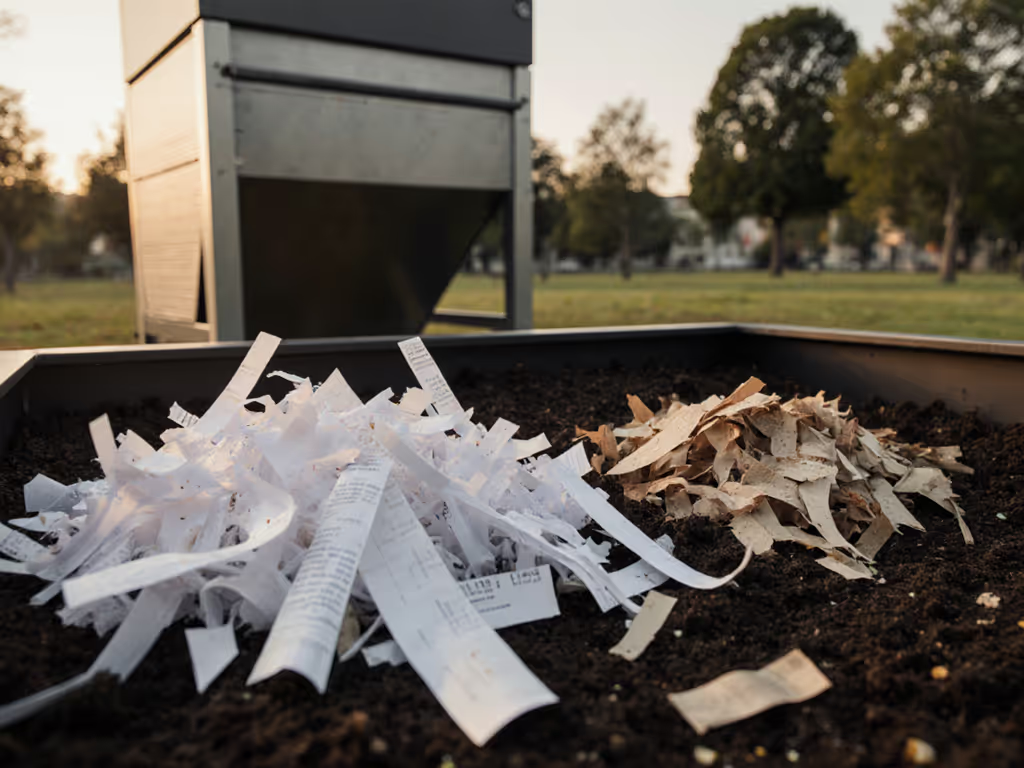
- Consider composting: In appropriate settings, shredded paper can serve as carbon material in composting systems
I've helped several small firms implement chain-of-custody reminders that track shredded material from destruction to recycling. If you're building processes from scratch, our small business document destruction policy guide walks through scheduling, compliance, and cost trade-offs. These simple logs (what we call plain-language audit notes) show both regulatory bodies and sustainability teams exactly where materials end up.
What waste management alternatives exist for shredded paper?
Beyond traditional recycling, several innovative approaches can reduce the shredded paper landfill impact:
Privacy is a process, not a one-time event, and neither is environmental responsibility.
- Corporate take-back programs: Some shredding services offer closed-loop systems
- Community composting initiatives: Many cities now accept shredded paper in organic waste streams
- Paper mulch: Gardeners often welcome clean shredded paper for soil improvement
- Local school programs: Art departments can use shredded paper for craft projects
For home offices, I recommend home vs. office policy pointers: keep a separate bin for shredded paper that can go directly to municipal compost or recycling programs. If you're using a personal shredder like the Amazon Basics model that handles 6-8 sheets at a time, consider using a paper bag liner that can go directly into recycling, as many facilities accept shredded paper when properly contained. For compatible liners, oils, and accessories that reduce waste and extend machine life, see our home office shredder kits.
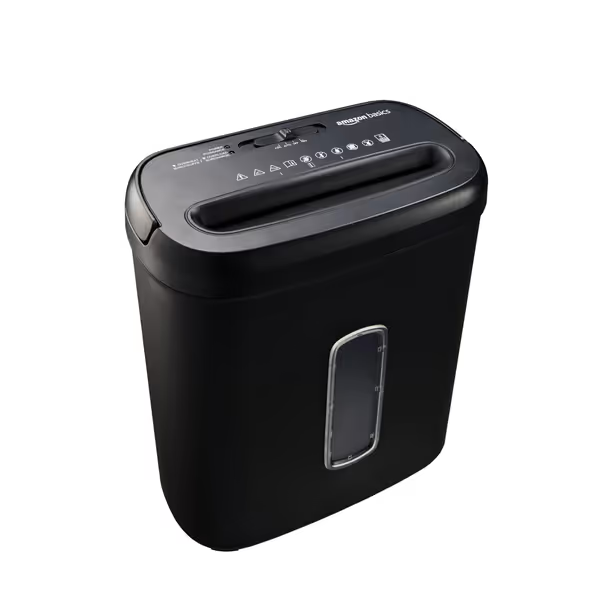
Amazon Basics 8-Sheet Cross Cut Shredder
Secure P-4 shredding for everyday documents and credit cards.
$33.99
Security LevelP-4 Cross-Cut
Security LevelP-4 Cross-Cut
Pros
Shreds 8 sheets & credit cards (non-metallic)
Automatic overheat protection for durability
Quality tested with a 3.7-gallon bin
Cons
3-minute runtime, then 30-minute cool down
Mixed feedback on noise and long-term durability
Customers find the paper shredder works well, is reliable, and is excellent for its price. The device effectively shreds cards and handles up to 6 sheets at once.
Customers find the paper shredder works well, is reliable, and is excellent for its price. The device effectively shreds cards and handles up to 6 sheets at once.
How can I balance security needs with environmental responsibility?
This is where I see many organizations struggle: they either over-shred everything to P-7 levels (creating material nearly impossible to recycle) or under-protect sensitive information. The solution lies in thoughtful risk category mapping:
| Document Type | Risk Level | Appropriate DIN Level | Recyclability |
|---|---|---|---|
| Public information | Low | P-1/P-2 | High |
| Internal business records | Medium | P-3/P-4 | Moderate |
| Financial records | High | P-5 | Low-Moderate |
| Medical records | Critical | P-6/P-7 | Low |
You'll notice I recommend P-4 as the workhorse for most business documents (that is the DIN level that balances security with recyclability). For home offices, the same principle applies: not everything needs to be shredded to the highest security level. Most personal documents (like utility bills once reconciled) can safely use a less aggressive cut that still protects your information while keeping recycling options open.
What immediate steps can I take toward sustainable document destruction?
Start with these simple, actionable steps that won't disrupt your workflow:
- Audit your documents: Categorize what you're shredding using risk category mapping
- Right-size your security: Match DIN levels to actual risk rather than using maximum security for everything
- Contain shredded paper properly: Use paper bags instead of plastic for recycling
- Choose service providers wisely: Ask specifically where shredded material ends up
- Track your impact: Maintain simple chain-of-custody reminders for audit purposes
One small firm I worked with reduced their shredded paper landfill impact by 60% simply by implementing a three-tiered document system (public, internal, and confidential), each with appropriate destruction methods. Their compliance didn't suffer, and they even saved money on shredding service costs.
Conclusion: Making Privacy and Sustainability Work Together
Privacy is a process, not a product we purchase and forget. Understanding shredded paper landfill impact helps us make smarter decisions that protect both information and environment. The most effective security practices aren't flashy, they're consistent, appropriate to the risk, and sustainable over time.
By implementing sustainable document destruction methods that align with your actual risk profile, you accomplish more than compliance, you create a system that works quietly and effectively, without environmental drama. When your privacy practices become boringly consistent, you've achieved true security.
To further explore how to align your document security with environmental responsibility, consider researching local recycling requirements for shredded paper in your municipality or consulting with professional shredding services about their sustainability practices. The path to responsible document destruction begins with asking the right questions, not with the most aggressive shred possible.
Related Articles