
Best Call Center Shredders for Quiet, Secure Voice Clarity
By David Okoro • 25th Sep
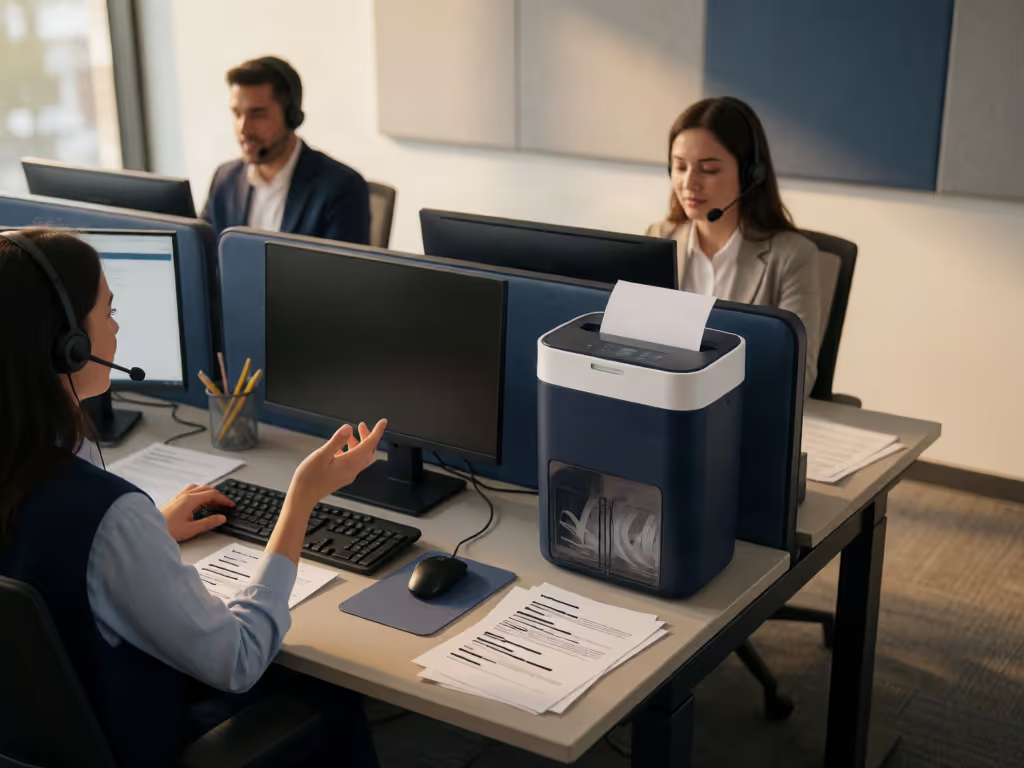
At a glance
The Fellowes Powershred 79Ci is the stronger overall choice for call-center teams that value manufacturer-manual support, jam-management features, supported office media, and a shorter stated cooldown. Choose the Amazon Basics 24-Sheet model instead when larger manual batches matter most and a 60-minute cooldown is workable.
- Best overall: The 79Ci handles up to 16 sheets per pass, runs for 20 minutes, then lists a 30-minute cooldown. View on Amazon
- Best for batch volume: The Amazon Basics model lists 24 sheets per pass, a 25-minute run time, and a 7-gallon bin, but its stated cooldown is 60 minutes and the available evidence comes only from the retailer listing.
- What decides it: Neither shredder has measured noise data, call-quality testing, or verified auto-feed capacity.
Important: Do not treat qualitative quiet-operation claims as proof of voice-friendly performance or a sub-60 dB result.
A call center shredder has two jobs: destroy sensitive paper reliably and stay out of the way of conversations. The two quiet call center shredders compared here are not backed by measured decibel data or call-quality testing, so neither can honestly be called proven voice-friendly. What they do offer is a useful contrast in manual-feed volume, continuous run time, cooldown, cut size, and jam handling, the details that determine whether document destruction becomes a smooth shared-workspace routine or a recurring interruption.
For the best fit, start with your batch size and your desk layout, not a vague "quiet" label. Keep it tidy; keep it running.
1. Set the right standard for a call-center shredder
An office shredder turns paper into smaller pieces for disposal; these two models use cross-cut cutting rather than long strip cutting. For teams handling customer notes, printed account material, or other confidential paperwork, cross-cut is the relevant starting point.
Security labels still need plain-language interpretation. Fellowes' general guidance describes DIN P-4 and P-5 as levels suited to confidential documents. The Fellowes Powershred 79Ci is listed as P-4 on its retail listing, though the current manual for this model does not state a DIN level. No collected source assigns the Amazon Basics 24-Sheet Cross-Cut Shredder a P-4 rating, so it should not be purchased on an assumed P-4 rating.
For a customer-service workspace, "voice-friendly document destruction" is less about believing a single sound claim and more about reducing disruption:
- Put shredding in a designated admin spot rather than beside agents taking live calls.
- Shred in short, planned batches between call-heavy periods.
- Favor a machine whose documented run time matches the batch you actually accumulate.
- Keep the bin from becoming overfull, since a clean bin change is faster and less distracting than dealing with spilled confetti.
General office-noise guidance also favors quiet-work zones and layout changes to reduce distraction. That is practical here, but it is not proof that either machine protects caller or agent voice clarity.
Neither reviewed shredder has verified operating-noise measurements or evidence of automatic paper-feed capacity. Both are manual-feed machines.
2. Best documented all-rounder for maintenance-minded teams: Fellowes Powershred 79Ci
The Fellowes Powershred 79Ci is the stronger choice when your priority is a shared-use routine supported by a manufacturer manual and a defined maintenance habit. Its current manufacturer manual rates it for up to 16 sheets per pass, with a 20-minute maximum continuous run time followed by a 30-minute cooldown. That is a workable profile for a small office, supervisor station, or back-office disposal point where paperwork arrives throughout the day rather than in one massive archive-clearing session.
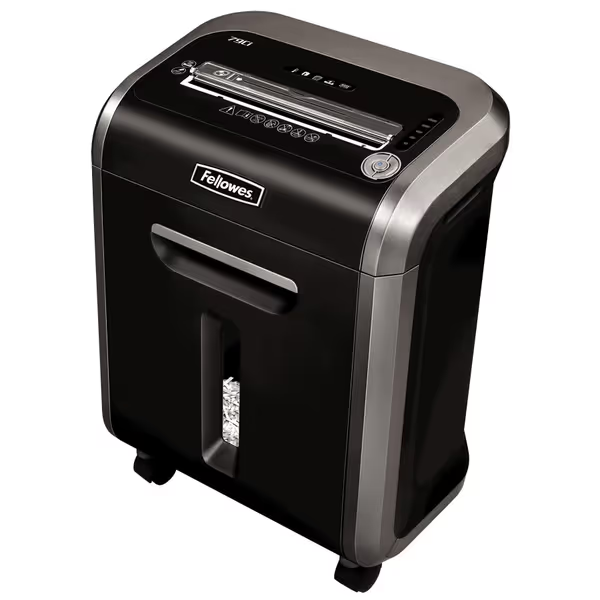
Fellowes Powershred 79Ci Crosscut Shredder
Heavy-duty, jam-proof shredder for secure, quiet, and efficient document disposal.
$278.99
Security LevelP-4 Crosscut
Security LevelP-4 Crosscut
Pros
Shreds 16 sheets + cards/CDs with ultra-quiet operation.
100% Jam-Proof system and 20-minute continuous run time.
SafeSense® technology enhances safety for hands and pets.
Cons
Mixed durability reports despite heavy-duty build.
Customers find this paper shredder to be a workhorse that shreds multiple pages with ease, including credit cards and CDs/DVDs, and appreciate its super quiet operation. The shredder features jam-proof technology that works well, and customers consider it good value for money.
Customers find this paper shredder to be a workhorse that shreds multiple pages with ease, including credit cards and CDs/DVDs, and appreciate its super quiet operation. The shredder features jam-proof technology that works well, and customers consider it good value for money.
The paper output is 5/32 by 1 1/2 inches (4 by 38 mm). Its exact retail listing describes the model as P-4, which makes it the clearer of the two choices for buyers specifically seeking a listing-published confidential-document security grade. Still, treat that as a current listing claim rather than proof of a separate certification.
What makes it suited to a busy shared area
The 79Ci's meaningful advantage is its documented Jam Proof System. For a broader comparison of jam-proof cross-cut shredders under real workloads, examine how different systems handle overloads, mixed materials, and recovery. Fellowes says it electronically measures paper thickness to help prevent jams and can correct a misfeed; its "100% jam-proof" language is conditional on following the manual. In normal terms: do not test the promise by forcing a thick, uneven stack into the slot. Stagger, don't stack (especially with mixed mail and folded pages).
Its supported-media list is also broad for a desk-side disposal workflow: paper, staples, small paper clips, credit cards, and CDs/DVDs. The manual specifically excludes adhesive labels, continuous-form paper, transparencies, newspaper, cardboard, large paper clips, laminates, file folders, X-rays, and plastics other than the specified media. That limit matters. A machine that handles everyday staples is not an invitation to feed whatever happens to be in the recycling pile.
The manufacturer calls its noise feature SilentShred, and an outside publisher has qualitatively characterized the model as quiet. Neither source gives a usable measured dB result for this model, so I would not place it beside an agent and promise quiet calls. Use the claim as a reason to consider it, not as an acoustic specification.
Maintenance and bin-change ergonomics
Fellowes recommends oiling the 79Ci every time the waste bin is emptied to avoid reduced capacity, intrusive shredding noise, and possible stoppage. For broader guidance on shredder maintenance, including oiling schedules and jam prevention, follow a routine matched to the team's usage. That is the maintenance interval in minutes that pays off: it takes a short moment at bin day and avoids a much longer jam-and-cleanup episode later. The retail listing describes a 6-gallon pull-out bin and LED bin-full indicator, which should help make bin timing visible in a shared space.
Jam-risk grade: Low to moderate when users stay within the rated feed, keep unsupported materials out, and oil at each bin emptying. The design is forgiving; the routine still matters.
3. Best for the largest stated manual batches: Amazon Basics 24-Sheet Cross-Cut Shredder
The Amazon Basics 24-Sheet Cross-Cut Paper, CD and Credit Card Home Office Shredder with Pullout Basket is the capacity-led option. Its exact retail listing states 24 sheets per pass, a 25-minute continuous run time, and then a 60-minute cooldown. For a deeper look at how shredder duty cycles affect overheating, recovery time, and long-term reliability, compare the machine's rated run time with your actual workload. On paper, that means fewer feed cycles for a bulky sorting session than the Fellowes, provided you plan around the longer recovery period after a full run.
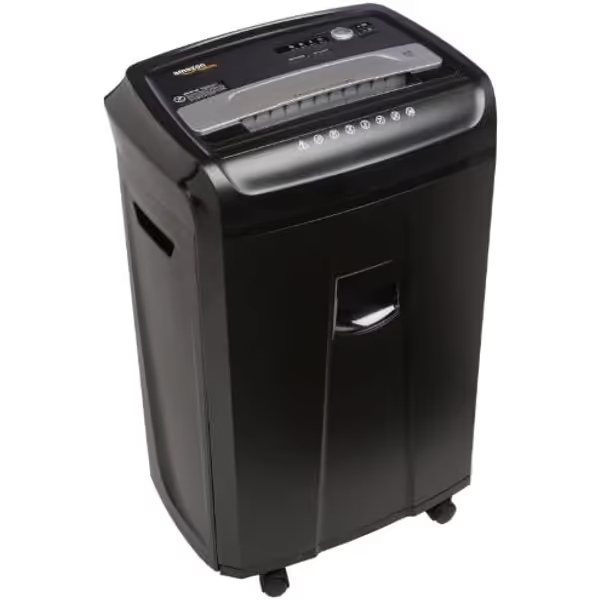
Amazon Basics 24-Sheet Cross-Cut Shredder
High-capacity cross-cut shredder for home office security and convenience.
Sheet Capacity24 Sheets
Sheet Capacity24 Sheets
Pros
Shreds paper, CDs, and credit cards effectively.
25-minute continuous run time for large tasks.
Auto-reverse clears jams, thermal protection.
Cons
60-minute cool-down time after extended use.
Larger size may not fit all compact spaces.
Customers report it shreds large volumes of paper, cards, and CDs without jamming, even with continuous use.
Customers report it shreds large volumes of paper, cards, and CDs without jamming, even with continuous use.
Those specifications come from the retailer listing; no manufacturer manual or official product page was available for review for this model. That does not make the machine unsuitable, but it does change the buying decision: confirm the current listing and documentation before you purchase, especially if your workflow depends on a particular material allowance or security classification.
Where its numbers help, and where they do not
A 24-sheet stated maximum is attractive if one person periodically processes thick batches of ordinary paper. It can reduce the number of manual insertions compared with the 79Ci's 16-sheet rating. Its stated 25-minute run time is also five minutes longer.
But a call-center buyer should look at the whole cycle, not just the headline number. After its stated maximum run, the Amazon Basics model lists a 60-minute cooldown, double the 79Ci's 30 minutes. That makes it better suited to a scheduled clearing session than to a workstation expected to handle frequent bursts all day without planning.
It cross-cuts paper into stated 7/32 by 1 27/32 inch pieces. No collected source assigns it a P-4 rating, so do not equate the larger sheet capacity with P-4 security. Capacity, cut pattern, and security designation are separate decisions.
Jam controls, materials, and bin reality
The Amazon Basics listing includes auto start and auto reverse, with auto reverse described as a way to clear paper jams. These are useful manual-feed conveniences (not auto-feed). There is no verified tray capacity, and no basis to walk away while the machine processes a stack.
The listing states it destroys credit cards, CDs, and DVDs one at a time, and it specifies a 7-gallon pullout bin. That extra gallon may mean fewer disposal trips during a document purge. Still, practical bin-change ergonomics come down to timing: empty before packed particles ride up near the cutting area, and keep the pullout path clear. That is both a mess/dust callout and a reliability habit.
Jam-risk grade: Moderate. Auto reverse is a recovery feature, not a substitute for feeding even, sensible stacks. Because the available documentation is limited, be conservative with materials and do not assume it accepts staples, clips, labels, or other items not stated in the current instructions.
4. Compare the two picks by the data that changes your workflow
| Decision point | Fellowes Powershred 79Ci | Amazon Basics 24-Sheet Cross-Cut |
|---|---|---|
| Stated paper feed | 16 sheets per pass; manufacturer manual specifies test conditions | 24 sheets per pass; retailer listing claim |
| Cut type | Cross-cut | Cross-cut |
| Stated cut size | 5/32 x 1 1/2 in. | 7/32 x 1 27/32 in. |
| Continuous run time | 20 minutes | 25 minutes |
| Cooldown | 30 minutes | 60 minutes |
| Jam behavior | Manufacturer-described thickness sensing and misfeed correction | Listing-published auto reverse |
| Documented media | Paper, staples, small clips, credit cards, CDs/DVDs | Credit cards, CDs, DVDs one at a time |
| Stated bin | 6-gallon pullout bin with LED full indicator on listing | 7-gallon pullout bin on listing |
| Noise evidence | Manufacturer SilentShred claim and an independent qualitative “quiet operation” assessment; no verified dB | No collected measured dB data |
Choose the Fellowes 79Ci if you want manufacturer-manual support for a 30-minute cooldown, staples and small paper clips, and an oil-at-bin-emptying routine. It is the more confidence-inspiring choice for a small team that needs predictable upkeep.
Choose the Amazon Basics 24-Sheet if your deciding factor is the larger stated manual paper batch and 7-gallon stated bin, and you can tolerate a planned 60-minute recovery after an extended session. Verify current product instructions before assigning it to varied office materials.
5. Build a quiet, low-mess shredding routine around the machine
The most reliable setup is not necessarily the one with the largest sheet rating. It is the one people can use correctly when they are busy. Our busiest floor once cut its before-lunch jams dramatically after feed guides were marked and everyone learned to stagger pages instead of stacking them. The mechanism mattered, but the repeatable habit mattered more.
Use this five-step operating routine:
- Set a batch limit below the headline maximum. Ratings can depend on paper weight, humidity, and conditions. The 79Ci manual explicitly notes that heavier paper and humidity can reduce its stated sheet capacity. A modest buffer is kinder to any manual-feed shredder.
- Separate odd materials first. Keep cards and discs in their own small pile. For the 79Ci, remove items on its prohibited-material list. For the Amazon Basics machine, follow its current instructions rather than assuming unstated compatibility.
- Schedule shredding away from active calls. A small disposal station in a less call-sensitive area does more for voice clarity than an unverified "quiet" label.
- Empty before the bin is packed tight. Pullout bins reduce handling steps, but an overfull bin makes the change dirtier. Have a disposal bag or container ready before opening it.
- Maintain at the trigger, not after trouble. With the 79Ci, oil each time you empty the bin. Low-fuss habits beat heroics when the bin hits full.
6. FAQ: the limits and mistakes that matter
Which is the quietest?
There is not enough measured evidence to rank these models. The Fellowes has a SilentShred feature claim and a qualitative outside "quiet operation" assessment, but no collected operating dB figure. No collected source provides a measured operating dB figure for the Amazon Basics model. If calls are sensitive, manage placement and timing first.
What are the biggest mistakes with these shredders?
Overfeeding, using materials the machine does not support, and treating maintenance as optional. For the Fellowes 79Ci specifically, ignoring its oil-at-each-bin-emptying recommendation can reduce capacity, increase noise, and contribute to stoppage.
What cannot go into the Fellowes 79Ci?
Its manual says not to shred adhesive labels, continuous-form paper, transparencies, newspaper, cardboard, large paper clips, laminates, file folders, X-rays, or plastics other than its specified media. For the Amazon Basics model, use its current product instructions for material limits because comparable manufacturer documentation was not available at the time of writing.
7. Take the next step: match the purchase to your actual paper pile
Before ordering, spend one workday tracking three things: the largest ordinary stack anyone would feed, the minutes spent shredding in a busy period, and where the machine can sit without competing with live calls. Then choose the Fellowes 79Ci for a manufacturer-manual maintenance-and-jam-control path, or choose the Amazon Basics 24-Sheet model for its larger stated manual batch capacity and accept the longer stated cooldown.
The winning call-center shredder is the one that makes secure disposal routine, keeps the bin contained, and does not invite shortcuts. Keep it tidy; keep it running.
Related Articles