Architectural Blueprint Shredders: Protect Design IP
By David Okoro • 28th Apr
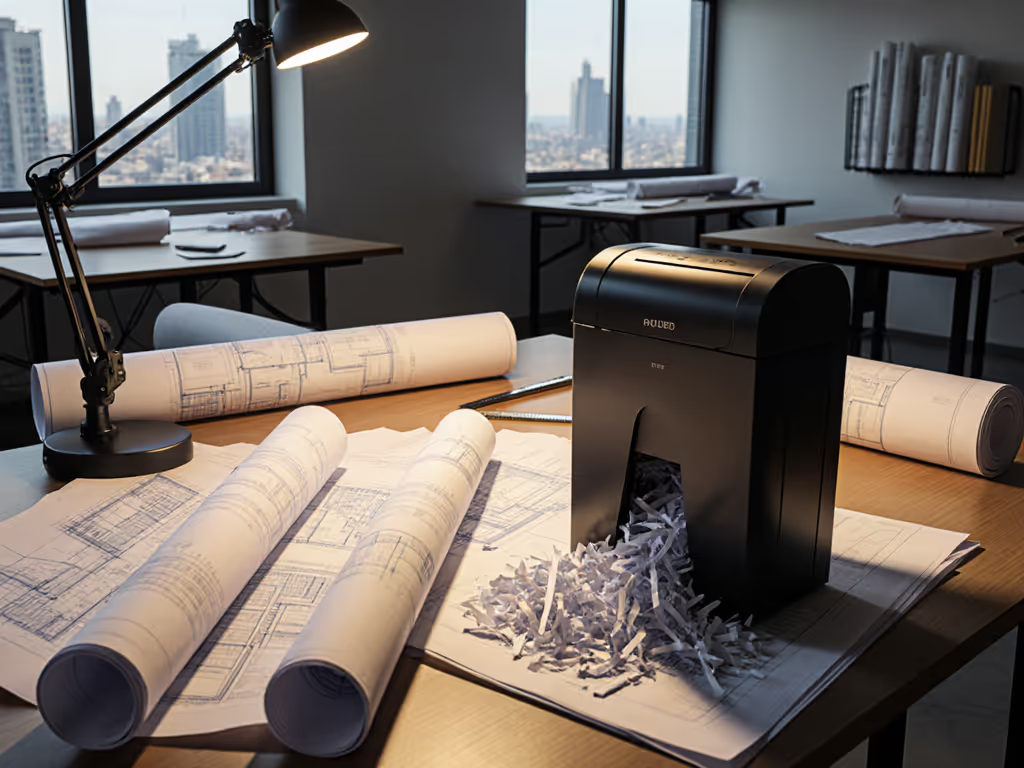
Design intellectual property is your competitive edge. When you're working with sensitive CAD documents, architectural plans, and client specifications (whether those are ANSI A through E formats or the larger A1/A0 paper shredding needs common in professional practices), you face a quiet threat: improper disposal. A blueprint left in a dumpster, a specification sheet glimpsed by the wrong eyes, or a scan of your construction details circulating beyond your team can translate to stolen ideas, compromised client trust, and regulatory exposure. For the legal frameworks behind secure disposal, review our document destruction compliance guide.
Securing design IP with shredders that integrate into your workflow is not about paranoia; it is about control. For industry-specific considerations, see our architecture firm shredders guide. And control reduces anxiety.
In my years maintaining shared document-handling environments across offices and schools, I learned that reliable destruction, like reliable equipment in general, comes from matching the right tool to the habit, not chasing novelty specs. This guide walks you through selecting, integrating, and maintaining a blueprint shredder that turns disposal from a vulnerability into a tidy, forgiving routine.
Why Architectural Offices Underestimate Destruction Needs
Many design firms and small architectural practices treat document disposal as an afterthought. A typical workflow involves:
- Revisions and drafts: Multiple blueprint iterations, rejected versions, and "for reference" copies that need purging.
- Client communications: Marked-up plans, contractor feedback sheets, and specification sheets containing proprietary methods.
- Vendor and partner materials: Supplier catalogs, material specs, and competitive bids that reveal your sourcing strategy.
- Regulatory compliance: Project documents that, under GLBA, HIPAA (if medical facilities are involved), and GDPR-adjacent practices, require documented destruction.
Yet many architects operate with a generic office shredder designed for standard letter-size paper. When a 22" × 34" blueprint lands in the tray, the result is predictable: jam, frustration, and the temptation to toss it elsewhere.
Low-fuss habits beat heroics when the bin hits full. A shredder that handles your actual paper, not some theoretical ideal, becomes one you'll actually use.
1. Assess Your Document Volume and Format Reality
Before selecting a shredder, grade your jam-risk by understanding what's actually flowing through your office.
Step One: Categorize your paper streams.
- High-sensitivity: Client blueprints, proprietary construction details, pricing data, and structural calculations. These require cross-cut or micro-cut destruction (DIN P-4 minimum; P-5 or P-7 for finance or healthcare tie-ins).
- Medium-sensitivity: Preliminary sketches, internal meeting notes, material specs, and vendor communications. Strip-cut or cross-cut (DIN P-2 to P-3) is defensible.
- Low-sensitivity: General office waste, promotional materials, non-project correspondence. Lower security suffices.
Step Two: Measure your typical paper footprint.
Architectural offices work with mixed formats:
- ANSI A (8.5" × 11") for specs and details.
- ANSI B (11" × 17") for preliminary room layouts and contractor sheets.
- ANSI C (17" × 22") for floor plans and elevation drawings.
- ANSI D (22" × 34") for complete building plans and site layouts.
- Custom large-format (24" × 36", 30" × 42", 36" × 48") for comprehensive site and construction master plans.
A responsible blueprint shredder must handle at least ANSI D (22" × 34") and ideally the larger formats. If you're working with 30" × 42" specification sheets, your shredder must accept that width or you'll be folding, and folding creates the exact jam-risk I spent years trying to eliminate.
Step Three: Estimate monthly volume in sheets.
Let's be honest: most offices undercount. A typical small-to-mid-size architectural practice processes:
- Solo architect or small 2 to 3 person firm: 200–400 sheets per month (mostly letter and legal, some blueprints).
- Mid-size studio (5 to 10 people): 800–1,500 sheets per month (mixed formats; weekly purges of drafts and revisions).
- Larger practice or shared design office: 2,000+ sheets monthly, including contractor files, vendor materials, and client archives.
Once you have a number, divide by the shredder's recommended maintenance intervals in minutes (how long it should run continuously) and duty cycle (the percentage of each hour it's safe to operate). A machine rated for 4 hours of intermittent use per day at 30% duty cycle isn't suitable for a Wednesday purge of 500 sheets. Understand run time limits and thermal recovery in our shredder duty cycle explainer.
2. Prioritize Cutting Level and Security to Your Actual Need
Confusion over DIN security ratings costs many practices money and leaves others exposed. For a deeper technical breakdown, see our DIN 66399 standard guide.
DIN P-2 (Strip-Cut, Approx. 12mm strips)
Security level: Low. Strips can be reassembled with effort.
Best for: General office clutter, promotional materials, non-project correspondence. Not suitable for architectural IP.
DIN P-3 (Cross-Cut, Approx. 4mm × 40mm pieces)
Security level: Moderate. Reassembly is time-consuming and impractical for casual theft.
Best for: Internal memos, preliminary sketches, vendor materials you don't mind competitors seeing.
DIN P-4 (Cross-Cut, Approx. 2mm × 15mm particles): Industry Sweet Spot for Architectural IP
Security level: High. P-4 satisfies most compliance standards (FACTA, GLBA, standard HIPAA workflows) and is the industry consensus for sensitive business documents.
Best for: Blueprints, client plans, pricing sheets, construction details, specifications, and most architectural IP. This is where reliability comes into play: a P-4 shredder that jams three times a day teaches people to avoid the shredder; one that runs smoothly gets used faithfully.
DIN P-5 (Micro-Cut, Approx. 2mm × 12mm particles)
Security level: Very High. Suitable for top-secret or highly regulated contexts (defense contracts, medical device manufacturing, high-stakes litigation).
Best for: Rare in architectural practice unless working on classified government projects or handling materials with embedded financial/medical data.
DIN P-6 and P-7 (Ultra Micro-Cut)
Security level: Highest. Overkill for most architecture firms; these are finance/government/espionage-grade.
Honest assessment: If you're not sure you need P-5, you need P-4. Buying higher than necessary inflates cost, reduces throughput, increases heat buildup, and creates jam-risk because tighter cutting mechanisms are less forgiving of mixed materials (staples, cardboard tape, thick cardstock).
3. Select for Large Format Secure Destruction Capability
A shredder that doesn't accept your actual blueprint width is worthless. Compare wide-format options tested on A3/A0 in our large paper shredder roundup.
Width Requirements
- Entry-level architectural need: 12" minimum (handles ANSI A, B, and most letter/legal).
- Standard architectural practice: 17" to 22" minimum (ANSI C and D; most A1 blueprints when folded).
- Comprehensive large-format capability: 30"+ (full-width A0 sheets, 30" × 42" specification pages, unfolded 36" × 48" sheets).