Paper Shredding Physics: Energy, Cuts & Particles
By Aisha Khan • 7th Mar

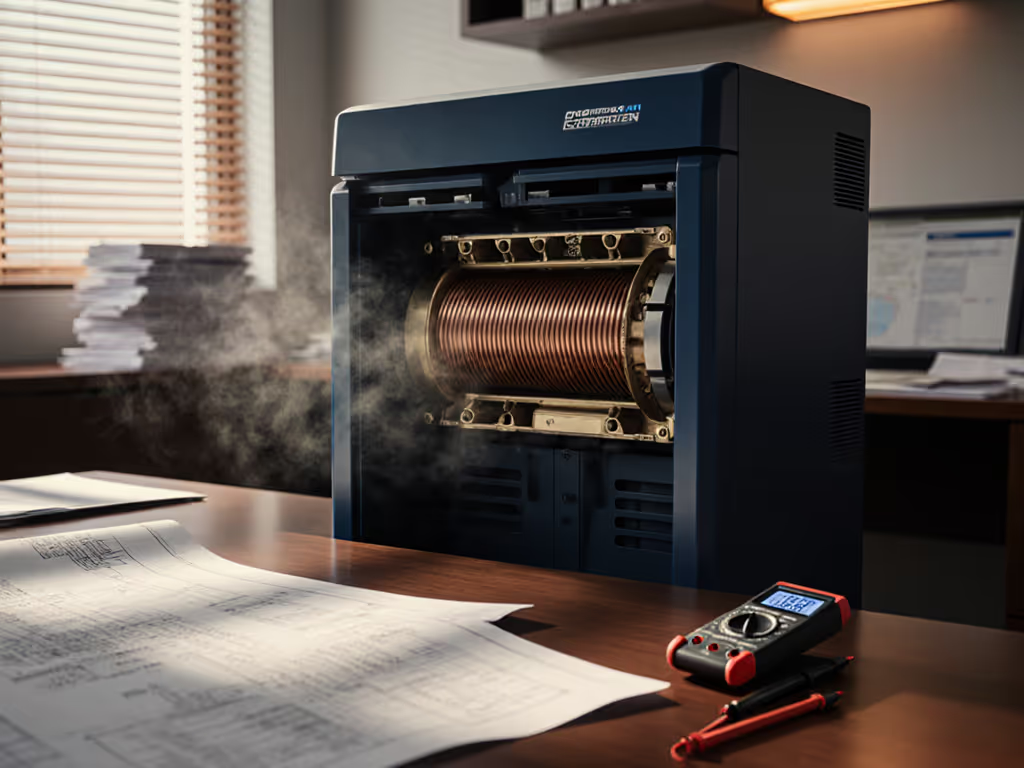
Paper shredding physics governs whether your machine delivers steady, predictable performance or leaves you with overheated blades and jammed documents. Understanding shredder mechanics means separating how motors, blades, and paper fiber actually interact from what manufacturers claim on the box. This isn't theoretical - it's the difference between a shredder that sustains your real workload and one that quits under pressure.
1. Motor Energy and Blade Rotation: The Foundation of Sustained Throughput
Every shredder converts electrical power into mechanical work through a motor that drives either high-speed or low-speed blade systems. A motor transfers energy to rotating shafts via belt and gear mechanisms; the tighter the connection, the more efficiently torque reaches the blades. This is where brochure specs often mislead. Manufacturers list peak wattage, but peak means briefly - under optimal conditions with light paper and no resistance. For a deeper look at how motor design drives torque delivery and durability, see our AC vs DC shredder motors.
Sustained throughput depends on continuous torque delivery, not peak motor horsepower. A pierce-and-tear system, for example, rotates at roughly 56 RPM with high torque, compared to hammermill designs that spin faster but with lower force per revolution. This low-speed, high-force approach means the motor doesn't strain as much during sustained feeding, reducing thermal stress and jam likelihood. The key metric isn't wattage - it's how much consistent rotational force the motor maintains under real load for a full run-time window.
2. Blade Design and Particle Size Control
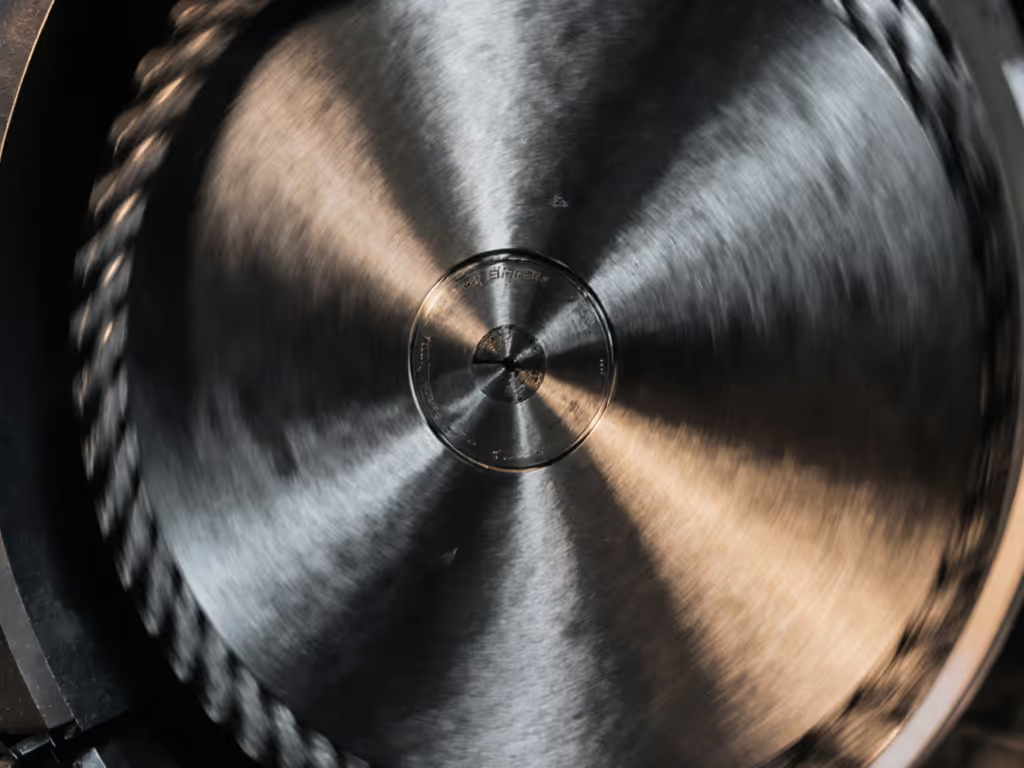
The physics of cutting paper begins with blade geometry. Shredders use sharp rotating teeth or circular knives with hooks that grab and pierce the fibers, then tear them apart as opposing blades meet. The hook tip does the piercing; the blade edge completes the tear. If the blade has a sharp tip, the result is segmented or granular particles; a flat edge produces longer strips.
Particle size is ultimately determined by the thickness of the knife set itself. Thinner knives (e.g., 1/2 inch versus 5/8 inch) create smaller, more uniform particles - which means higher security but also higher energy cost, because the motor must exert more force to subdivide each fiber. This trade-off is real: don't pay for micro-cut (P-5 to P-7) security when strip-cut (P-2) or cross-cut (P-3 to P-4) meets your actual sensitivity needs. Smaller particles also reduce baling efficiency and increase dust, a problem recyclers track carefully.
3. Paper Fiber Mechanics and Energy Consumption
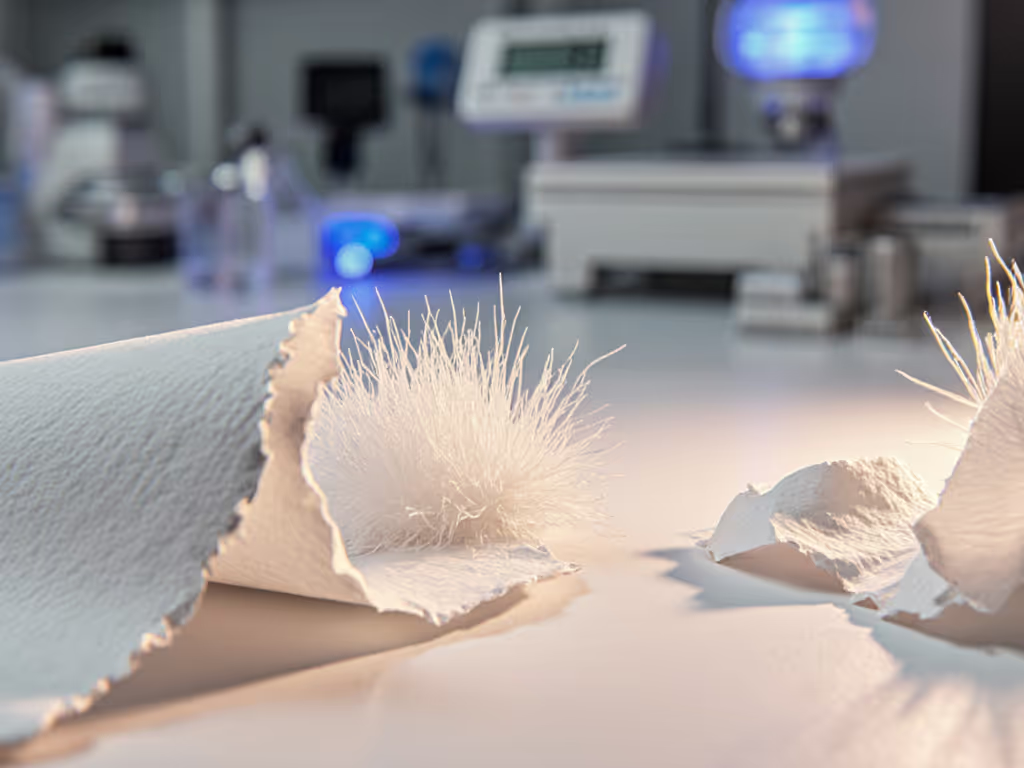
Paper isn't a uniform solid - it's compressed plant fibers bonded by lignin and sizing. When a blade encounters paper, it must overcome both the fiber tensile strength and the adhesive bond between fibers. Heavier paper (gsm higher than 100) and coated paper (glossy finishes, cardstock) demand more cutting energy per sheet because their fibers are denser and their coatings are harder to penetrate. If you regularly handle glossy or heavy stocks, review our glossy and cardstock shredding guide for model-specific performance tips.
This explains why auto-feed hoppers work only with standard 80-100 gsm office paper; mixed materials, junk mail with windows, and crumpled sheets introduce variable fiber density and require manual feeding. From a physics standpoint, you're not just cutting uniform cellulose - you're parsing inconsistent resistance, which exhausts the motor faster and raises jam likelihood. Plain-language math: if a shredder is rated for 15 continuous pages, and you feed it mixed envelopes and folded mail, sustained throughput drops to 8-10 pages before thermal or mechanical stress triggers a pause or jam.
4. Jam Physics: Material Compression and Motor Overload
A jam occurs when paper or foreign material (staples, clips, cardstock wedge) compresses between opposing blades faster than the motor can rotate them forward. The motor stalls, sensing the overload through increased current draw. Anti-jam technology detects this spike and either stops the motor or reverses it to eject the stuck material.
The physics driving jam risk: blade spacing, motor torque, and feeding consistency. Narrower blade spacing means finer cuts but tighter margins, and any deviation in paper thickness or alignment can trigger compression. Motor torque determines how hard the system pushes; low-torque designs stall earlier, triggering reversal before damage occurs. High-torque designs push harder, cutting through resistance but also burning energy and building heat. The sensible design choice: pierce-and-tear's low-speed, high-torque approach, which handles staples and clips with lower spark risk and fewer jams than hammermill technology.
During a quarterly document purge, I timed a 20-sheet unit's first run: eight minutes to process 150 sheets of mixed mail with clips. The motor cooled visibly, the gears audibly strained, and by minute nine it overheated and forced a 30-minute shutdown. The brochure promised 20 sheets per pass; the real behavior was 12 sustained sheets before thermal throttling. That taught me: measure sustained throughput under typical load, not peak capacity with ideal paper.
5. Thermal Physics and Duty Cycle Limits
Motors generate heat through electrical resistance and friction in the gearing. A shredder's duty cycle - the percentage of time it can run continuously without overheating - is governed by thermal dissipation. A motor rated for 5-minute continuous duty can run five minutes, then must cool. One rated for 30-minute duty can sustain longer but may use a larger motor or active cooling (fans).
The thermal physics: sustained current draw creates resistive heating (Joules law). Gearing friction adds mechanical heat. Both must dissipate through the motor casing and ventilation. If ambient temperature is high (summer office, no AC), if duty cycle is exceeded, or if paper resistance is higher than design assumptions (thick, coated materials), the motor reaches thermal cutoff faster. Most modern shredders include thermal overload protection that shuts the motor down automatically; recovery can take 20-60 minutes, depending on design.
This is where real-world testing matters. A machine spec'd for 15 continuous sheets at 80 gsm in a cool lab may handle only 8-10 sheets in a warm office or with 100 gsm cardstock. Calculate your actual monthly volume, divide by 21 working days, and estimate peak-day throughput need. Then match it to a shredder whose duty cycle and continuous-running time have been independently tested, not just manufacturer-claimed.
6. Sound Physics and Noise Output
Shredding noise is complex. As blades cut fibers, stress waves propagate through the paper and into the mechanical system. The rotating blades also create air turbulence in the shredding chamber. Motor vibration couples into the chassis, which radiates sound into the room. A typical office shredder generates 70-80 dB(A) at 1 meter - equivalent to a vacuum or lawnmower. Some designs reach 60-65 dB(A) through dampening, slower blade speeds, and better vibration isolation.
The key: don't trust "quiet" as a descriptor. For measured data in shared spaces, see our quiet office decibel tests. Demand a measured decibel spec at 1 meter, ideally in third-party tests. A machine marketed as "quiet" might mean 75 dB(A), which is still loud in a shared or nighttime environment. Low-speed systems (like pierce-and-tear at 56 RPM) naturally produce less noise than high-speed, high-frequency blade impacts, but they're slower - a trade-off between throughput and acoustic comfort.
7. Particle Size Prediction and Security Trade-Offs
The final particle size depends on blade thickness, blade spacing, and the number of passes through dual shafts. Strip-cut (P-2) leaves strips of 12mm width or wider - fast to produce but low security. Cross-cut (P-3 to P-4) intersects vertical and horizontal cuts, reducing particle size to 4x40mm or finer - acceptable for most personal and small-office confidential data. Micro-cut (P-5 to P-7) reduces particles to 2mm or smaller, meeting government and medical compliance but at a 30-50% energy and time cost. For context on P-ratings, see our shredder security levels guide.
Don't overshred. If your documents contain no financial account numbers, medical IDs, or government credentials, P-4 cross-cut is sufficient. If you're a solo attorney handling client contracts or a healthcare admin with patient intake forms, P-4 still works. Only government contractors, intelligence agencies, and secure document facilities genuinely need P-5 or higher. Choosing P-7 for home office use is like buying a truck bed liner for a sedan - unnecessary expense and slower performance.
8. Real-World Testing: Separate Brochure Bursts from Real Performance
Manufacturers test shredders in ideal conditions: room temperature, 20 lb bond paper, perfect alignment, no jams, no mixed materials. Real offices are messy. Documents arrive as thick paper, glossy postcards, envelopes with window plastic, stapled packets, and pages folded into thirds. Temperature fluctuates. Bins fill and slow feeding. Sustained throughput - the pages you actually process without stopping - is 40-60% of the peak brochure spec, according to field data.
When comparing models, ask for or seek independent test results that measure continuous run-time, jam-rate per 100 sheets, thermal recovery time, and sustained throughput under mixed-material feeding. Ignore peak capacity; it's a ceiling you'll never hit. Focus on the sustained window - how long can this machine run before it needs cooling, how many jams does it incur, and how long does recovery take. If a vendor won't provide this data, they're selling brochure bursts, not reliable machines.
Actionable Next Steps
Before buying, conduct a one-week audit: collect all the documents you'd shred in a typical week, categorize them by type (office paper, mail, cardstock, envelopes, stapled packets), measure the total weight or sheet count, and note peak daily volume. Then use this real data to match against a shredder's sustained duty cycle, not peak capacity. Request independent test reports or user reviews that mention jam rates, thermal shutdowns, and actual throughput under mixed materials. If a shredder can sustain your peak-day volume with a 50% headroom margin and includes auto-reverse jam protection and adequate cooling time between batches, it's right-sized. Don't overpay for security levels or speeds you won't use. Numbers first, marketing claims second - that's how you separate the machines that work from the ones that disappoint under real load.