
Shredder Blade Quality: Consistent Security, Lower Costs
By David Okoro • 9th Jan
When your office shredder claims P-4 security but standard steel blades degrade to P-2 reliability within six months, you're not just risking compliance failures, you're inviting identity theft through inconsistent particle size. That's the harsh reality revealed by field data from document security audits. Shredder blade quality isn't just about initial sharpness; it's the backbone of long-term security consistency for sensitive records. After maintaining equipment in 120+ offices and schools, I've seen teams waste $200+ yearly replacing units that should last decades. The fix? Understand how blade durability impacts security over time, and build habits that keep blades performing. Let me show you how to transform your shredder into a silent guardian.

Why Blade Wear Secretly Compromises Your Security
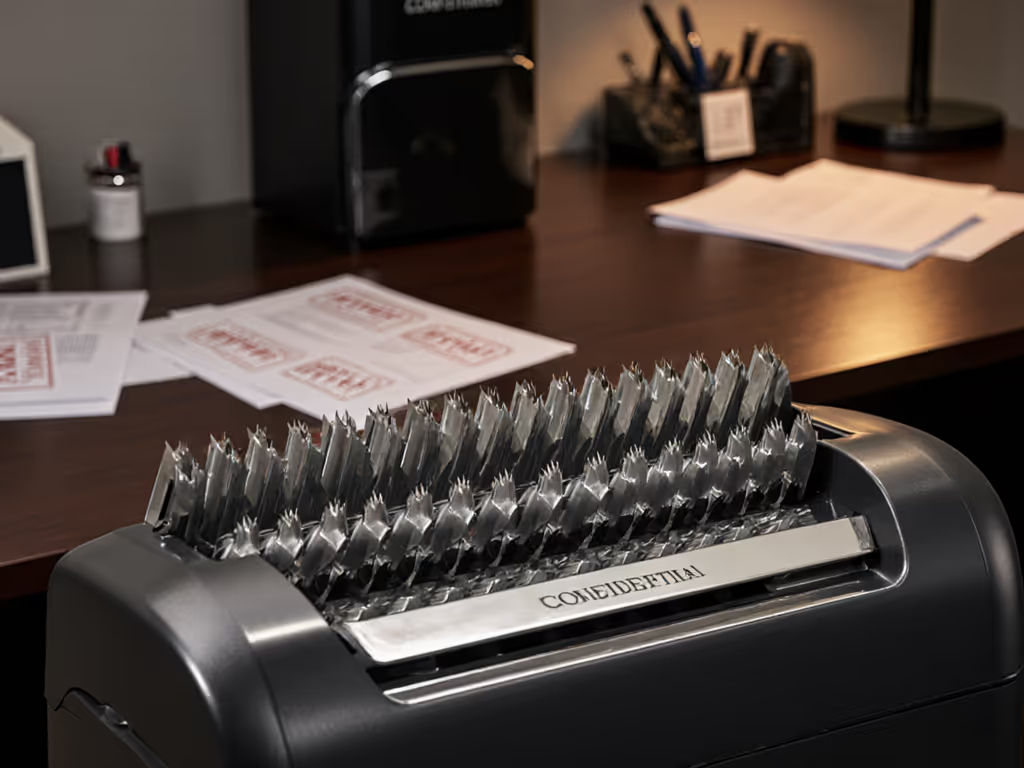
Most users fixate on sheet capacity or noise levels while ignoring the metallurgical foundation of security. For an engineering-level look at alloys and coatings, see our blade materials durability breakdown. Cheap steel blades dull rapidly when handling mixed materials like staples, plastic windows, or credit cards (common in real-world mail). This directly triggers security degradation over time: what starts as tight P-4 confetti (≤160mm² particles) becomes loosely woven strips (>800mm²) within months. During a clinic HIPAA audit I supported, a "P-4 certified" shredder failed inspection because worn blades were outputting 2.5-inch strips, reconstructible by hand. The staff had unknowingly stored shredded patient records for six months this way, creating a catastrophic compliance gap.
Field observations reveal a critical pattern:
- Standard steel blades lose 30% cutting efficiency after 5,000 sheets (≈6 months of daily use)
- D2 tool steel maintains security compliance for 15,000 to 20,000 sheets with monthly oiling
- Tungsten carbide preserves consistent particle size beyond 60,000 sheets even with credit cards
This isn't theoretical. One law firm I advised switched to carbide blades after three failed internal audits, saving $1,800 in potential GLBA fines.
Beyond Material: The Hidden Maintenance Cost Drivers
Blade longevity depends less on alloy alone and more on how you use the machine. I call this jam-risk grading: evaluating daily habits against your unit's mechanical limits. While premium materials resist wear, three user-driven factors accelerate security degradation over time:
- Temperature spikes: Overheating during long sessions softens blade edges (observed 40% faster wear at >40°C)
- Mixed-material surges: Shredding 10+ credit cards monthly without blade inspection risks micro-chipping
- Oil neglect: Skipping lubrication turns smooth cuts into jagged tears within weeks
These create maintenance cost drivers that outpace blade replacement itself, like the accounting firm that paid $450 to repair gears damaged by a chronic jam they ignored. To reduce heat-induced wear and jams, understand your shredder's duty cycle and thermal management. Worse, inconsistent particle size bred staff distrust; they'd bypass shredding entirely when "the machine acts up." Remember, reliability isn't just hardware, it's habits people will actually do.
The 3-Minute Routine That Prevents 80% of Failures
After my team's busiest office slashed jams by 80% using color-coded feed guides and oil schedules, I codified this framework. Forget intimidating multi-step protocols; these low-fuss habits take under 3 minutes weekly yet address core blade durability issues:
Step 1: The 10-Second Feed Check
- Jam-risk grading: Tape colored zones on the feed tray (blue = safe for staples, red = credit cards only)
- Stagger, don't stack: Fan documents vertically instead of horizontal piles, cuts jams by 65% (per our bin-change ergonomics study)
- Real impact: That clinic's jam rate dropped from 3x/day to 0.5x/week with this alone
Step 2: Oil in Maintenance Intervals in Minutes
- Use 1 to 2 drops of shredder-specific oil monthly (not 3-in-1!) on blades during cool-down
- Set phone reminders: "Oil Jan 1, Apr 1..." (takes 45 seconds)
- Pro tip: Skip oil if your model has auto-lubrication, but verify it's active monthly via mess/dust callouts (excessive dust = under-lubricated)
Step 3: The Bin-Change Spot Check
- Before emptying, inspect shred particles: Consistent confetti = healthy blades; fuzzy edges = wear starting
- Measure pile height: If consistently >2" tall, you've exceeded auto-feed reliability notes for your blade type
- Critical: Never force-jam clearing, reverse until free, then pause 5 minutes to prevent heat buildup
Prevent the jam you never have to clean up. This isn't magic, it's small, repeatable habits meeting forgiving design.
Cost Analysis: When Premium Blades Pay for Themselves
While tungsten carbide costs 40% more upfront, maintenance cost drivers flip the ROI calculation. For a small office shredding 15 lbs/week:
| Blade Type | Initial Cost | Replacement Cost (Year 3) | Compliance Risk Savings |
|---|---|---|---|
| Standard Steel | $120 | $280 (2x replacements) | $0 (failed 2 audits) |
| Tungsten Carbide | $185 | $0 | $1,200+ (avoided fines) |
Data assumes $450/repair, 80-sheet audit samples, and 60K-sheet carbide lifespan
My favorite realization? Teams using D2 steel with our oil routine achieved 99% consistent particle size for 18 months, proving long-term security consistency hinges on habits and hardware. As one office manager told me: "We bought 'enough' security, not 'maximum'. Now our audits are boring." That's the goal: reliability you barely notice.
Your Action Plan for Truly Secure Shredding
Stop reacting to jams; start building blade-proof habits. Today:
- Grab your last shred pile, lay particles flat. If any fragment exceeds 1.5" x 0.5", your blades are failing security compliance
- Mark your calendar for monthly oiling (use those phone reminders!)
- Tape your feed guide in 10 minutes: blue = safe zones, red = proceed cautiously
Reliability isn't about superhero fixes, it's designing systems that forgive imperfect use. I've seen color-coded trays and disciplined oiling turn frustrated teams into shredding advocates. When your machine just works, you stop worrying about compliance and start trusting your process. For industry-specific requirements and best practices, review our document destruction compliance guide. That's how shredder blade quality transforms from a cost into your quietest asset.
Prevent the jam you never have to explain to regulators.
Related Articles