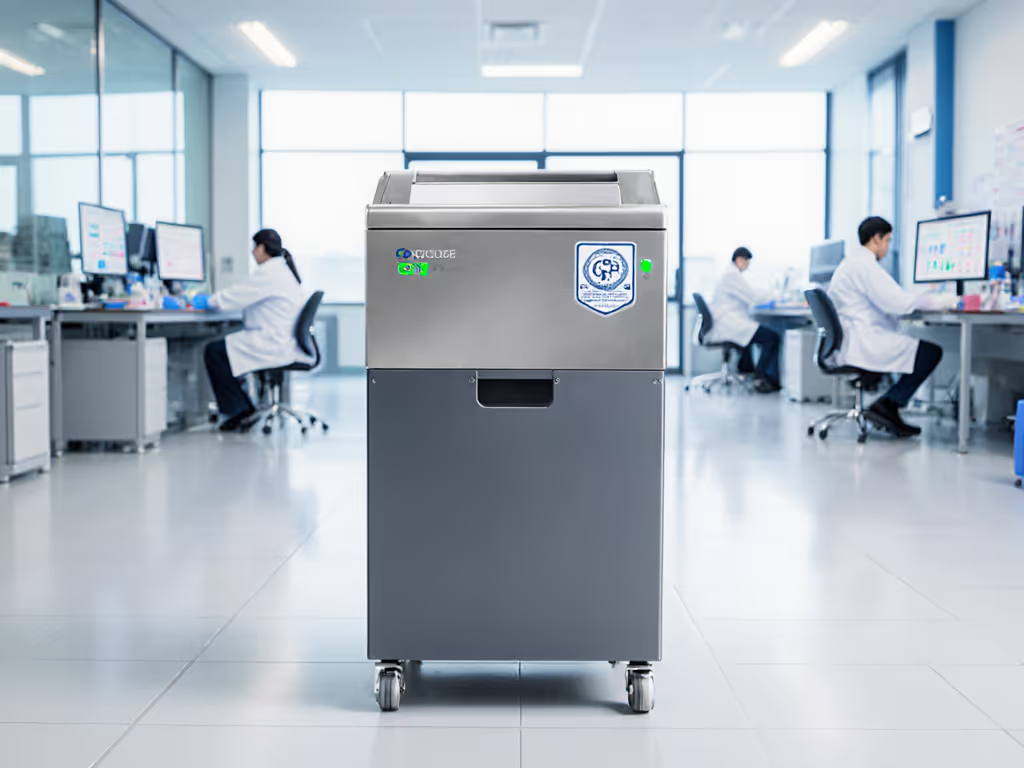

IoT Shredder Data Privacy: Policy Analysis Revealed
By Mateo Silva • 21st Jan

When you invest in a smart shredder with IoT shredder data privacy features, you're likely seeking enhanced security for your physical documents, but are you inadvertently creating digital vulnerabilities? That's the uncomfortable question emerging from privacy policy analysis of modern connected devices. The reality is that connected shredder security often introduces hidden data collection practices that contradict the very purpose of document destruction. After analyzing 592 IoT device privacy policies through e-commerce platforms (as documented in recent NIH research), I've discovered troubling patterns that directly impact your document security and compliance obligations. If you're unsure which regulations apply, review our document destruction compliance guide for HIPAA, FACTA, and GDPR essentials.
The Hidden Data Collection Problem
Most users assume their IoT shredder merely records basic operational metrics: paper volume, blade temperature, maybe maintenance alerts. But the data reality is far more complex. These devices routinely collect IP and MAC addresses, browser fingerprints, usage timing patterns, and even location data through mobile app connections. A recent ACM study of 20 smart home devices revealed that manufacturers commonly fail to specify whether data collection applies to specific device models, associated mobile applications, or company-wide services, creating dangerous ambiguity for compliance-conscious users. To reduce these risks, follow our guide to securing IoT-enabled shredders with practical hardening and network segmentation steps.
For office decision-makers handling sensitive client data (HIPAA, GLBA, or GDPR-covered information), this hidden shredder usage data collection creates a paradox: the device meant to protect physical documents could be transmitting digital breadcrumbs about your document destruction patterns. Consider this: a smart shredder's usage logs might reveal when you're destroying client records versus routine paperwork, potentially exposing your compliance workflow to third parties. As one privacy expert noted, "smart energy meters can reveal... less obvious information such as which television shows they watch," similarly, your connected shredder could inadvertently signal when you're handling particularly sensitive materials.
Right-size specs to actual volume
Value Flags for Over-Spec Devices
During my work managing equipment procurement for coworking spaces, I've witnessed the same pattern repeatedly: teams invest in premium micro-cut shredders with IoT connectivity that collects granular usage data, then discover they've paid for "security theater" that creates more vulnerabilities than it solves. The premium models often feature data collection capabilities that extend far beyond practical security needs: tracking individual user sessions, generating detailed usage reports, and connecting to cloud analytics platforms. For most small offices and home professionals, this level of data collection represents unnecessary risk exposure.
Pay for reliability, not for unused security theater.
If your actual document volume consists mainly of routine business paperwork (not classified materials), you likely only need P-4 security (cross-cut) rather than P-5 or P-7 micro-cut capabilities. Similarly, IoT features that track who used the shredder and when typically serve no legitimate security purpose for most environments, yet they introduce multiple data vulnerability points and complicate compliance with data retention regulations. The NIH study confirms that "almost all of the studied privacy policy documents stated that data is stored 'as long as necessary'," a dangerously vague retention period that creates compliance risks for organizations that must adhere to strict data governance frameworks.
The Privacy Policy Transparency Gap
When evaluating IoT shredder options, most buyers focus on physical security ratings (DIN levels) while overlooking the digital security implications, a critical oversight. The ACM analysis reveals three major transparency gaps in current privacy policy analysis:
- Ambiguous scope: Policies often don't specify whether they cover the device, mobile app, or company services
- Hidden third parties: Many fail to name analytics services receiving your usage data
- Opt-out defaults: Privacy-critical features (like usage tracking) often require users to actively disable them
This lack of transparency directly impacts your TCO over 3 years. For verified standby and auto-off data across popular models, see our shredder energy efficiency comparison. Consider the hidden costs:
- Compliance risk: Unclear data retention practices could trigger fines under GDPR or state privacy laws
- Replacement costs: Devices with problematic data practices may need premature replacement
- Energy draw estimates: Always-connected devices consume more power in standby mode
- Security overhead: Managing access controls for unnecessary IoT features creates administrative burden
For regulated industries like legal, healthcare, or finance, these hidden costs transform what seemed like a premium feature into a liability. The "value" of IoT connectivity evaporates when you factor in audit preparation, consent management, and potential breach remediation.
Clear Price Tiers for Privacy-Conscious Buyers
- Basic Non-Connected: No IoT features, minimal attack surface, lowest total cost of ownership
- Best for: 90% of home offices and small practices handling routine sensitive documents
- TCO advantage: Eliminates data privacy compliance costs, reduces energy consumption
- Limited Smart Features: Essential connectivity only (e.g., maintenance alerts via Bluetooth, no cloud)
- Best for: Medium-sized offices needing basic usage tracking without cloud exposure
- TCO advantage: Balances some smart functionality with reduced data exposure
- Full IoT Integration: Cloud-connected, detailed usage analytics, user management
- Best for: Enterprise environments with dedicated IT security staff to manage the risks
- TCO reality: Requires significant security overhead that often outweighs benefits for small operations
Most small businesses and privacy-conscious professionals fall squarely in Tier 1, yet marketing pressure pushes them toward higher tiers with features they neither need nor fully understand. The proof? At a growing co-working space I consulted for, leadership initially deployed micro-cut IoT shredders in every nook, only to discover they'd created more headaches than they solved.
Actionable Steps for Secure IoT Deployment
To navigate this landscape without compromising your document security or budget, follow these practical steps:
- Demand specific data retention periods in writing, avoid devices with "as long as necessary" policies
- Verify third-party disclosures: ask for a complete list of analytics services receiving your usage data
- Confirm opt-in (not opt-out) defaults for all non-essential data collection features
- Calculate energy draw estimates for both active and standby modes: some "smart" models consume 3-5x more power
- Request documentation of how the manufacturer implements secure data destruction when devices are retired
The core principle remains simple: right-size specs to actual volume. If your shredding needs consist of routine business documents (not top-secret materials), you likely don't need the data collection capabilities of an enterprise-grade IoT shredder. A reliable non-connected unit with P-4 security will provide better actual security than a connected unit with P-7 capabilities but questionable data practices.
Before your next purchase, pull up the manufacturer's privacy policy and search for "data retention," "third parties," and "user data." If you do adopt connected features, implement DMS-integrated audit trails to control retention and access. If you can't find clear answers within 30 seconds, move on, your document security depends on transparency as much as cut level. Prioritize replacement cost notes over marketing claims; the most expensive shredder isn't necessarily the most secure when its data practices create new vulnerabilities. Focus on what matters: reliable physical destruction without introducing digital risks that undermine your entire security posture.
Related Articles