
Food Safety Log Destruction: Restaurant Compliance Guide
By Priya Nair • 18th Jan
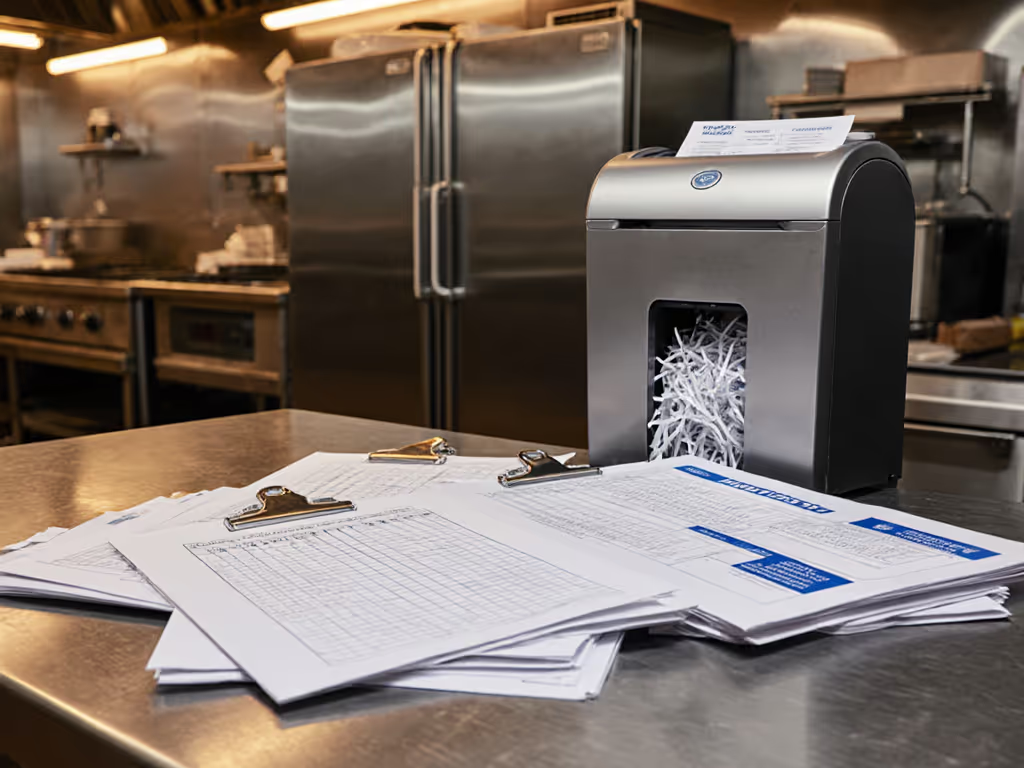
Restaurant document destruction isn't optional; it's the final, critical step in food safety compliance. When health inspectors review your establishment, they don't just check current logs; they verify your entire records management lifecycle, including how you destroy sensitive documentation. Food industry shredder compliance ensures discarded logs (containing temperature readings, supplier details, or employee health checks) never become liability vectors. Get this wrong, and you risk fines, reputation damage, or worse: compromised consumer safety. Get it right, and you create a seamless, auditable system that is as unremarkable as it is essential.
This guide cuts through the noise using DIN 66399 cut levels (the global standard for secure destruction) to map your food safety logs to proportionate security measures. No overkill. No security theater. Just methodical, consistent practices that align with California's Retail Food Code (§114310), FDA guidelines, and BRC standards. Remember: Match the document risk to the shred, not the hype. For a broader overview of regulations like HIPAA, FACTA, and GDPR, read our document destruction compliance guide.
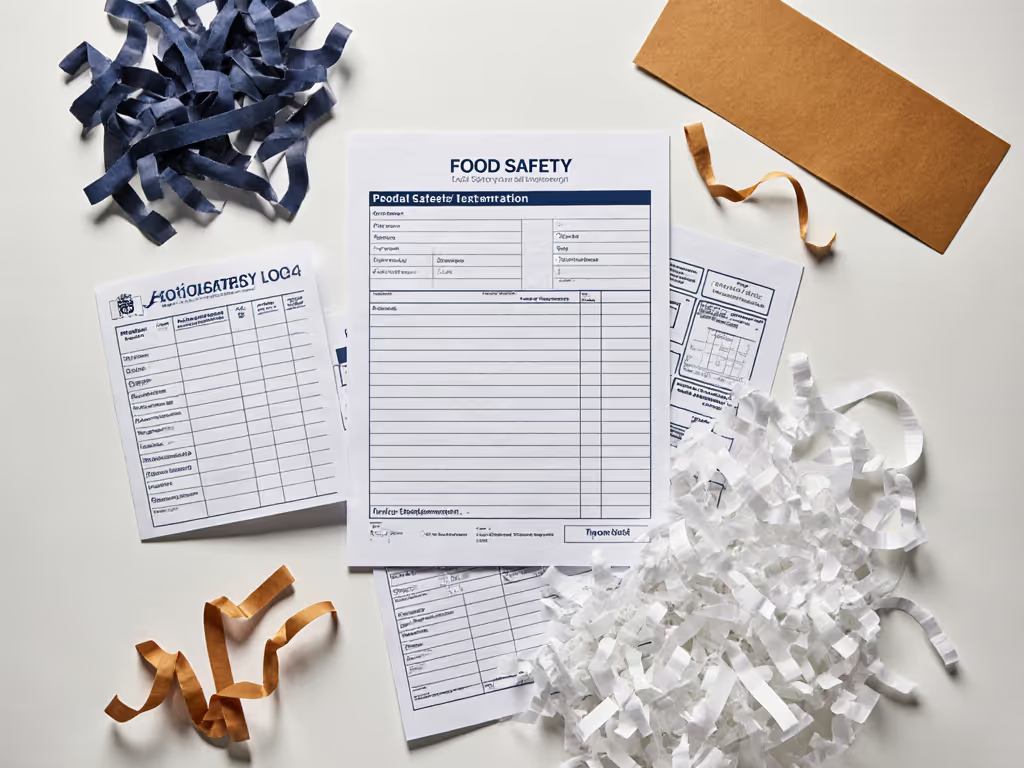
Why Your Restaurant's Log Destruction Strategy Matters
Food safety logs document critical operational data: cooking temperatures, allergen controls, sanitation schedules, pest control reports, and employee health screenings. While retention periods vary (e.g., California requires 2 years for temperature logs under SB 1383), destruction timing is equally regulated. Simply tossing logs in the trash violates federal privacy laws like HIPAA for health-related staff records and California Civil Code §1798.80, which mandates secure disposal of any customer or employee data. Improper destruction invites:
- Regulatory fines (up to $11,000 per HIPAA violation)
- Reputational harm from leaked supplier contracts or safety gaps
- Legal liability if discarded logs reveal unresolved health violations
During a recent health department audit, one diner's neatly labeled shredding bins (paired with signed Certificates of Destruction) became the easiest compliance win. The inspector noted it took 30 seconds to verify chain-of-custody logs. Privacy is a process, not a single dramatic event; it's baked into daily workflows.
FAQ: Food Safety Log Destruction Compliance
Q: What food safety logs MUST be securely destroyed vs. simply discarded?
A: Only logs containing personally identifiable information (PII) or sensitive operational data require certified destruction. Focus on:
- Employee health records (e.g., illness reports under FDA Food Code §2-201.11)
- Supplier invoices listing allergens or proprietary recipes
- Customer incident reports (e.g., complaints involving medical details)
- Internal audit trails of corrective actions for violations
Routine temperature logs without PII? Shredding isn't legally required, but do it anyway. Chain-of-custody reminders keep staff vigilant. As one small-chain owner told me: "If a competitor finds our discarded pest control logs, they see our weak spots." Retention periods from California's Retail Food Code inform timing:
| Document Type | Minimum Retention | Required Destruction Method |
|---|---|---|
| Cooking temperature logs | 90 days | P-2 (strip cut) |
| Employee health records | 3 years | P-4 (confidential) |
| Foodborne illness incident reports | 6 months | P-5 (high-confidential) |
| Supplier certificates (allergens) | 2 years | P-3 (sensitive) |
Q: How do DIN 66399 levels apply to restaurant logs?
A: DIN level spelled out protection is non-negotiable for PII. Here's risk category mapping for common logs:
- P-2 (Strip Cut): Basic operational logs (e.g., daily sanitation checklists without signatures). Acceptable for non-PII items under FDA 21 CFR §110, but rarely ideal for restaurants.
- P-3 (Cross Cut): Supplier invoices, training rosters. Use for documents with business-sensitive data (e.g., proprietary cleaning schedules).
- P-4 (Confidential): Employee illness records, customer allergy notes. Required for HIPAA-covered health data under Cal/OSHA
- P-5 (High-Confidential): Incident reports involving injuries or fatalities. Mandatory when PII intersects with litigation risk
Avoid under-shredding (P-2 for staff records = HIPAA violation) or over-shredding (P-7 for menu drafts = wasted resources). Food service privacy compliance means matching the medium to the risk (not the vendor's sales pitch).
Q: What proof is needed after destruction?
A: A Certificate of Destruction (COD) is your audit armor. Per California's SB 1383 recordkeeping rules, it must include: To automate COD creation and chain-of-custody logs, follow our DMS integration guide.
- Document type and quantity (e.g., "120 pages of 2025 employee health logs")
- DIN level of destruction (e.g., "P-4 cross-cut shredding")
- Date, location, and method of destruction
- Signatures of custodian and witness
${GENERic_IMAGE(certificate-of-destruction-example)}
Plain-language audit notes: Never write "records destroyed per policy." Specify "3 boxes of 2024 pest control reports shredded at P-3 level on 01/15/2026; COD #2026-001 filed."
Q: Can home office shredders handle restaurant logs?
A: Only for micro-businesses (<5 staff). Most commercial home office shredders lack the DIN-certified cut levels and throughput for restaurant volumes. If noise is a concern in tight back-of-house spaces, consult our shredder decibel comparison to select sub-52 dB models. Key gaps:
- Noise: 60+ dB models disrupt kitchens; seek <52 dB for shared spaces
- Capacity: Must handle 500+ sheets/day without overheating (common for 200-seat establishments)
- Security: Strip-cut home units fail P-3+ requirements for staff records
For 10+ staff, invest in a commercial cross-cut shredder (P-4 rated). For vetted options, start with our tested office cross-cut picks. Chain-of-custody reminders start with where you place it: Position near the office (not in public areas) to prevent tampering.
Beyond Shredding: Your Action Plan
- Map logs to risk categories (e.g., "employee health = P-4; temperature logs = P-2")
- Schedule destruction per retention rules (review CalRecycle's SB 1383 guidelines annually)
- Document every step: Use a COD template with DIN level spelled out
- Train staff on bin labeling: "P-4 ONLY: Staff Records" / "P-2: General Logs"
${GENERic_IMAGE/restaurant-document-workflow)}
Final Tip: Boring Compliance Wins Audits
Food safety log destruction succeeds when it's routine, not remarkable. Align your shredder's DIN level to actual risk, not fear. Audit-proof your process by making documentation so consistent it's uninteresting to inspectors. When privacy is a process, not a performance, you'll spend less time sweating compliance and more time serving customers.
Further Exploration → Download California's SB 1383 Recordkeeping Checklist (CalRecycle) → Access FDA's Food Code Retention Guidelines (Chapter 8) → Request DIN 66399 Compliance Templates for Restaurants
Related Articles