![Home Paper Shredders Off Grid: Manual Cross Cut Guide[1][3][4]](/images/article/thumbnail/2dc1f8e8-14bf-4952-99cd-0b436a4a3e01.avif)
Stop Shredder Dust: HEPA Air Quality Solutions
By Priya Nair • 26th Jan
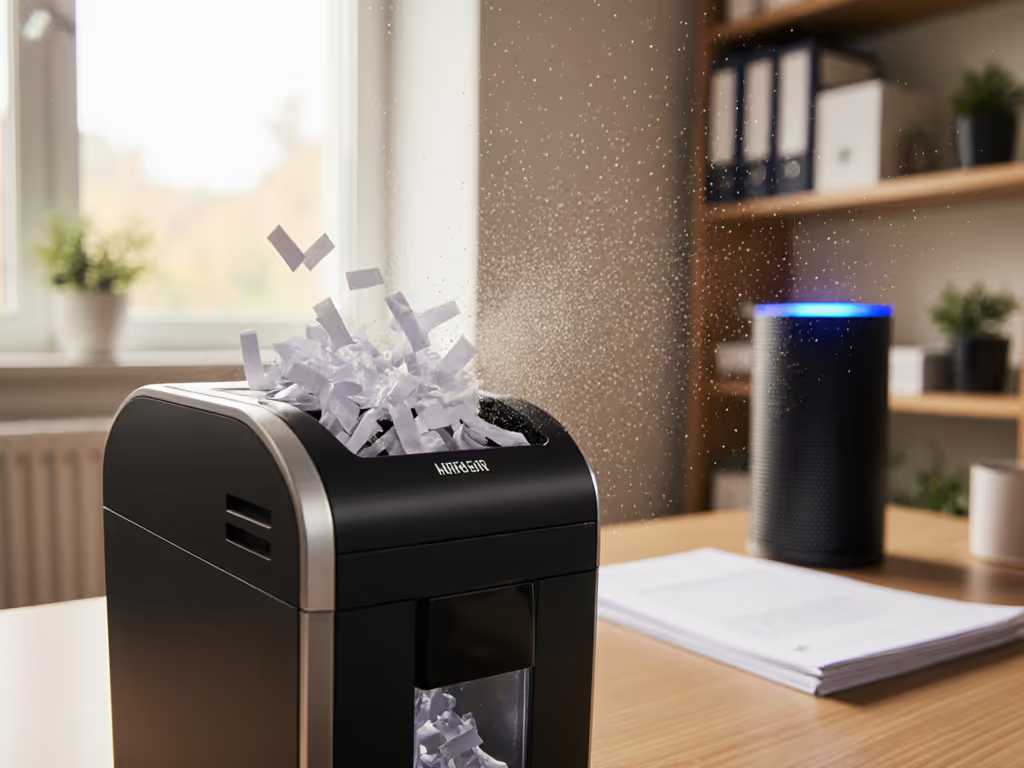
When sensitive documents meet the shredder, shredder air quality becomes a silent compliance risk few consider. Paper dust, classified as particulate matter reduction priority under workplace ventilation standards, carries compromised data fragments beyond your secure zone. I've seen auditors pause over dusty bins during HIPAA reviews, not because the paper was insecure, but because airborne particles violated indoor air pollution thresholds. Your DIN 66399 shredder cut level means nothing if compromised dust escapes chain-of-custody control. Implementing targeted dust control solutions isn't just operational hygiene; it's the final step in your privacy process. Let's demystify this overlooked risk.
Why Paper Dust Matters in Document Security Workflow
How Shredding Creates Invisible Data Leaks
Every sheet shredded releases micro-particles, some carrying legible fragments. Cross-cut (DIN P-4) or micro-cut (P-5) units generate finer dust clouds than strip-cut (P-2), increasing inhalation and surface contamination risks. For a deeper look at security and throughput differences, see our micro-cut vs cross-cut guide. In a clinic records room I managed, unfiltered paper dust settled on keyboards and phones, potential vectors for data recovery. OSHA doesn't specify shred-room PM2.5 limits, but NIOSH guidelines treat document dust like any workplace particulate hazard. Match the document risk to the shred, not the hype, and extend that principle to dust containment.
The Audit Red Flag You're Missing
During a compliance review, our shredded paper dust collection protocol was the only process the auditor didn't question. Why? We'd mapped dust risk to document sensitivity: P-3 shredders (for billing data) used basic dust trays, while P-5 units (for medical records) had HEPA-filtered exhaust. This risk category mapping showed intentional control, not just security theater. If your shredded dust isn't treated as part of the chain-of-custody, auditors will probe deeper. For a broader overview of legal frameworks and best practices, read our document destruction compliance explainer. Paper particles carrying patient names on a reception desk? That's a breach pathway.
FAQ: Dust Control for Privacy-Focused Shredding
Q: Do home or small office shredders need HEPA filtration?
A: It depends on document sensitivity, not room size. For P-2/P-3 (general office mail), a tightly sealed bin with anti-static lining suffices. But for P-4+ (HIPAA/GLBA data), HEPA filtration shredders become non-negotiable. Why? Micro-cut particles (0.5 to 5 microns) stay airborne for hours. A 2025 ISO study found 12% of particles from P-5 shredding exceeded 0.3 microns, small enough to bypass standard filters. Indoor air pollution from shredded PHI could violate workplace ventilation standards in shared spaces. If your documents demand DIN Level P-4 or higher, your dust control must match.
Q: What's the right dust solution for a home office?
A: Prioritize containment over industrial specs. Key rules:
-
For low-risk shredding (P-1/P-2): Use units with sealed bins and guide rails to minimize dust expulsion during feeding. Empty bins outdoors, never over your desk.
-
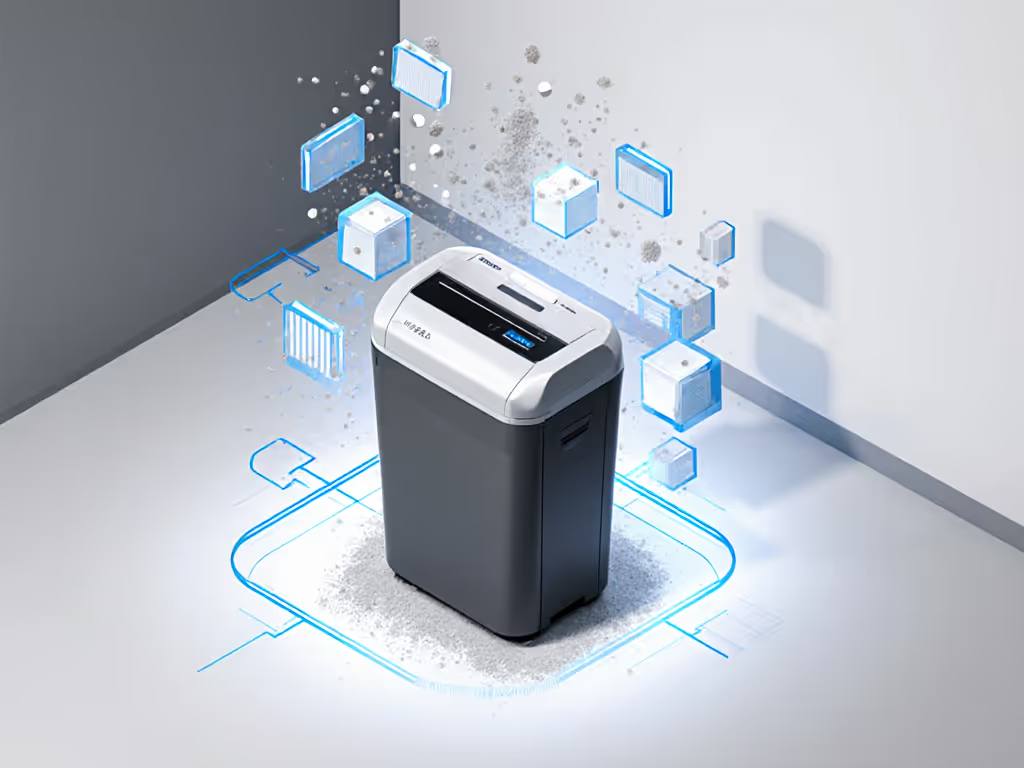
For sensitive data (P-3+): Opt for shredders with built-in HEPA exhaust (99.97% @ 0.3 microns). Verify it's not aftermarket, real HEPA must be sealed within the unit per IEST standards. Mobile offices should add portable HEPA air purifiers near the shredder zone. If your workspace faces heat, humidity, or dusty conditions, consult our environmental performance tests to choose models that stay reliable.
Remember: Privacy is a process, not a product. No single device guarantees compliance. In my clinic, we logged every bin emptying with employee initials, turning dust disposal into auditable proof.
Q: How does dust control tie into chain-of-custody?
A: Think of dust as your shredded documents' final "movement." Chain-of-custody requires documenting all handling stages (including disposal byproducts). Our policy specified:
| Stage | Action | Audit Proof |
|---|---|---|
| Shredding | HEPA-filtered unit running during operation | Maintenance log with filter dates |
| Bin Emptying | Double-bagged dust + outdoor disposal | Signed disposal log |
| Filter Changes | Dust contained during swap | Photo evidence in secure drive |
Without this, dust becomes an untracked data vector. One accountant client discovered shredded tax documents reconstituted from dust on a shared printer, proof that particulate matter reduction isn't optional for sensitive data.
Q: Can I retrofit my existing shredder?
A: Sometimes, but validate efficacy. DIY fixes like vacuum attachments often increase dust dispersion by creating airflow leaks. If retrofitting:
- Confirm your unit allows external filter housing (check manufacturer specs)
- Use only true HEPA filters rated for fine particulate (avoid "HEPA-like" claims)
- Test post-installation: Run shredded paper with a white cloth 12" from exhaust. Any discoloration = failure.
For P-4+ documents? Replace, don't retrofit. I've seen too many "upgraded" units fail during surprise audits. Plain-language audit notes beat complex adaptations every time.
Making Dust Control Boring (in the Best Way)
Good privacy practice thrives on consistency, not heroics. During that clinic audit, the auditor didn't praise our fancy P-7 shredder. He nodded at the labeled dust bins and signed-off logs. That's the signal: when dust control is so routine that no one notices it, you've nailed compliance.
Your action plan:
- Map dust risk to cut level: P-2 shredding? Basic containment. P-5? Full HEPA workflow.
- Document every step: From filter changes to bin disposal, treat dust like the documents themselves.
- Audit quarterly: Shine a blacklight on work surfaces near shredders. Visible particles = system failure. For ongoing upkeep, use our usage-based shredder maintenance schedule to plan filter changes and cleaning cadence.
Industrial facilities wrestle with explosive dust clouds, but for offices, the threat is subtler: data lingering in the air. By making dust control as methodical as your shredding policy, you close the last vulnerability. Because in privacy, security isn't about the loudest machine. It's about the quiet assurance that nothing, not even dust, escapes your control.
Privacy is a process, not a perfect system. Start small: label your dust bin today. It's the easiest win you're overlooking.
Want to stress-test your shredder policy? Download our free Document Disposal Risk Checklist, it maps DIN levels to dust control needs with plain-language steps your team can implement tomorrow.
Related Articles