Shredding vs. Alternatives: Real Costs, Right Security
By Mateo Silva • 19th Feb
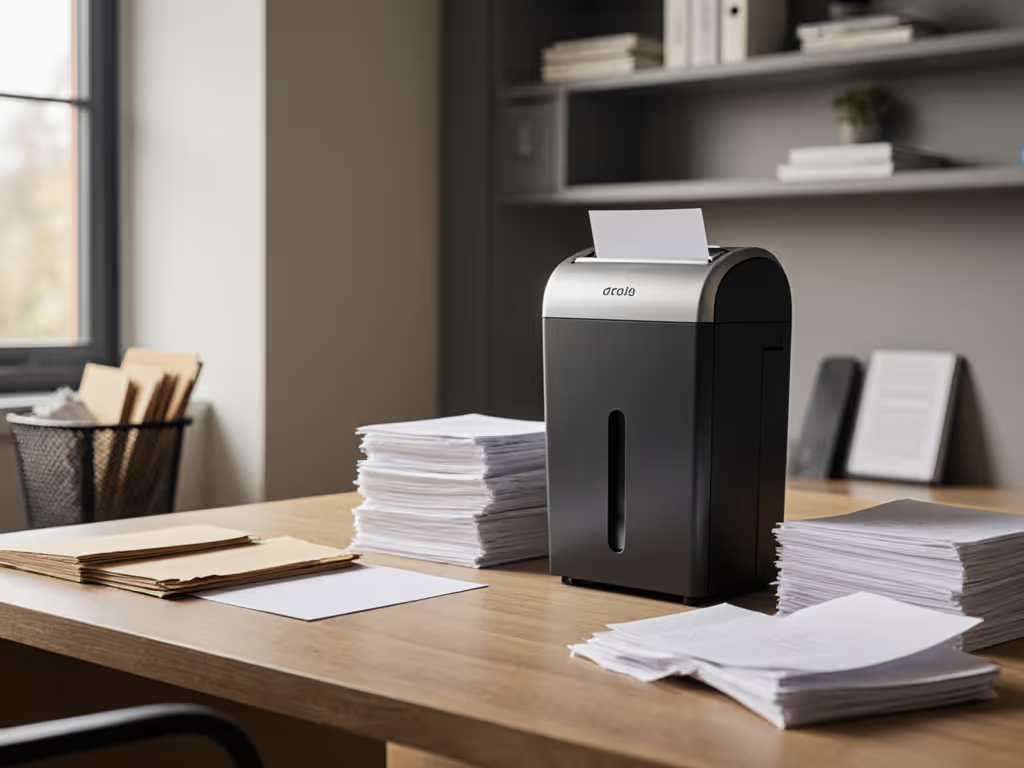
When sensitive documents land on your desk, the instinct is clear: they need to disappear securely. But "disappear" doesn't mean one thing anymore. You can buy a shredder or choose alternative destruction methods (ranging from commercial shredding services to pulping, incineration, and chemical destruction), each with starkly different price tags, security guarantees, and hidden costs. The question isn't which is most secure; it's which delivers the security you actually need without paying for capabilities you'll never use.
Most people assume a desktop shredder is the default. It's visible, immediate, and feels controlled. But that feeling can mask real inefficiency. For small volumes of routine mail, a shredder may be overkill. For high-compliance environments handling dozens of client files weekly, outsourcing may cost less than maintenance and replacement cycles. The gap between these scenarios is where real money lives, and where most buyers stumble.
The Main Destruction Methods: A Clear Price Landscape
Let's map the document destruction methods head to head. Prices and security vary wildly, and understanding both is essential for responsible spending.
In-House Shredding
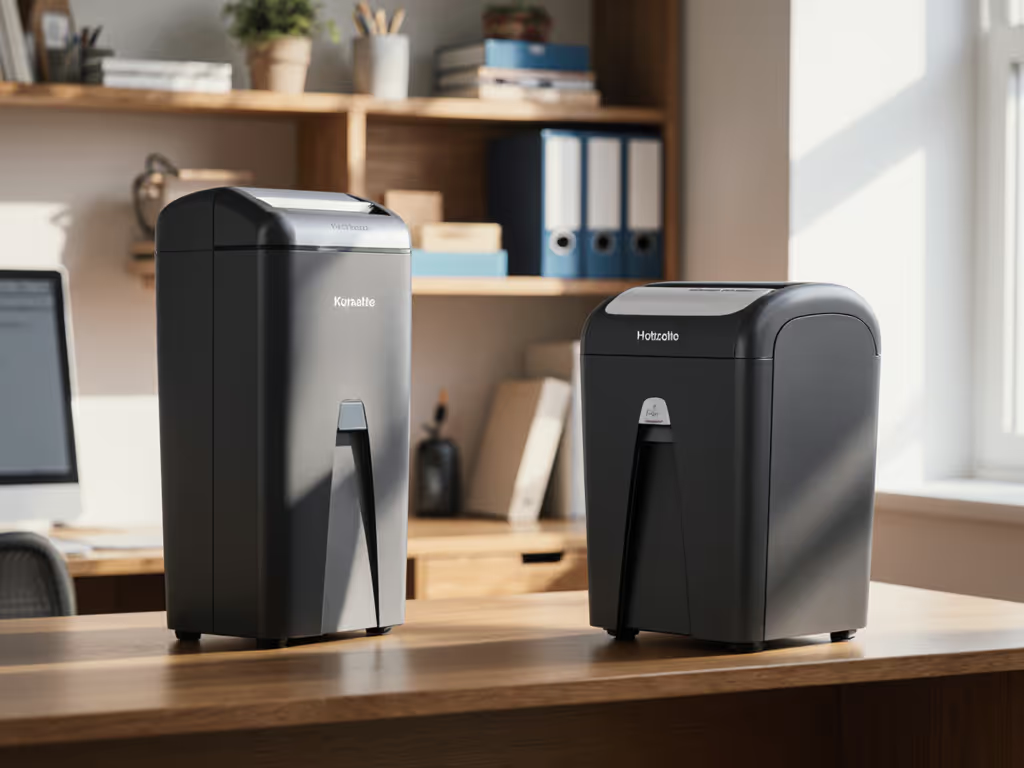
Shredding is the dominant choice for personal and small-office settings. Costs run $0-$3,000+ to own (depending on capacity and build quality), plus recurring costs: power, maintenance, replacement bags or bin liners, occasional blade oil, and eventual motor burnout.
Per-use costs are invisible. For a deeper dive into true ownership math, see our cost-per-sheet analysis across usage scenarios. A $300 cross-cut shredder over 5 years of regular use (factoring in electricity ($50/year), replacement parts ($30/year), and eventual disposal) lands at roughly $0.10-$0.30 per batch if you shred once or twice weekly. That's cheap if you're actually using it. It's expensive if it sits idle most months, and genuinely wasteful if you bought P-5 security when P-3 would have sufficed.
Drop-Off Shredding Services
This is the overlooked champion for small, irregular volumes. Retailers like FedEx and UPS stores, plus independent shredding firms, charge $0.50-$1.50 per pound. For a year's worth of personal documents (roughly 20-40 lbs), you'll spend $10-$60. You haul it in, pay, and walk out. No electricity, no maintenance, no guilt about a half-empty bin sitting under your desk.
Security scales too. Most drop-off services offer cross-cut or micro-cut shredding, which exceeds the needs of 90% of households. You pay for the method, not for ownership overhead.
Commercial Mobile Shredding Services
A truck arrives, shreds on-site, and you get a certificate of destruction. For 1-10 boxes, pricing runs $130-$175. For larger volumes, per-pound rates drop sharply, sometimes to $0.50-$1 per pound for bulk jobs.
On-site shredding carries a security premium. You watch it happen, the chain of custody is clean, and compliance documentation is immediate. If compliance drives your decision, our document destruction compliance guide breaks down HIPAA, FACTA, and GDPR requirements. That's valuable if you're handling HIPAA, GLBA, or legal client files. For personal tax returns and utility bills, it's theater. If you don't need it, don't fund it.
Pulping and Wet Destruction
Pulping vs shredding represents a different trade-off. Pulping (soaking documents in water and reducing them to pulp) is common in industrial recycling and large-scale operations. A single pulping machine costs $50,000-$300,000+, and per-ton processing runs $20-$50. For an individual or small office, this is a non-starter; you'd contract with a facility.
Security is high: reconstruction is virtually impossible. Compliance is strong for regulated industries. But cost-per-document at small scale is prohibitive. You're paying for a shared industrial process, not individual control.
Incineration
Incineration security comparison to shredding reveals a critical trade-off: absolute destruction vs. practicality. Incineration guarantees nothing recoverable remains, no fragments, no residue, no forensic recovery. A single-document incinerator costs $2,000-$15,000 and runs on gas or electric; operating costs are $0.50-$2 per document depending on weight and facility efficiency.
Regulatory hurdles are substantial. EPA emissions rules, local air-quality permits, and fire codes restrict where incineration is legal. Many urban areas ban it entirely. For a home office or small business, it's rarely feasible. For secure destruction of classified or highly sensitive materials (legal discovery, health records, financial data), it's sometimes mandated or advisable. But that's a narrow case.
Chemical Document Destruction
Chemical document destruction uses solvents to dissolve paper and ink, rendering recovery impossible. Industrial chemical processors charge $30-$100 per box or $0.75-$3 per pound. The process is thorough and compliant, but environmental impact is high, and local hazardous-waste regulations often restrict or prohibit it for general users.
This is specialist territory, and contract shredding firms or certified waste handlers use it for ultra-sensitive batches. Cost and regulatory friction make it impractical for routine use.
Security Levels: Matching Actual Need, Not Spec Creep
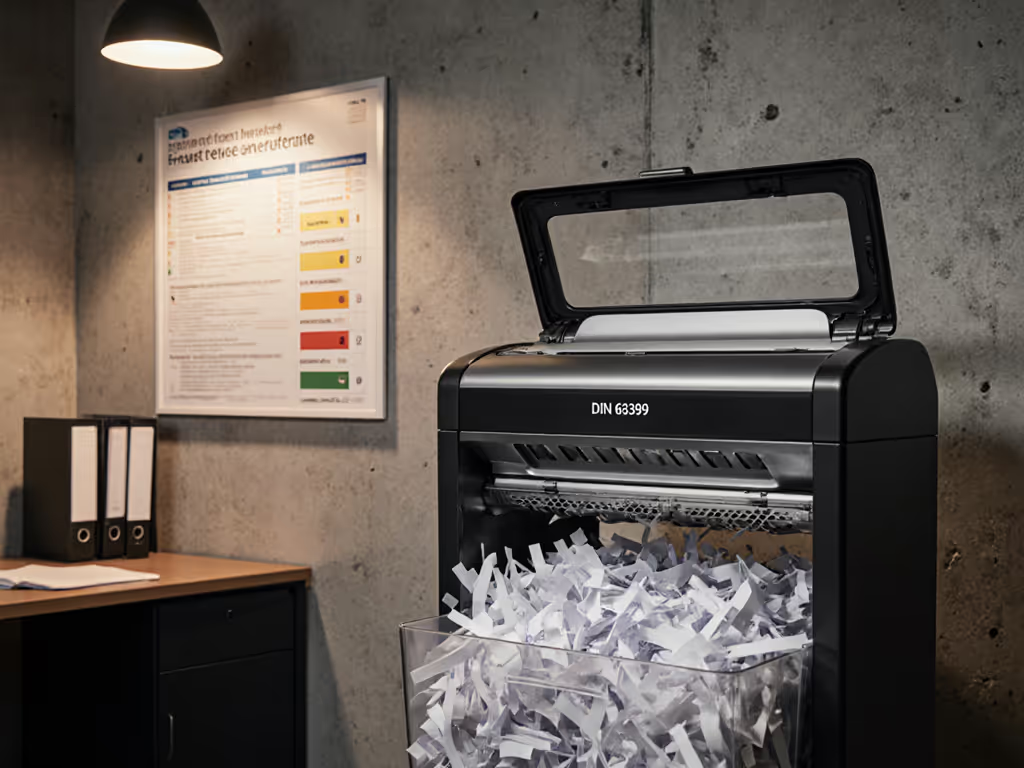
Every destruction method maps to a security classification. If you're new to ratings, our guide to shredder security levels explains P-1 through P-7 with real-world examples. DIN P-1 (strip-cut) is the weakest; DIN P-7 and NSA standards are near-military. The trap is overbuying.
For personal tax returns, utility bills, and junk mail: P-3 (cross-cut) is sufficient. For bank statements, medical records, and anything with SSN or account numbers: P-4 micro-cut is prudent. For financial advisor notes, legal discovery, or proprietary data: P-5 or higher makes sense.
Most commercial shredding services default to cross-cut or micro-cut, which covers 95% of legitimate needs. A personal shredder marketed as P-6? You're paying $400-$800 for security rarely triggered. That's the co-work lesson in miniature: we once bought micro-cut floor shredders for every nook, gorgeous machines, overpriced, and idle half the time. We mapped what actually got shredded, consolidated to two reliable cross-cuts in central spots, and cut spend by thousands. Nobody noticed the difference except finance.
Pay for reliability, not for unused security theater.
Total Cost of Ownership: The Hidden Arithmetic
Shredder ownership looks cheap upfront. A $200 cross-cut machine seems reasonable. But over 3 years, factor in:
- Purchase cost: $200-$600 (quality varies wildly)
- Annual electricity: $40-$80 (continuous-duty models use more)
- Maintenance and parts: $30-$100 per year (oil, bags, replacement feed roller, jam clearing)
- Eventual replacement: By year 4-5, most budget shredders burn out. Resale: $0-$50
- Disposal of old unit: $0-$25 (recycling fee or donation)
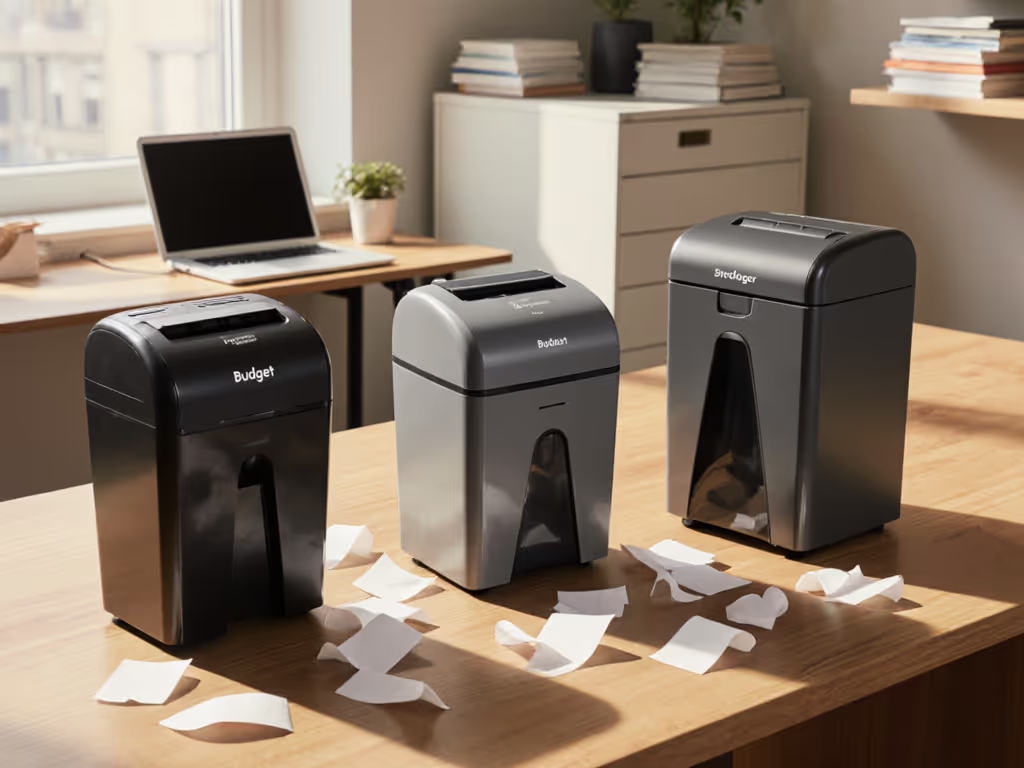
Total 3-year TCO: $320-$970 at regular weekly use. That's $0.20-$0.60 per session, reasonable if shredding is routine. If you shred 6 times per year, you've spent $50-$160 per session. Suddenly, drop-off shredding at $0.75/lb looks sane.
Commercial shredding services have their own TCO calculation. An annual audit by a legal firm might use a service 4-6 times per year, spending $40-$80 per service (for a small box), or $200-$480 annually. Add chain-of-custody certificates, and compliance is built in. Compare that to owning a machine, insuring against jams and breakdowns, and managing a bin of shredded paper.
Environmental and Practical Considerations
Energy draw matters. Continuous-duty shredders pull 800-1500 watts during operation; standby adds $10-$20 yearly to your bill. If you're shredding a small batch once weekly, you're burning 1-2 kWh per session. Over a year at typical residential rates ($0.14/kWh), that's $15-$30 just for power. Acceptable, but not negligible.
Disposal of shredded paper is straightforward, most curbside recycling accepts it. Pulp and incineration ash require hazardous-waste handling in regulated settings. This tilts the scale toward shredding for home and small-office use: simpler, lower friction, fewer environmental compliance headaches.
Noise is real. Strip-cut shredders run 65-75 dB; cross-cut and micro-cut run 75-85 dB. For tested noise data and quiet picks, see our shredder decibel comparison. That's apartment-hostile and loud enough to disrupt calls or concentration. Drop-off services and mobile shredding take this problem off your desk, literally.
When to Buy, When to Outsource
Use this framework:
Buy a shredder if:
- You shred 2+ times per week consistently
- Your documents are routine (no extreme security requirements)
- You have dedicated space and can tolerate the noise
- You're comfortable with maintenance
- Your 3-year TCO of $400-$700 beats your alternative (outsourcing 100+ sessions annually)
Outsource via drop-off if:
- You shred 2-4 times per year
- Volume per session is under 20 lbs
- Cost per session is under $20
- You value simplicity and zero maintenance
Contract commercial shredding if:
- You handle regulated data (HIPAA, GLBA, legal client files)
- You need formal chain-of-custody and destruction certificates
- Volume justifies on-site convenience (100+ lbs annually)
- Compliance risk outweighs the service premium
Consider pulping, incineration, or chemical destruction only if:
- Your security need is genuinely extreme (classified, ultra-sensitive discovery)
- Regulatory requirements explicitly mandate it
- You have budget for industrial-scale processing
- Local law permits it
Summary and Final Verdict
There is no universal best method. Shredding dominates because it's controllable, affordable at scale, and sufficient for most needs. But sufficient is not required for everyone.
For the home office handling personal mail and tax returns: drop-off shredding at $10-$40 per year beats machine ownership. You skip maintenance, noise, and guilt over an idle purchase.
For small business with routine client files: a mid-range cross-cut shredder ($300-$500) pays for itself in 2 years of weekly use, and compliance is straightforward.
For regulated environments: commercial mobile shredding ($150-$300 per session) is an insurance policy against chain-of-custody gaps and fines. The cost is business overhead, not personal waste.
For extreme security needs: industrial-scale pulping or incineration is justified, but rare outside classified or legal discovery contexts.
The real win is honest assessment. Map your actual volume, sensitivity, and frequency to the least-cost method that meets all three. Resist spec creep. Avoid buying shredding capacity you'll never fill. If you won't use it, don't fund it. The goal isn't the fanciest destruction; it's the calm, boring confidence that your sensitive papers are gone, without overhead, mess, or regret.
Related Articles