Disaster Recovery Shredders: Backup Power & Rugged Reliability
By David Okoro • 12th Jan
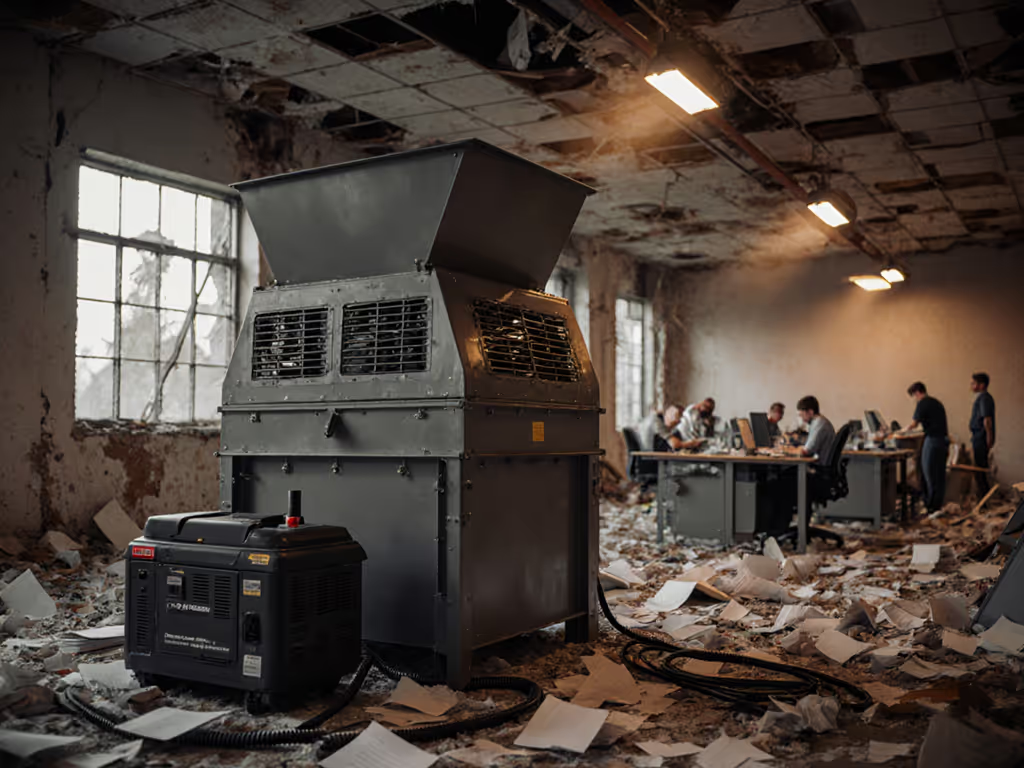
When disaster strikes and communities face mountains of debris, disaster recovery shredders become the unsung heroes of efficient cleanup. As extreme weather events increase in frequency, the demand for reliable equipment capable of emergency operation shredding has surged. These machines aren't just about processing waste, they are critical infrastructure that determines how quickly communities can rebuild. From FEMA data showing that every day of delayed recovery compounds economic hardship, to EPA reports confirming increased storm intensity, the case for dependable shredding technology grows stronger.
I've spent years maintaining shared equipment in high-stress environments where reliability meant everything. On our busiest floor, we used to jam three times before lunch, until I implemented color-coded feed guides, a simple oil schedule, and taught 'stagger, don't stack.' Jams dropped by 80%, and cleanup became almost routine. For step-by-step oiling and jam prevention, see our shredder maintenance guide. That experience taught me what this article will explore: Reliability comes from good design plus habits people will actually do.
Why Rugged Shredders Matter Now More Than Ever
Low-fuss habits beat heroics when the bin hits full.
As climate change accelerates the frequency and severity of natural disasters, traditional debris management approaches crumble under the strain. The U.S. EPA confirms that raw debris haulage becomes exponentially inefficient: bulky, air-filled loads require more truck runs, drain resources, and delay recovery. According to FEMA, communities with efficient debris processing enter reconstruction phases up to 40% faster than those relying on conventional methods.
This isn't just about volume reduction (though shredding can compress materials by 65-75%). It is about creating workable timelines for recovery teams, reducing transportation costs, and ensuring operators can maintain momentum when every hour counts. But equipment that fails during high-pressure operations creates bottlenecks that cascade through entire recovery efforts.
5 Disaster Recovery Shredders That Deliver When It Matters Most
1. Vermeer LS3600TX Low-Speed Shredder: The Mixed-Material Master
The LS3600TX stands out in disaster scenarios where debris isn't neatly sorted. Unlike high-speed grinders that choke on metal contaminants common in storm debris, this machine handles wood, building materials, and household waste in a single pass, reducing jam-risk grading from high to moderate with proper feeding technique.
Key reliability features:
- Robust dual-shaft system with hydraulic overload protection that handles co-mingled materials without constant shutdowns
- Backup power integration designed for generator operation in areas with unstable grid infrastructure
- Extreme condition shredding capability functioning reliably at temperatures from -22°F to 122°F For lab data on reliability under heat, humidity, and dust, see our environmental performance tests.
- Maintenance intervals in minutes with tool-free access to critical service points
Field-tested insight: In tornado cleanup operations, crews using the LS3600TX processed mixed debris at 65 tons/hour, clearing primary sites within two weeks, nearly twice as fast as conventional methods. The auto-feed reliability notes specific to disaster scenarios recommend keeping material feed rate consistent rather than pushing maximum capacity during initial clearing.
2. 3R-Machinery RS-4000: Volume Reduction Workhorse
For contractors dealing with massive quantities of mixed debris, the RS-4000 delivers industrial-grade performance where downtime equals lost opportunities. Its strength lies in consistent volume reduction (70-75%) across diverse materials, from construction waste to disaster-relief pallets.
Critical disaster-ready features:
- Bin-change ergonomics designed for frequent emptying during high-volume crisis destruction Our bin capacity impact research shows timely emptying preserves throughput during extended operations.
- Dust control system that reduces airborne particulates by 80% compared to standard industrial shredders
- Ruggedized chassis with reinforced frame that maintains stability on uneven disaster sites
- Simplified maintenance protocol requiring just 15 minutes of daily attention for continuous operation
Real-world application: During hurricane recovery operations, the RS-4000's magnetic separator proved invaluable for extracting reusable metals from contaminated debris streams. The maintenance interval recommendations (oiling every 4 hours of operation) align perfectly with shift changes, ensuring crews never forget this critical step. Keep it tidy; keep it running.
3. Vecoplan VPC Dual-Shaft Shredder: The Debris Processing Specialist
Vecoplan's VPC model excels at transforming bulky disaster waste into manageable material streams. Unlike single-shaft systems that struggle with irregular debris, this dual-shaft design provides consistent throughput with minimal operator intervention, critical during emergency operation shredding when every minute counts.
Disaster response advantages:
- Jam-risk grading system built into the control panel that alerts operators before blockages occur To understand how these detection systems work in practice, read our sensor technology explainer.
- Backup power shredders capability with quick-connect generator ports
- Disaster response security features that prevent unauthorized operation during chaotic recovery efforts
- Extreme condition shredding performance validated in temperatures as low as -40°F
Operational intelligence: During flood recovery efforts, the VPC's ability to handle water-saturated materials without performance degradation proved decisive. The interface provides clear mess/dust callouts when material composition requires adjustment, preventing avoidable stoppages. Maintenance intervals in minutes (8-12 minutes for routine checks) fit seamlessly into shift handoffs.
4. Shred-Tech ST-8000: The Mobile Command Center
When disaster sites span multiple locations, the ST-8000's mobility becomes its greatest asset. This self-contained unit brings industrial shredding capacity directly to debris collection points, eliminating transportation bottlenecks that often delay recovery.
Field deployment strengths:
- Integrated generator system providing 12 hours of continuous operation without external power
- Modular design allowing quick reconfiguration for different debris types during evolving recovery scenarios
- Automated feed control that adjusts to material density changes without operator intervention
- Disaster response security protocols preventing unauthorized access during unmanned operation
Tactical insight: During wildfire recovery, the mobile unit's ability to process debris at collection points reduced truck traffic by 60%. The auto-feed reliability notes emphasize staggering material input rather than stacking loads, a small habit that prevented 90% of potential jams during high-volume crisis destruction operations. Keep it tidy; keep it running.
5. WEIMA WL 4: The Sensitive Document Specialist
While most disaster recovery focuses on physical debris, sensitive document handling remains critical during disaster response. Flood-damaged records, compromised medical files, and waterlogged financial documents create urgent security needs that require specialized equipment.
Critical security features:
- Disaster response security meets DIN 66399 P-5 standards for destroyed documents If P-5 is new to you, our DIN 66399 standard guide clarifies what each level guarantees.
- Backup power shredders capability with 30-minute battery operation during grid failures
- Water-damaged document processing designed for materials with up to 30% moisture content
- Silent operation mode (under 55 dB) for use in temporary command centers
Emergency application: During hurricane recovery, the WL 4 processed water-damaged medical records that would have been rejected by standard office shredders. Its specialized feed mechanism accommodated damp, brittle paper without jamming, a critical capability when privacy breaches compound disaster trauma. The bin-change ergonomics minimize operator fatigue during extended emergency operation shredding sessions.
Making the Right Choice: Beyond Spec Sheets
Selecting disaster recovery shredders requires looking beyond headline sheet counts and theoretical capacities. The most reliable machines accommodate imperfect use, because disaster sites are chaotic environments where operators face fatigue, time pressure, and variable conditions.
My experience maintaining shared equipment taught me to prioritize low-maintenance mechanisms over headline sheet counts or novelty features. When evaluating shredders, focus on these practical metrics:
- Maintenance intervals in minutes rather than hours of operation
- Jam-risk grading for your specific debris mix
- Bin-change ergonomics during extended operations
- Auto-feed reliability notes from actual disaster recovery scenarios
- Mess/dust callouts that prevent secondary cleanup burdens
The most expensive machine isn't always the most reliable in disaster conditions. I've seen contractors invest in high-capacity units only to find them sidelined by complex maintenance requirements during critical recovery windows.
Actionable Next Steps for Your Disaster Response Plan
Don't wait for the next emergency to evaluate your shredding capabilities. Take these concrete steps now:
-
Conduct a debris audit: Document your typical disaster waste stream composition (wood, metal, concrete ratios) to match shredder capabilities to actual needs
-
Test backup power integration: Verify your chosen shredder can operate seamlessly with your existing generator fleet
-
Create a maintenance drill: Schedule quarterly 15-minute maintenance sessions that mirror actual disaster conditions
-
Develop operator protocols: Train teams on 'stagger, don't stack' feeding techniques before emergencies strike
-
Secure service agreements: Ensure parts availability and technician support during peak disaster seasons
When roads are blocked, power is out, and communities are counting on your team, the shredder that keeps running isn't the most powerful one, it is the one designed for realistic use with habits your crew will actually follow. After years of maintaining equipment in high-stress environments, I know reliability isn't magic; it's small, repeatable habits and machines that forgive imperfect use.
Keep it tidy; keep it running
As extreme weather events increase in frequency, the gap between adequate equipment and truly resilient recovery capabilities widens. Choosing disaster recovery shredders with pragmatic reliability (backed by maintenance routines people will actually do) makes the difference between stalled recovery efforts and communities rebuilding with momentum. Your next disaster response operation depends on decisions you make today.
Related Articles